
Discover the top 10 most adorable newborn photography ideas and get inspired for your newborn photoshoot with popular newborn poses and props.
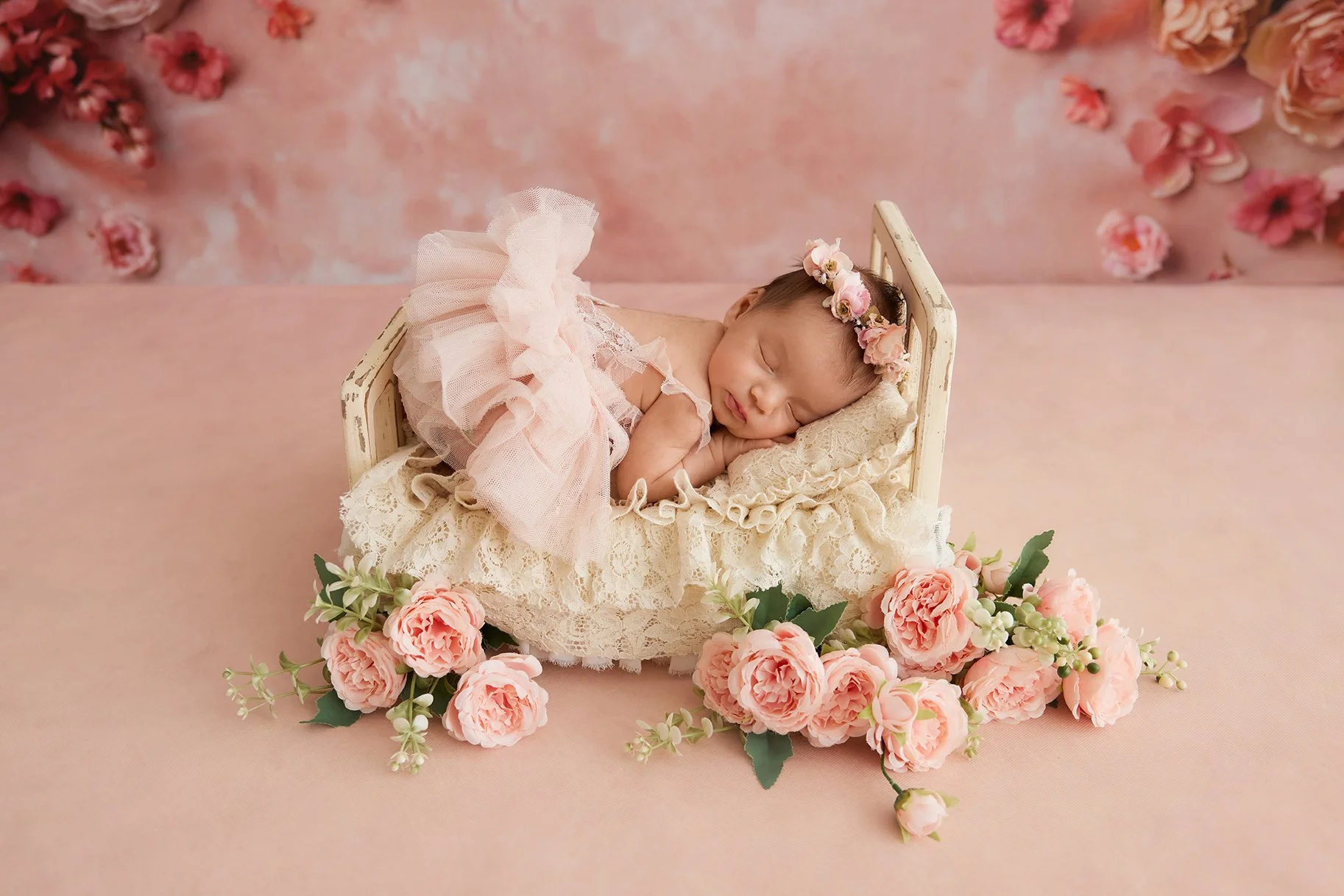
Newborn photography is not simply taking a picture. It’s holding onto the way a new baby felt in your arms. It’s preserving the love in the room, the hush, the awe, the beginnings.
I have photographed more than 800 newborns between my Los Angeles studio and my newly opened studio in Dubai. Every newborn photography session I take on is approached with patience, newborn safety, gentle hands, and a deep respect for the tiny life I am entrusted with. I am fully trained and licensed in newborn posing and handling, and my spaces are designed to be warm, clean, calm, and soothing.
In this guide, I want to share the most heart-melting, meaningful newborn photography ideas I have learned and refined through years of photographing babies and teaching other photographers. Every detail matters. And every detail is learnable.
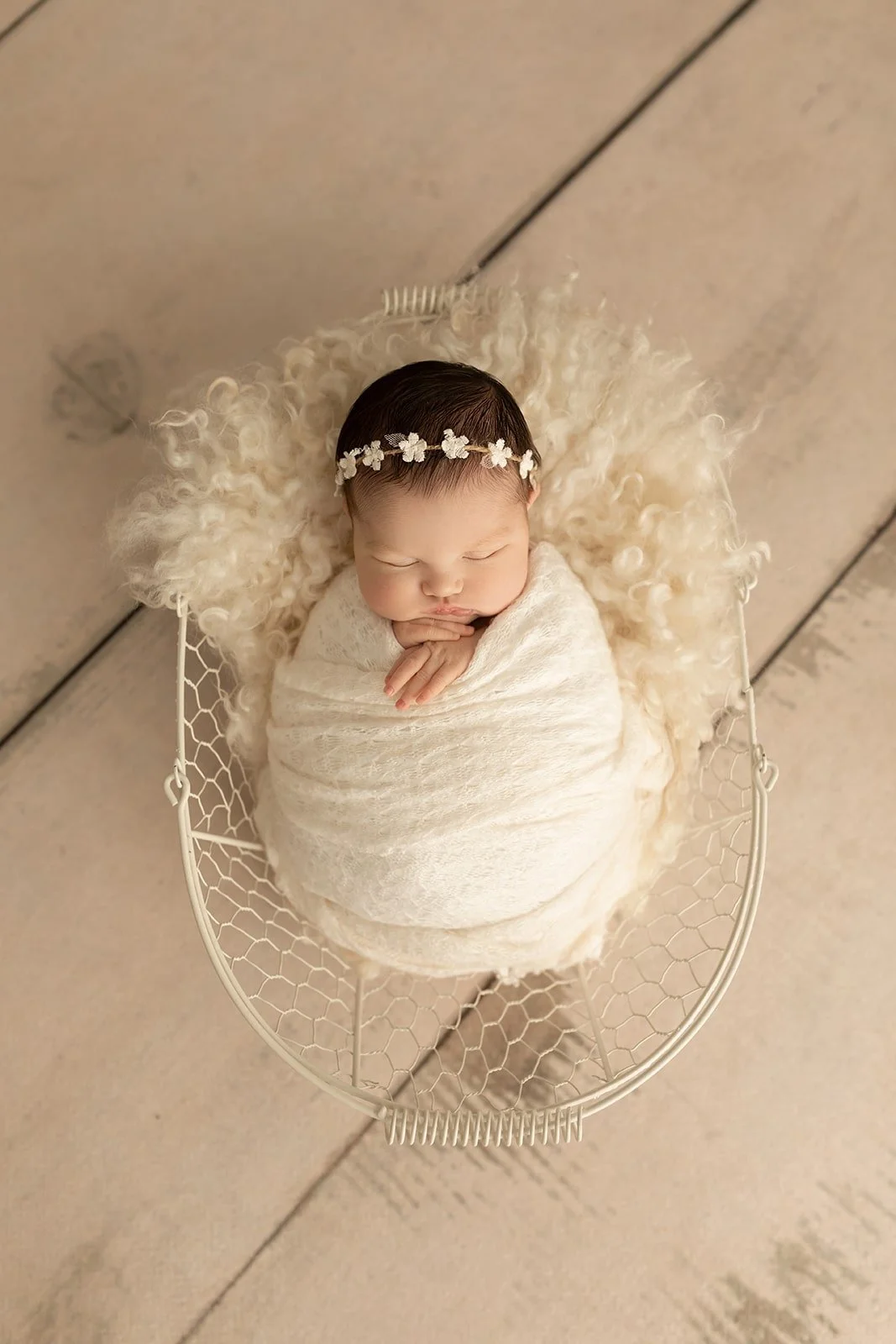
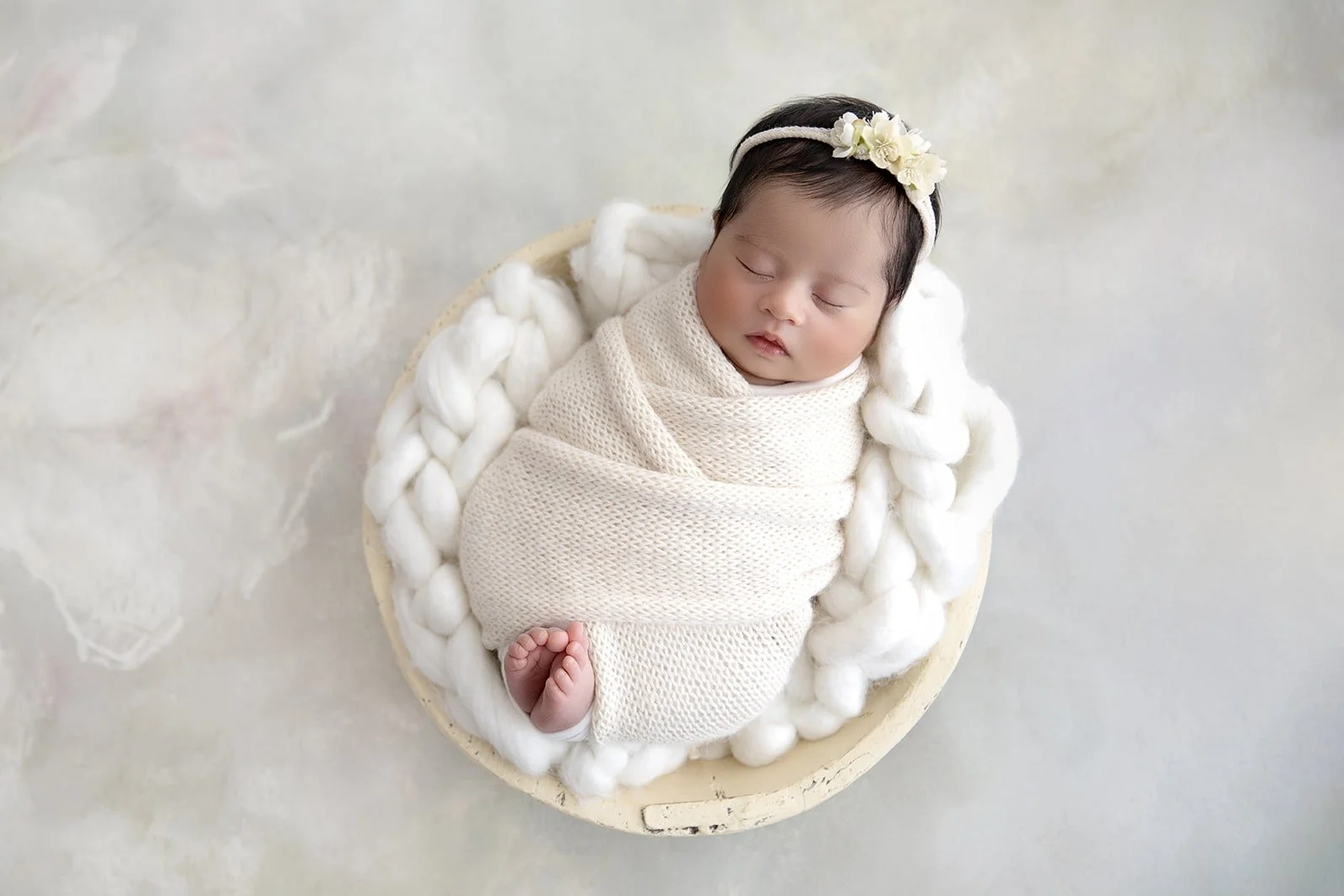
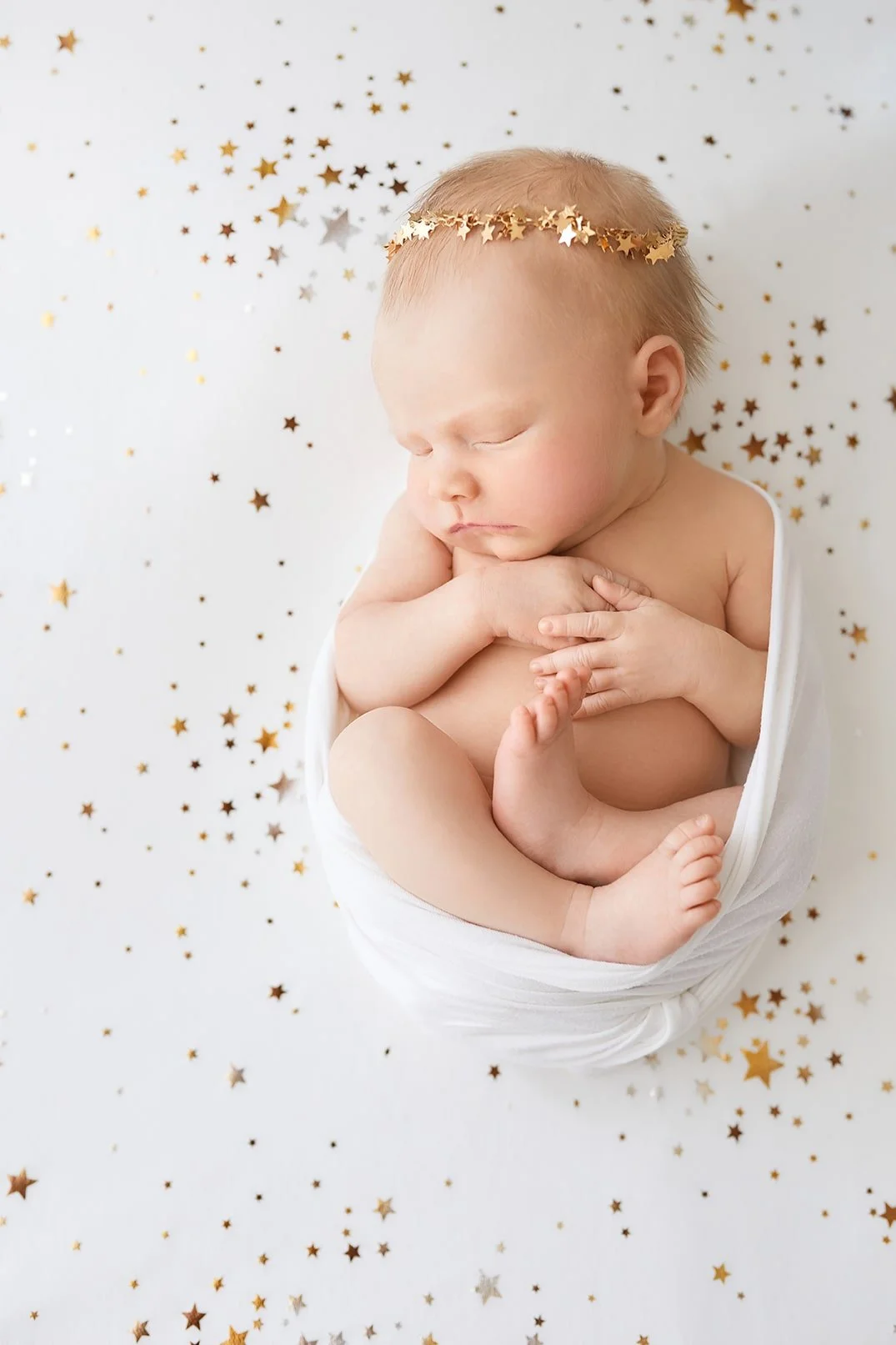
1. The Pure White Swaddle with Soft Natural Light
A newborn wrapped in white feels like sunlight, like innocence, like breath. White carries a purity that never competes with the baby, it frames them. It lets the softness of their cheeks, the fullness of their lips, the delicate wrinkles on their hands and feet become the visual story. When parents see these photos, they don’t see styling or props. They see their child.
The key to this newborn pose is gentleness. The swaddle is never a restraint. It is a return to the memory of the womb, the warm enclosed space where the baby felt protected for nine months. A proper swaddle should feel like the baby is being held, not wrapped tightly. Stretchy, breathable fabric is essential.
Cotton jersey, butter-soft bamboo blends, and lightweight knits are beautiful because they mold to the baby’s form without pressure. Before wrapping, always make sure the baby is warm enough and calm. A warm studio and the rhythmic sound of a soft shusher can help soothe their breathing into that slow, settled state.
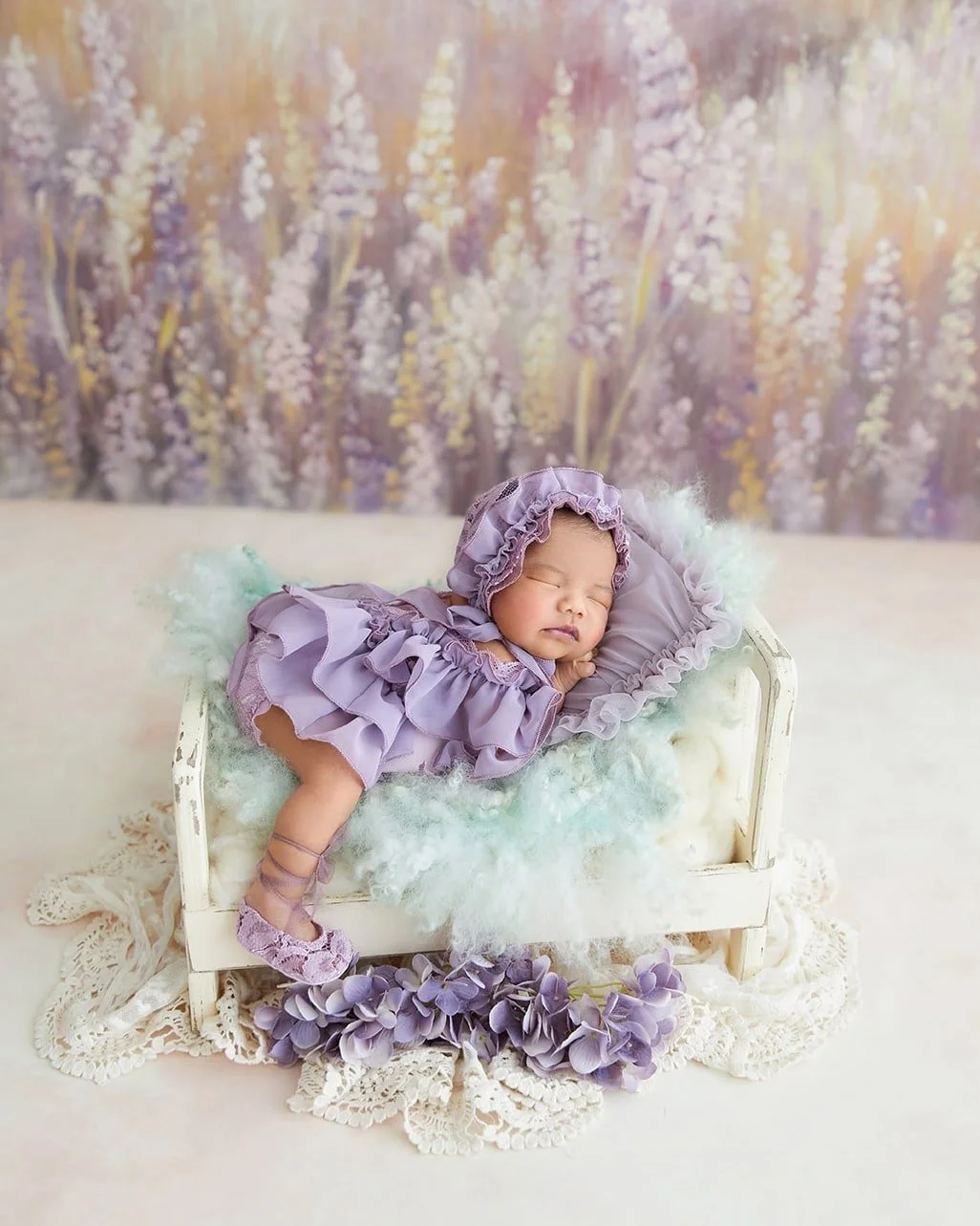
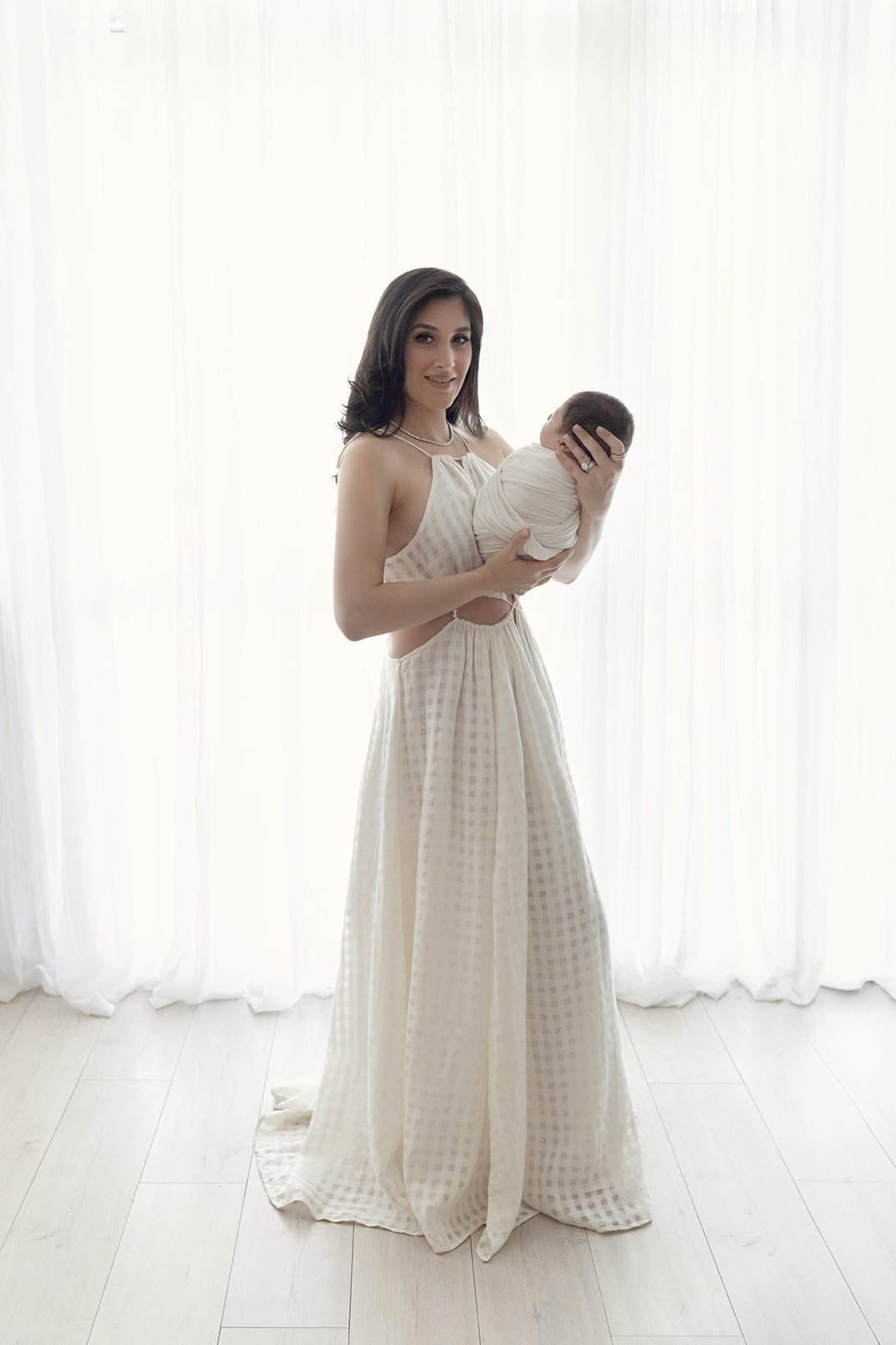
When placing the baby near the window, avoid direct beams of sunlight. Harsh light flattens features and creates tension in shadows. Soft natural lighting should feel like it is hugging the baby, not spotlighting them. A sheer curtain, or even a white sheet clipped across the window frame, will diffuse the light into the perfect glow. Position the baby at a gentle angle to the window so the light falls across the roundness of their face and belly. The side facing the window becomes softly illuminated while the opposite side gradually falls into a tender shadow, this is what creates depth and shape.
Angle matters. Shooting too high makes the baby look small and distant. Shooting too low emphasizes the chin in a way that feels heavy. Instead, aim just slightly above eye level so the eyelids, the cheeks, and the curve of the lips are visible in a relaxed, flattering perspective. I always take two variations, the full curled figure and the intimate close-up of the baby’s face and fingertips resting against the swaddle. Those close-ups are the ones parents hold closest to their hearts.
This is the type of setup I break down step-by-step in my Newborn Photography Masterclass, where I demonstrate hand placement, wrap flow, and ways to read the baby’s subtle cues that tell you when to proceed and when to pause.
2. The Cozy Womb-Like Beanbag Setup
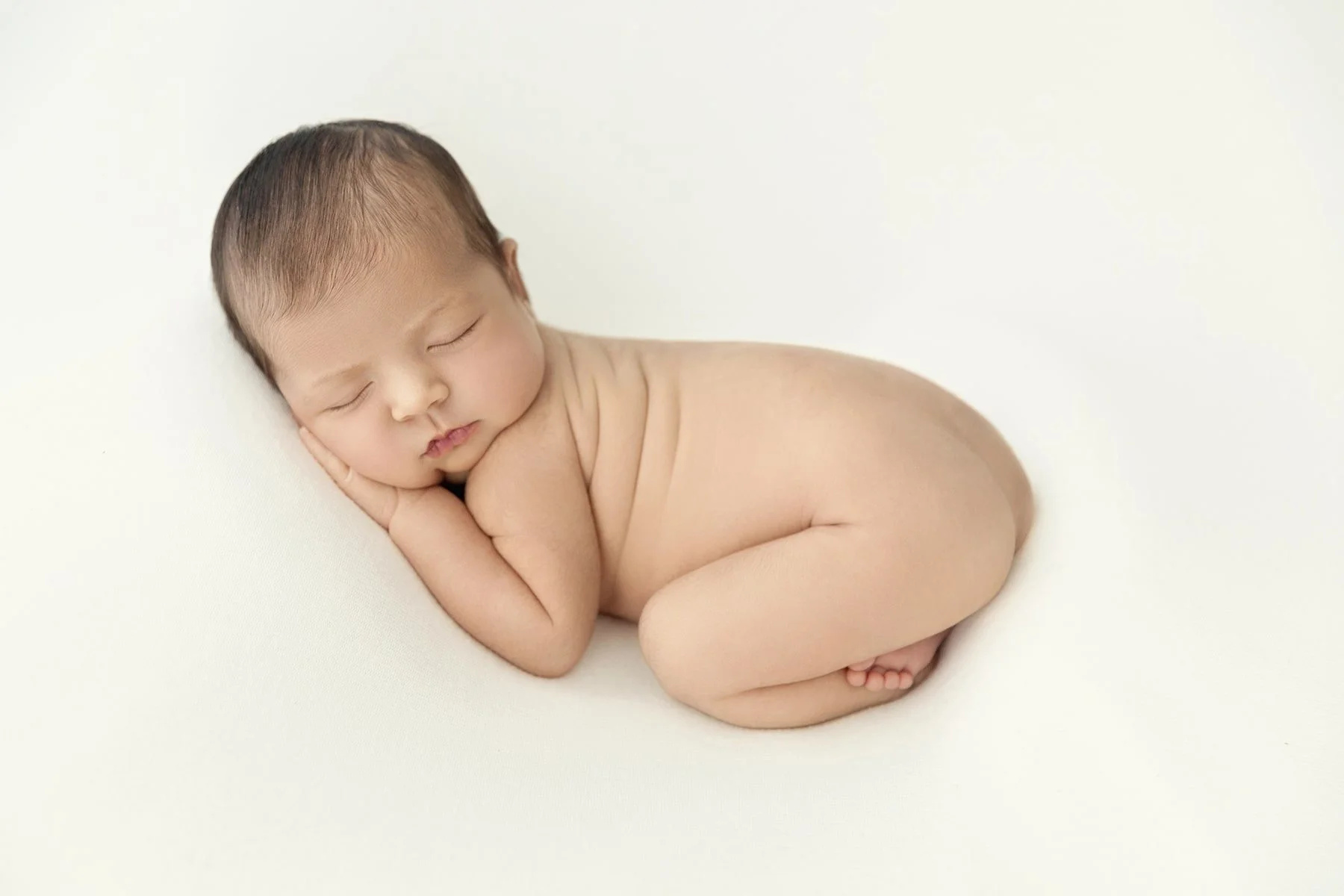
There is a particular magic that happens when a newborn is placed on a well-prepared beanbag. The pose should never feel forced. The baby is simply resting in the position their body naturally returns to when they feel safe.
The beanbag surface should not be too soft or too firm. Too soft, and the baby sinks unevenly, losing neck and airway support. Too firm, and the baby cannot relax into a natural curl. I layer the beanbag thoughtfully, a supportive base, a soft but structured layer above it, and finally a beautifully smooth backdrop surface. Textured blankets can be lovely, but they must be carefully chosen so they do not distract from the baby’s delicate features. A light, neutral knit or velvety smooth layer works wonderfully.
When positioning the baby, I think of creating a flowing line through the body. The legs curve inward slightly, the hips are supported, the arms rest gently near the heart, and the chin is lifted just enough to keep the airway open. If the chin tucks too far down, it can obstruct the baby’s breathing, so always lift the head a whisper, never more. The baby’s comfort is always the first and final priority.
What makes this pose so visually beautiful is the way light falls across the landscape of the baby’s body. Place the baby at a soft angle to the window so one cheek catches the light and the other fades gradually into depth. The light reveals the curve of the nose, the shape of the eyelids, the gentle slope of the forehead. It’s sculptural, but in a way that feels effortless and serene.
3. Wrapped in Texture
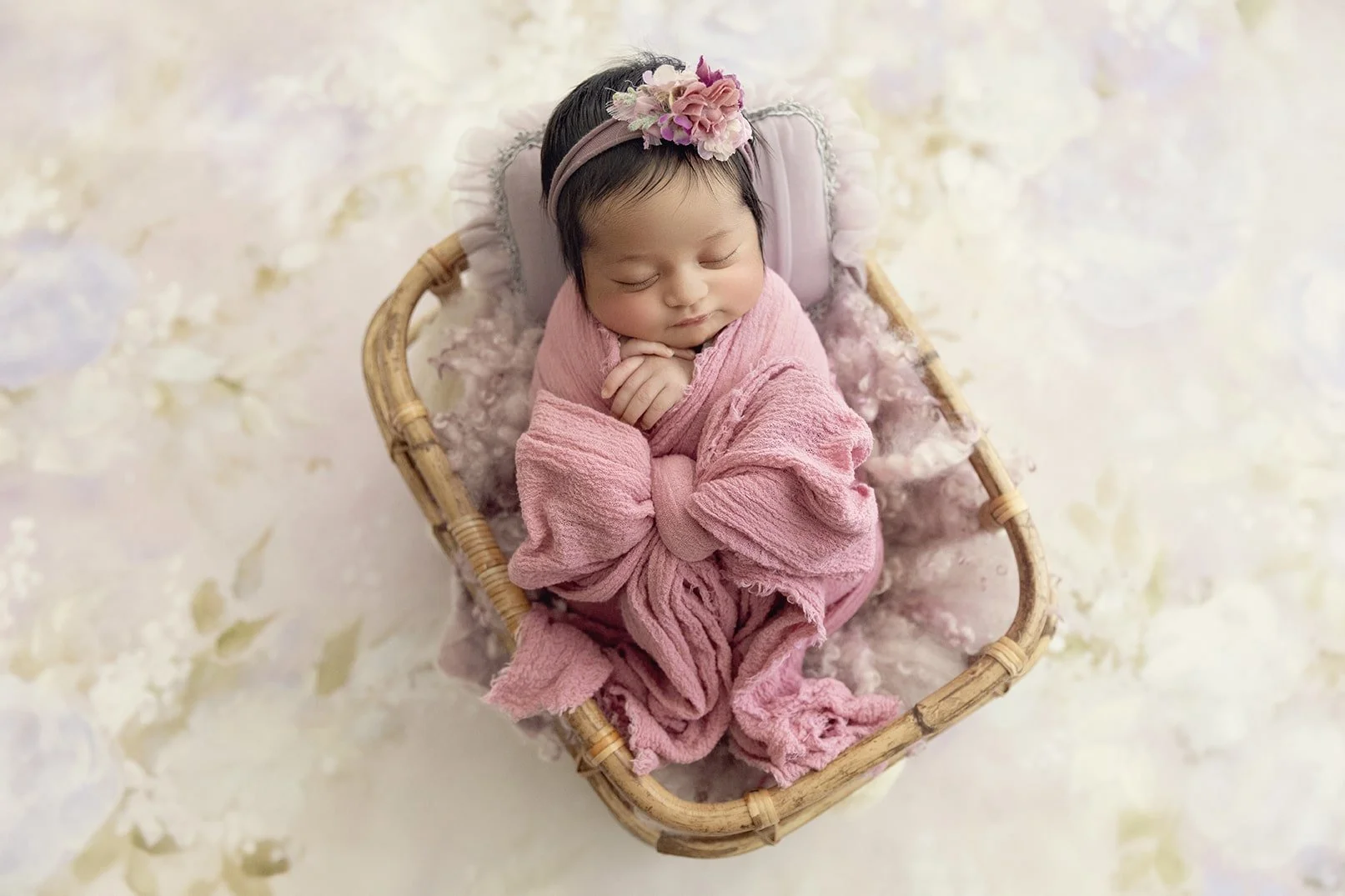
There is something deeply comforting about texture in newborn photography. A soft knit, a delicate lace, or a gently woven wrap can feel like memory itself. Texture carries history. It reminds parents of the blanket a grandmother made, the shawl a mother wore during pregnancy, the little knitted bonnet that was gifted long before the baby arrived. When texture is chosen thoughtfully, it brings emotional resonance into the image without overpowering the newborn.
The key is restraint. Every layer and accessory must exist to support the baby’s presence, not distract from it. I always begin by choosing one main texture and allowing everything else to play quietly around it. A hand-knit wrap may take center stage, with the backdrop, bonnet, and accents chosen to melt softly into it. When all the elements share a gentle tonal relationship, the photo becomes cohesive rather than busy.
When placing the newborn, I shape the wrap around the body so the fabric embraces the baby rather than simply covering them. The wrap should follow the natural curve of the belly, the gentle bend of the legs, the tucked position of the hands. This creates visual flow, guiding the viewer’s eye from the baby’s face down through their tiny fingers and across the shapes of their form. Texture should feel like touch, not decoration.
Light interacts beautifully with texture. Soft natural light glides across a knitted weave, creating dimension without harsh contrast. The newborn’s skin remains the star, but the supporting fabrics give context and warmth. Textures have personality, and when used with intention, they make the photograph feel tactile and deeply human, the kind of image parents subconsciously want to reach out and touch.
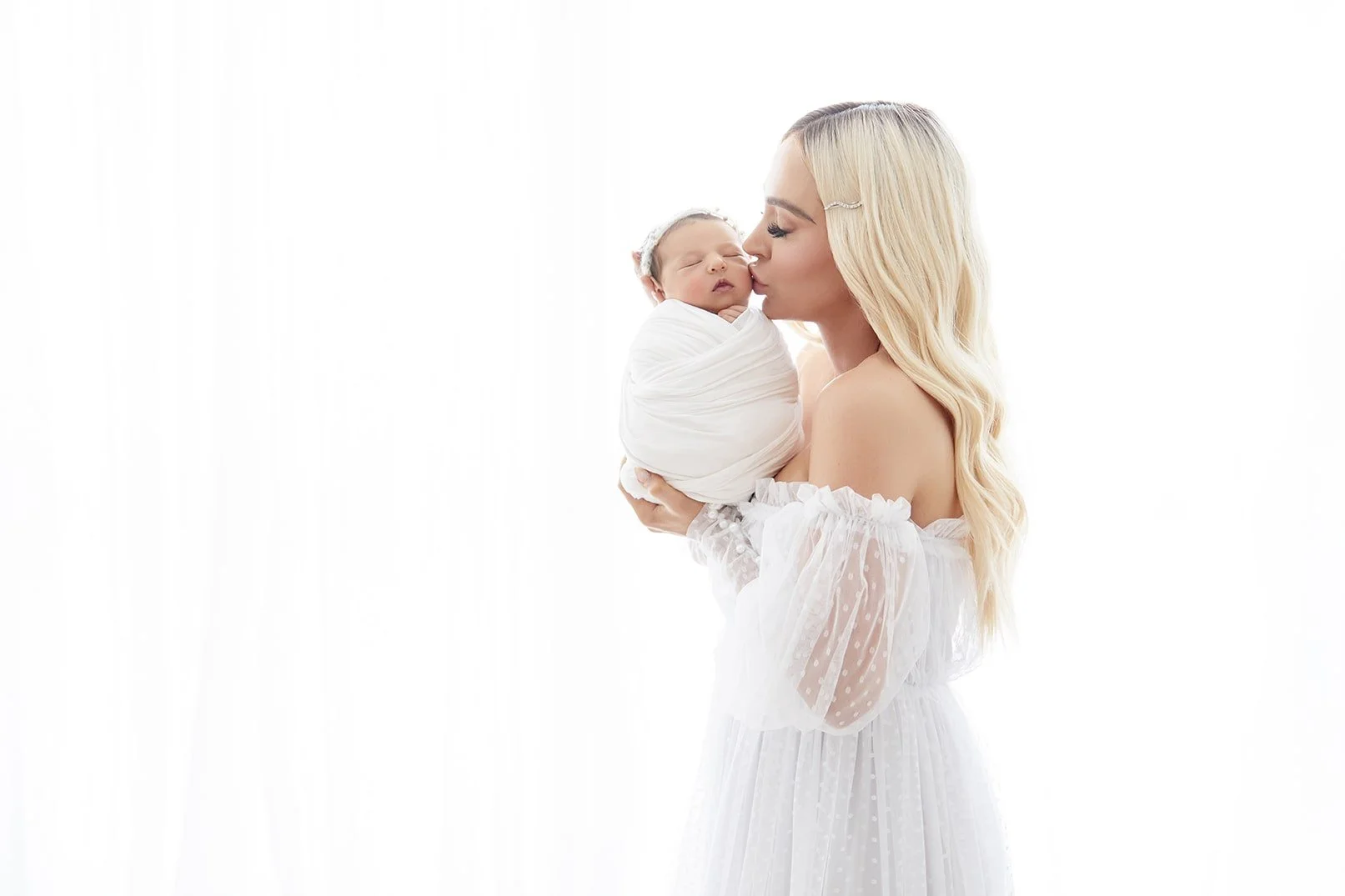
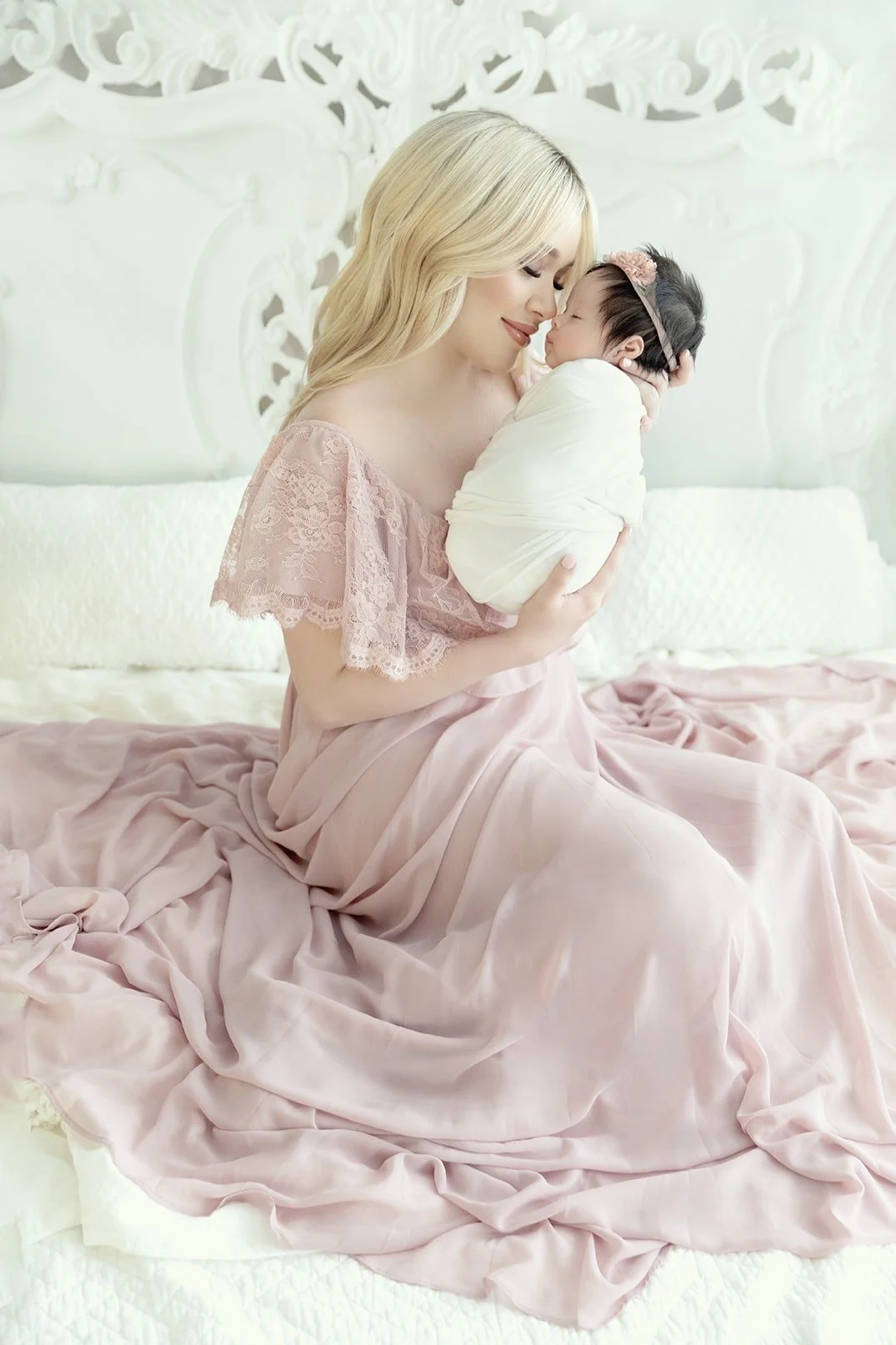
4. The Heart-Melting Parent & Baby Portrait
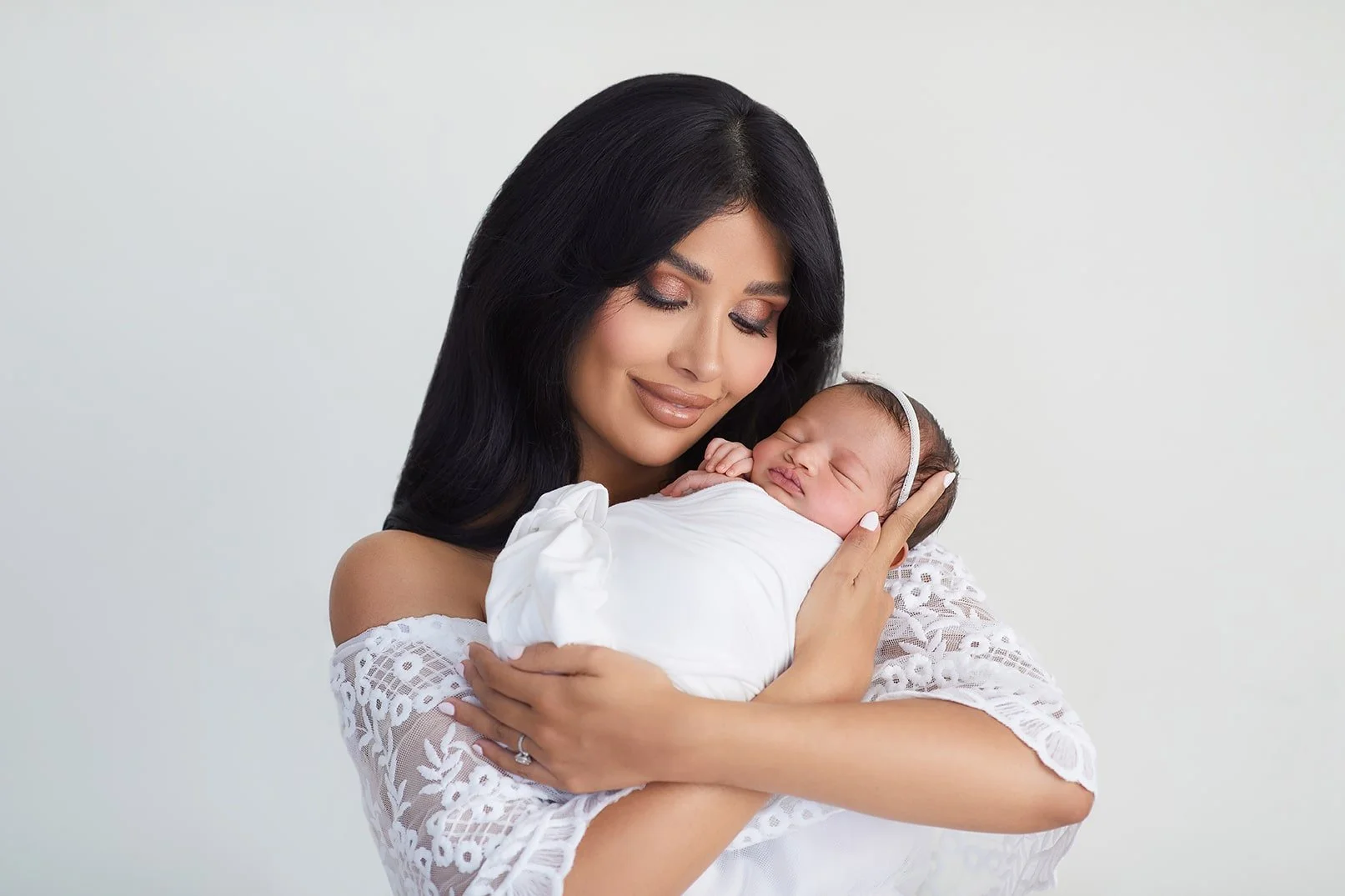
The moment a parent holds their newborn during a photography session is always quiet in a very specific way. It feels like the room is exhaling. All the styling, all the posing, all the preparation fades into the background, and what remains is pure emotion.
Many parents come into the studio feeling a little unsure. They may be tired, healing, adjusting to this new role and bond. One of the greatest gifts a newborn photographer can offer is reassurance. Before I ever guide a pose, I speak softly, I slow my own breath, I match the stillness I want the baby to feel. Parents mirror your energy. A calm photographer creates calm parents, and calm parents create calm babies.
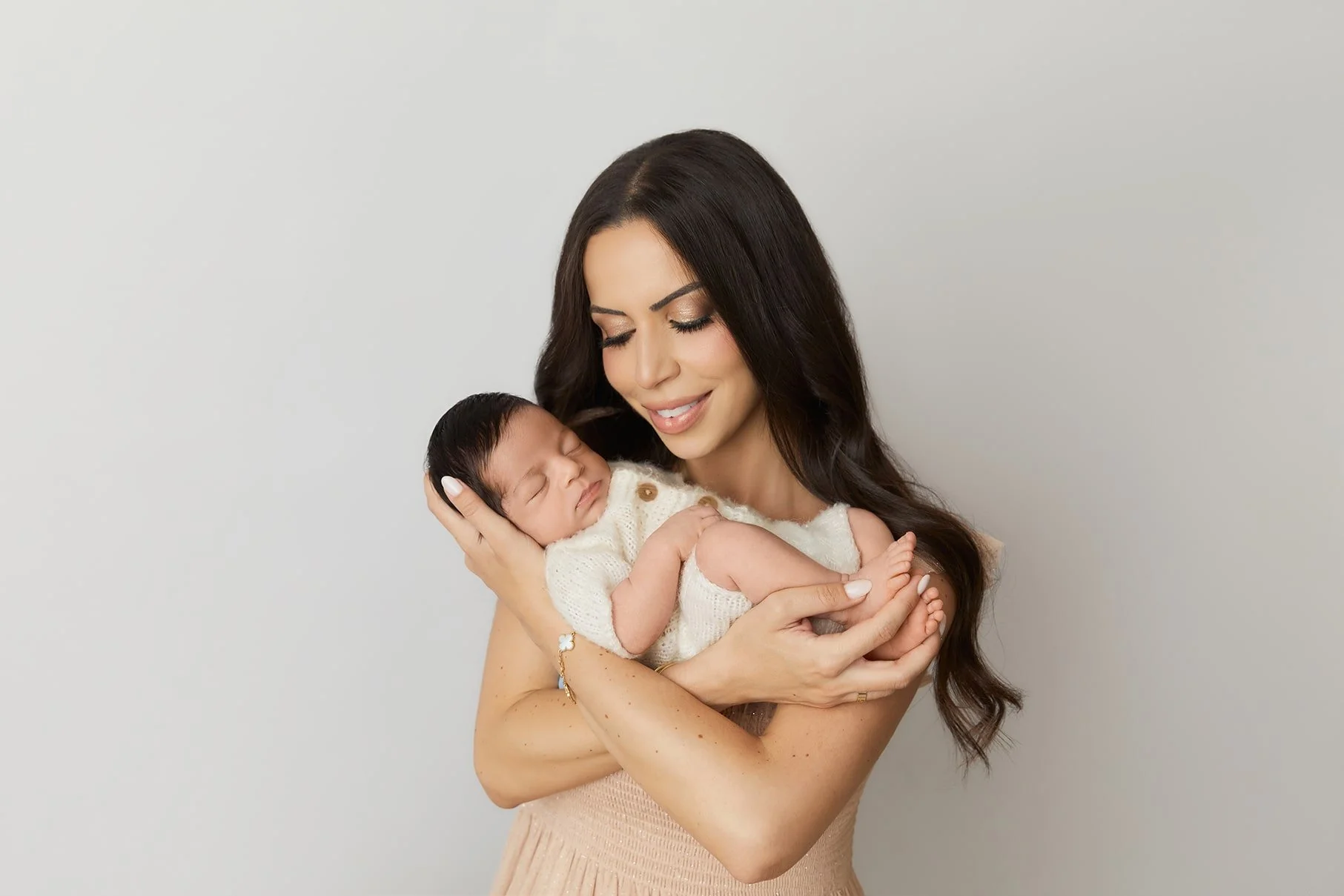
When guiding a mother to hold her newborn, I always begin with the shoulders. Stress lives in the shoulders first. A gentle reminder to release the tension can change everything about how the image reads. The hands follow next. Hands tell love stories in images.
I guide the fingers to soften and wrap around the baby with tenderness instead of stiffness. Small adjustments make enormous visual differences, a lifted elbow creates negative space near the baby’s face, allowing light to pass through and making the pose feel airy and elegant.
Fathers often hold the baby differently, closer to the chest, protective and grounding. I let that energy lead the pose. A wide hand at the back of the baby’s head, the gentle curl of the baby’s tiny body against a strong arm, the kiss on the crown of the head.
For those who want to master these emotional, natural parent-baby portraits with confidence, the DIY Maternity & Newborn Photography Course Bundle goes deeply into body positioning, set design and lighting.
5. The Sibling Hug
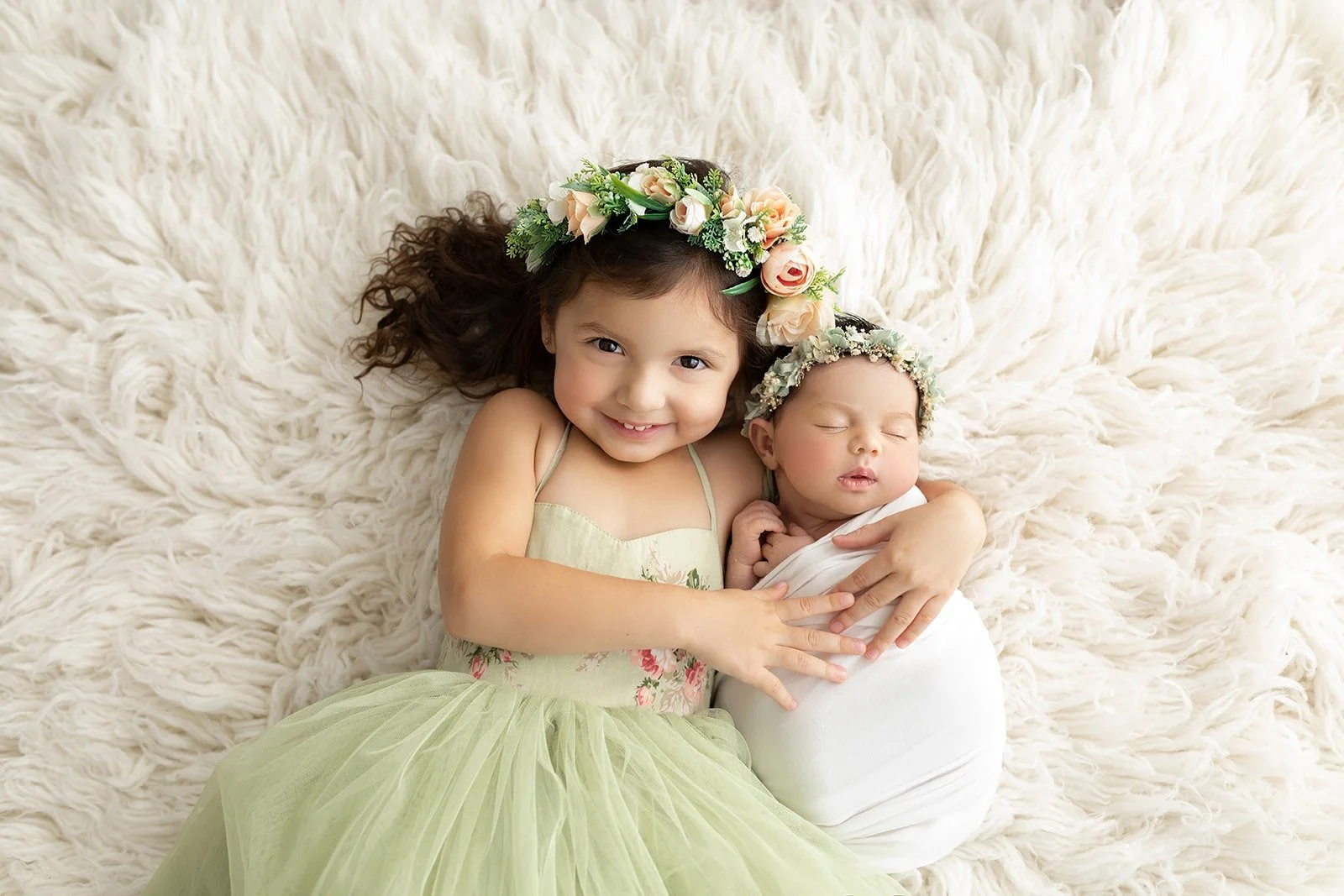
There is a very particular tenderness that exists in photographs where a sibling holds their newborn brother or sister. It is the beginning of a lifelong relationship, captured in a single frame. But any photographer who has worked with toddlers knows that these images are never about control. They are about collaboration, patience, and play.
The most important part of photographing siblings is honoring who the sibling is. Some are gentle and quiet. Some are energetic and curious. Some are shy. Some are excited at first and then suddenly want nothing to do with the camera. Every reaction is valid, and the session goes far more smoothly when the photographer accepts rather than resists.
I always create a setup that prioritizes safety. One of the most secure and naturally beautiful ways to photograph siblings is by having the older child lie down comfortably on a blanket or beanbag surface, and then placing the swaddled newborn gently against their chest or tucked safely beside them. The proximity creates warmth, and the angle allows the photographer to capture closeness without requiring the sibling to physically support the baby’s weight.
Once positioned, the magic happens in the details. A soft whisper into the baby’s ear. A tiny kiss on the forehead. The moment their hands touch. Toddlers respond to direction only when it feels like an invitation, not a command.
For photographers who want structured guidance in sibling posing, including how to create these images even when the sibling is hesitant or wiggly, my 1 Month Old with Sibling Course walks through the entire process.
6. Tiny Details: Fingers, Toes, Lashes, and All the Little Things
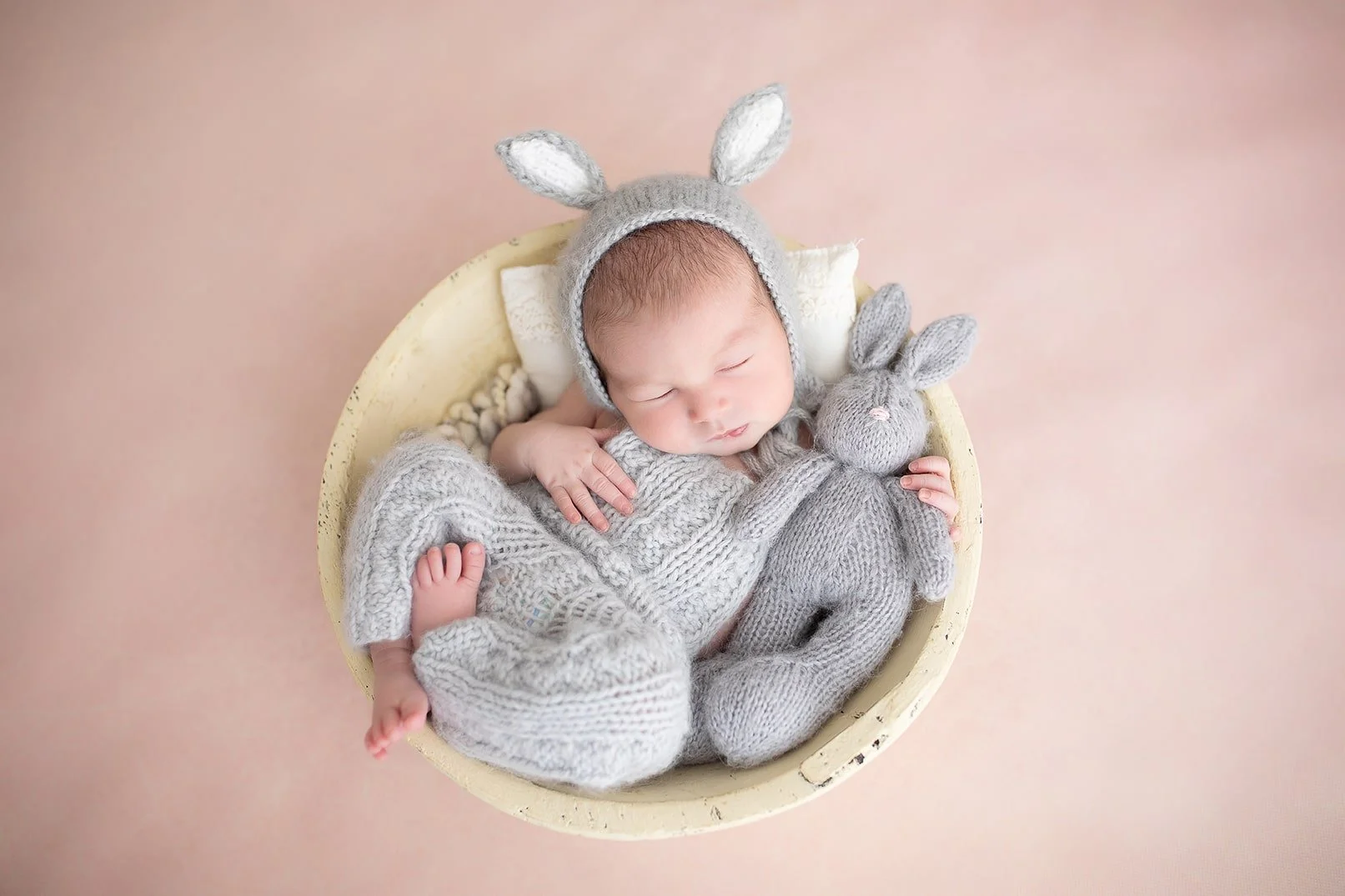
If there is one category of images that parents absolutely love, it is the close-ups. The tiny fingers curled around nothing and everything, the soft swirl at the crown of the head, the perfect bow of the lips, the wrinkled little feet that somehow already smell like nostalgia. These are the photographs that hold time still.
To photograph details well, you must slow down. You must notice the way the baby’s breathing creates the slightest rise and fall of the chest. You must observe how the fingers soften once the baby is fully relaxed. You must pay attention to the way light touches the skin.
I often wait until the newborn is in a deep, settled sleep for these shots. The hands relax naturally, the toes uncurl slightly, and the muscles release any tension. Using natural light, I position myself so the light brushes across the feature I want to highlight, the eyelid, the ear, the tiny cupid’s bow of the lip.
Parents don’t realize how quickly these details change. The newborn fingers elongate, the lashes grow thicker, the tiny foot creases smooth out. These photographs become treasures because they are emotionally irreplaceable.
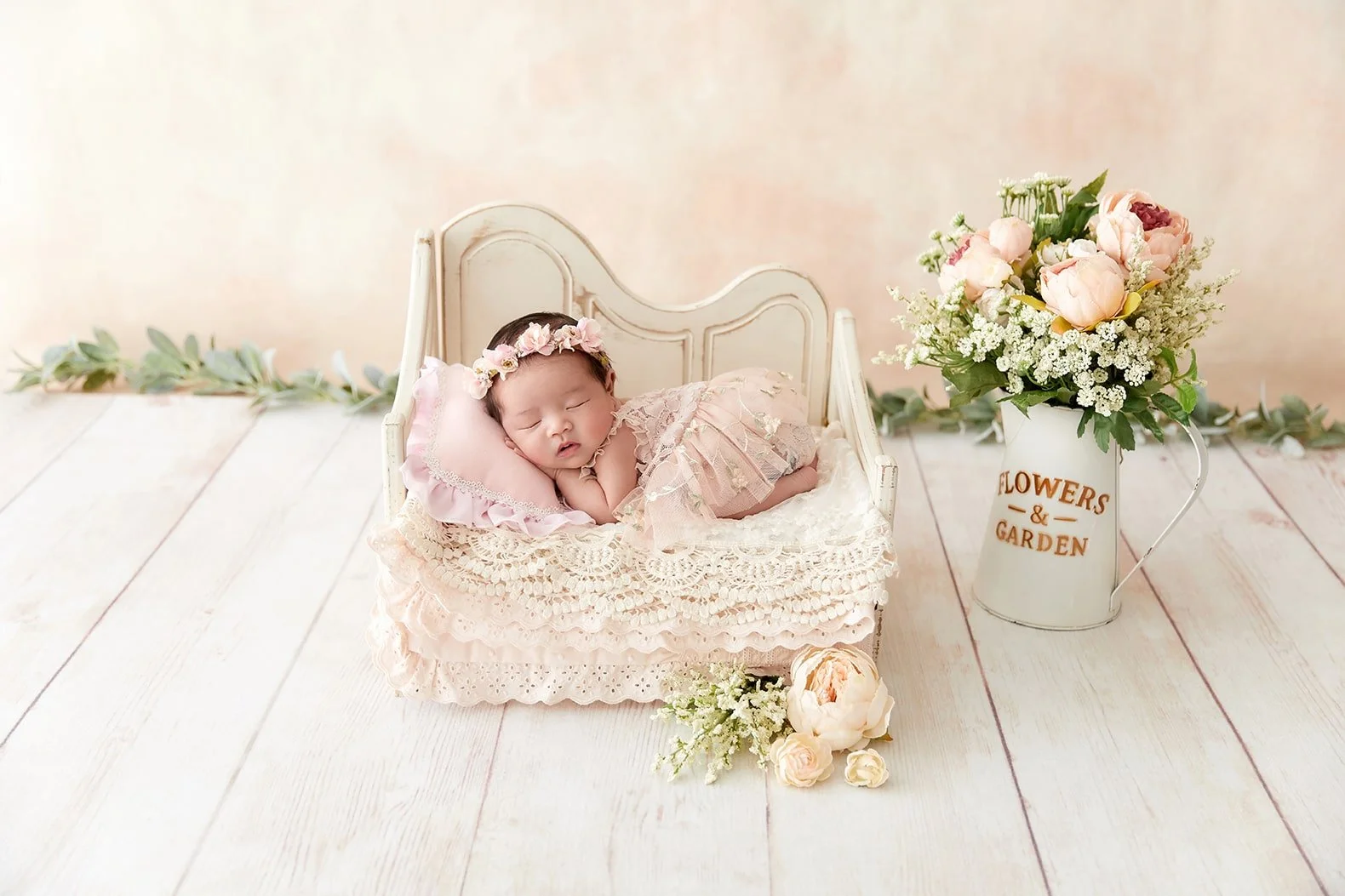
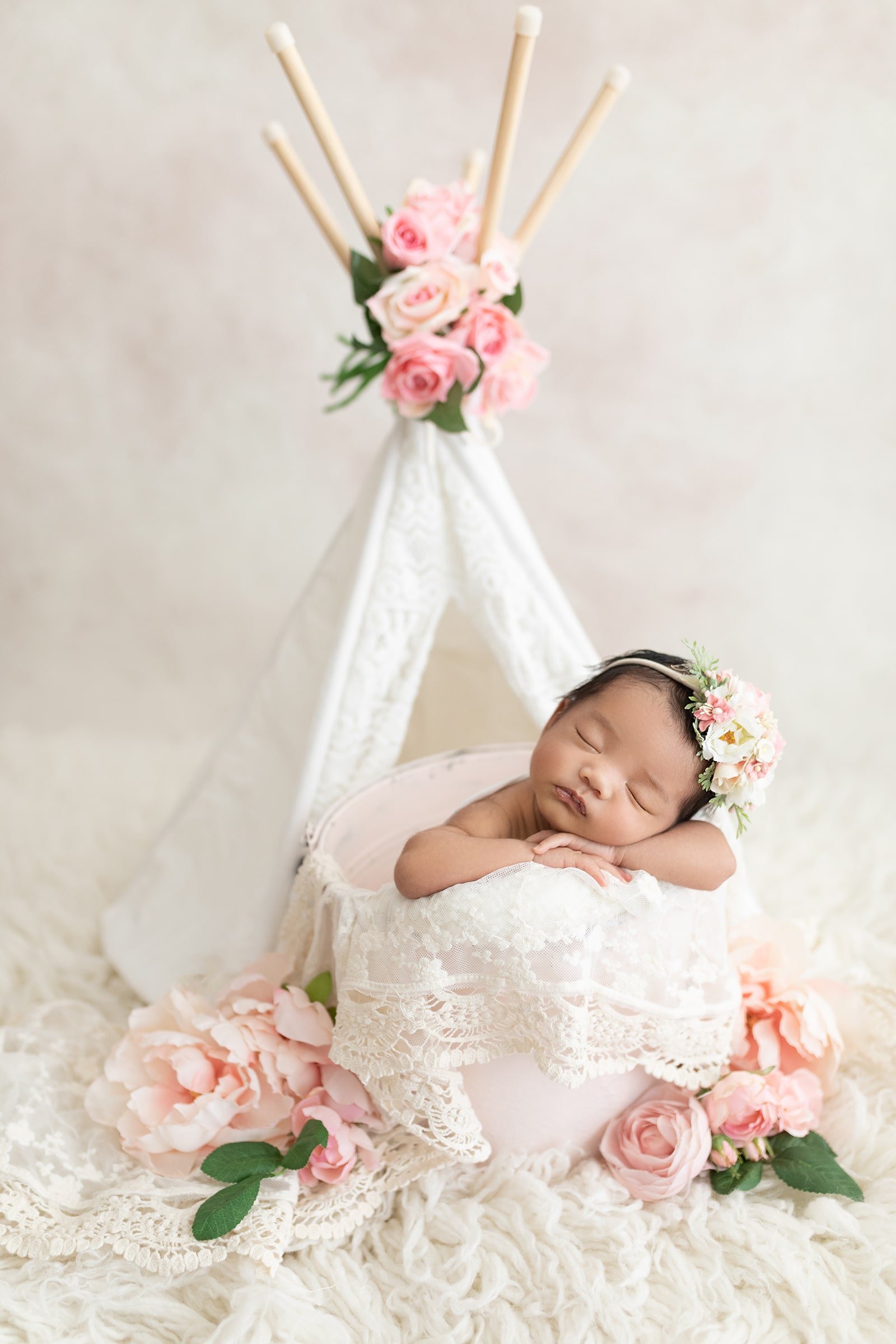
7. Floral Nest
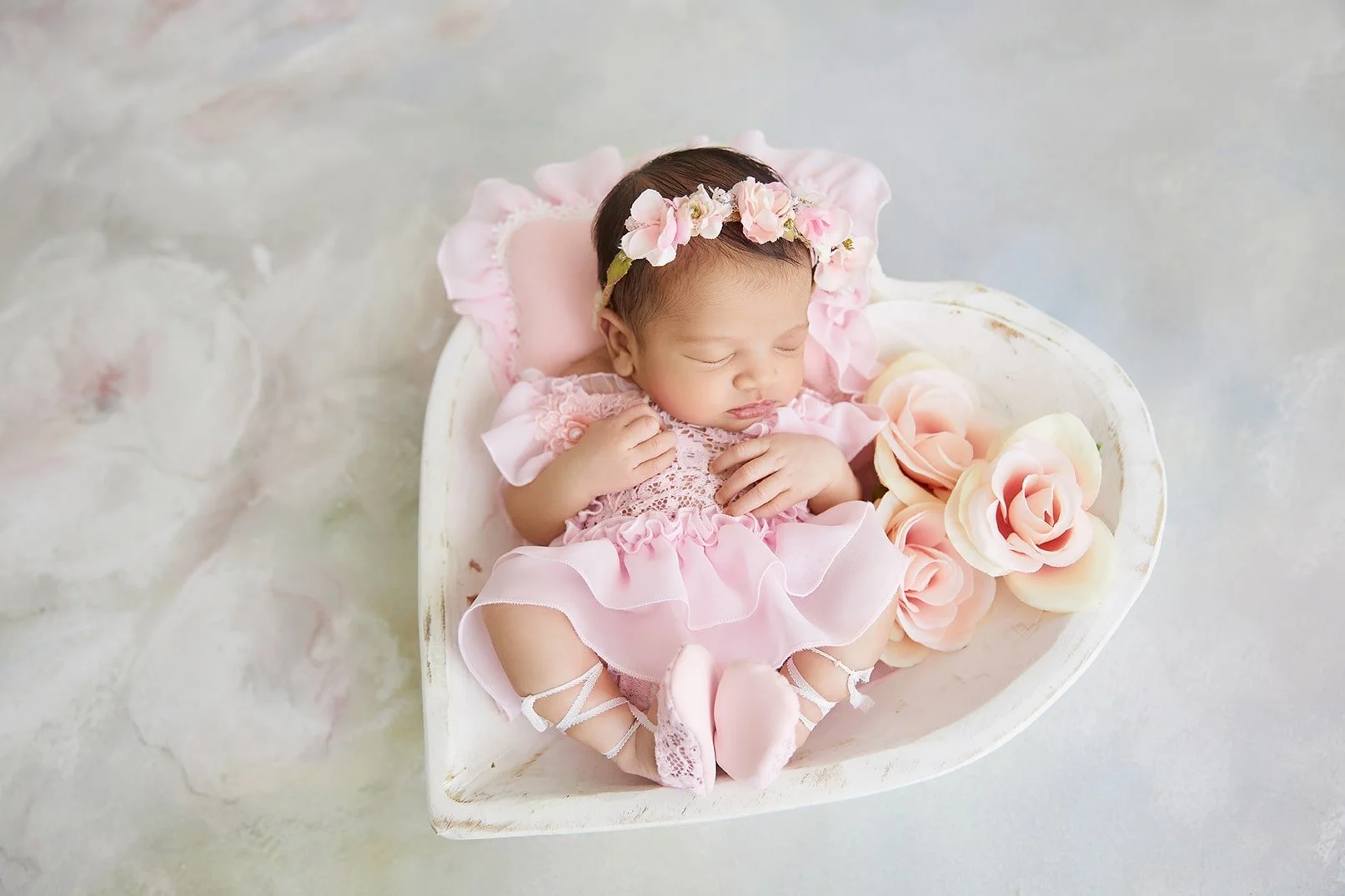
There is a timeless romance in surrounding a newborn with fresh florals when done thoughtfully. The key is to keep the identity of the baby at the center of the image, not the decoration. Florals should whisper, not shout.
I choose flowers with care. Nothing with heavy fragrance, sharp stems, or pollen that will fall onto the baby’s skin. Roses, ranunculus, peonies, chamomile, eucalyptus, dried hydrangea, and baby’s breath work beautifully. I trim stems short and cushion everything beneath layers of soft fabric so nothing touches the baby’s delicate skin directly.
The baby remains swaddled or gently posed in a secure and familiar position. The florals simply create atmosphere, mood, shape, and tone. Some parents choose flowers that carry meaning, blooms from their wedding, flowers from their cultural traditions, or hues that match the nursery palette.
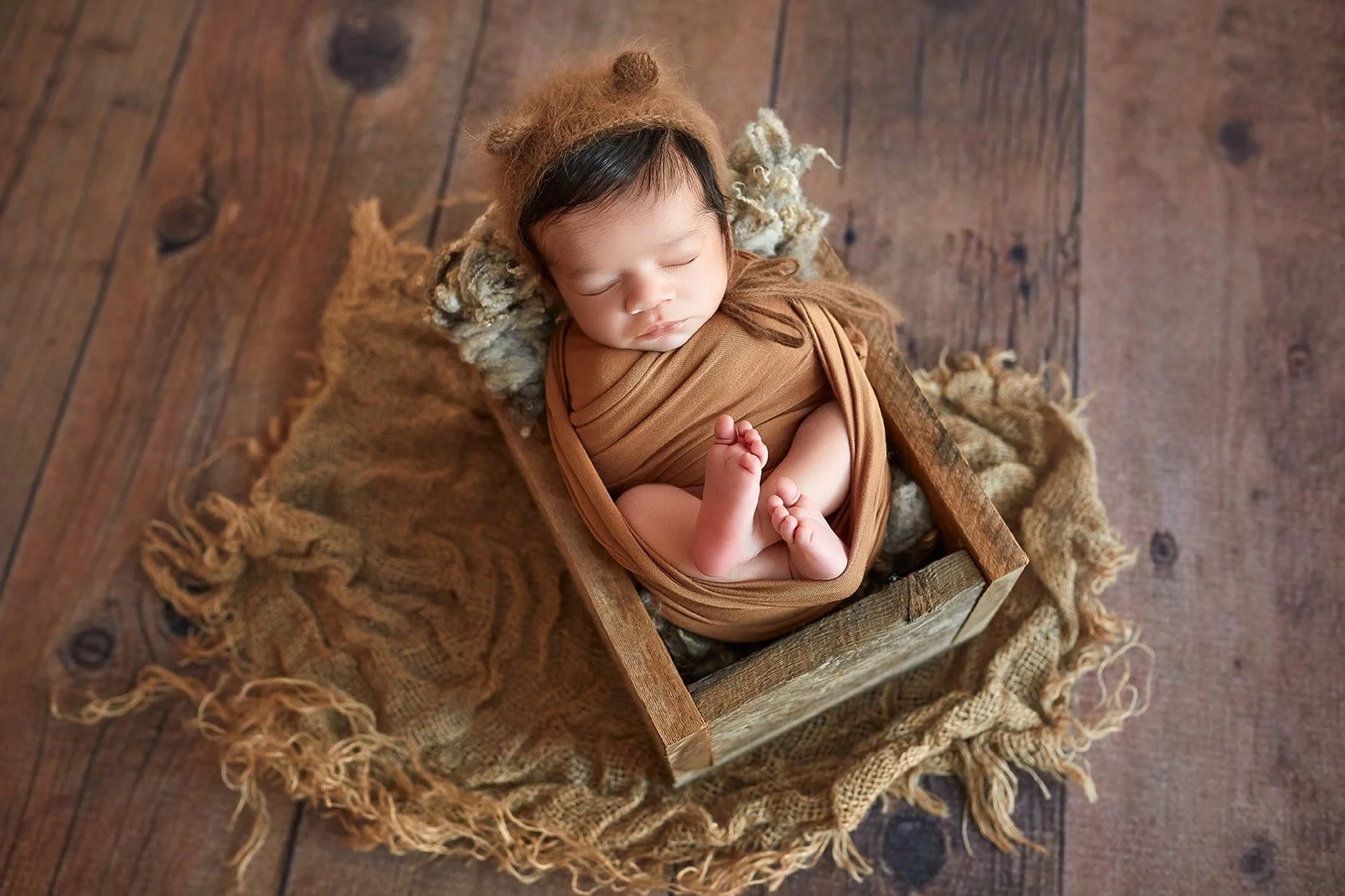
8. Basket Dream Pose
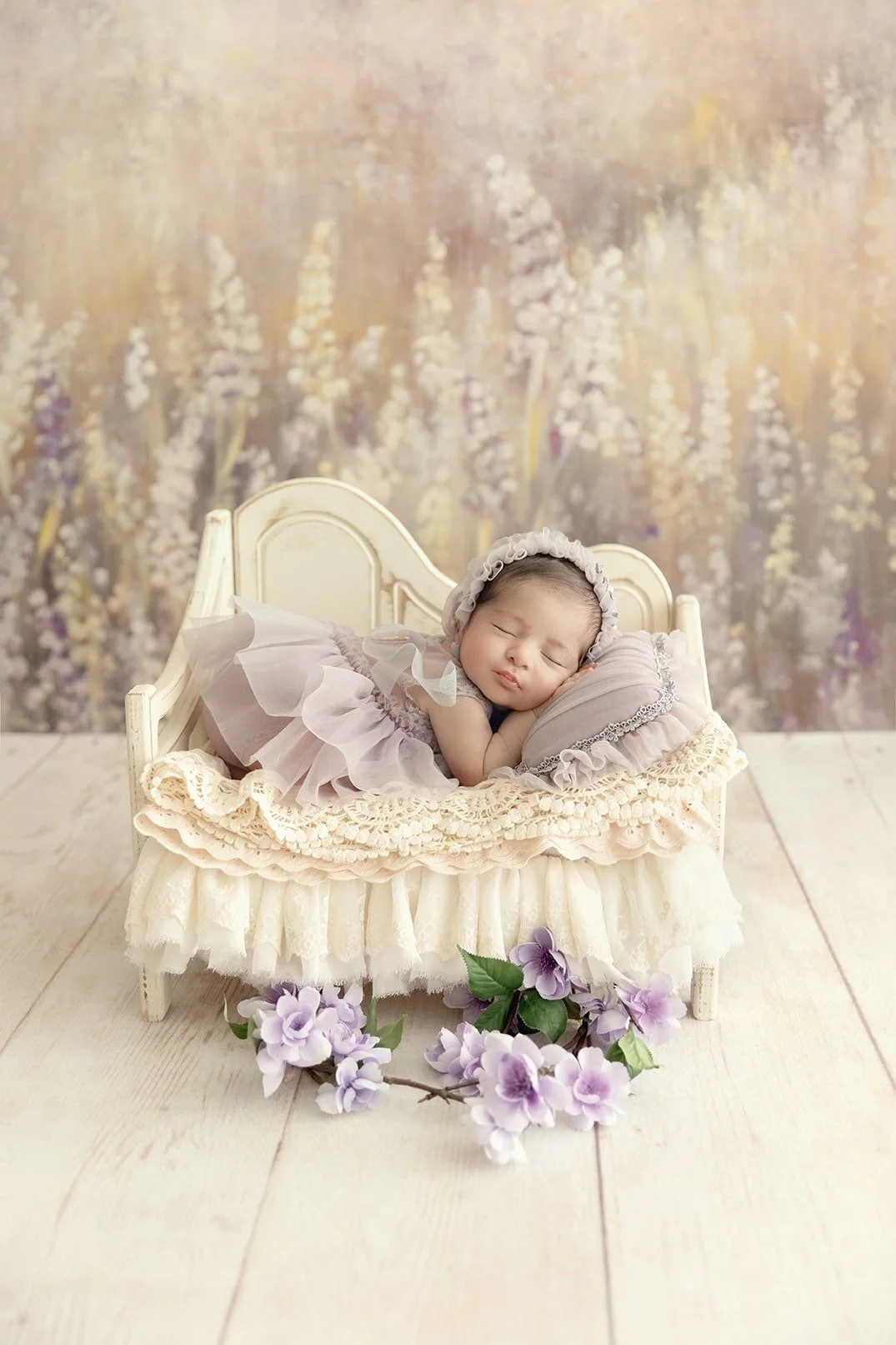
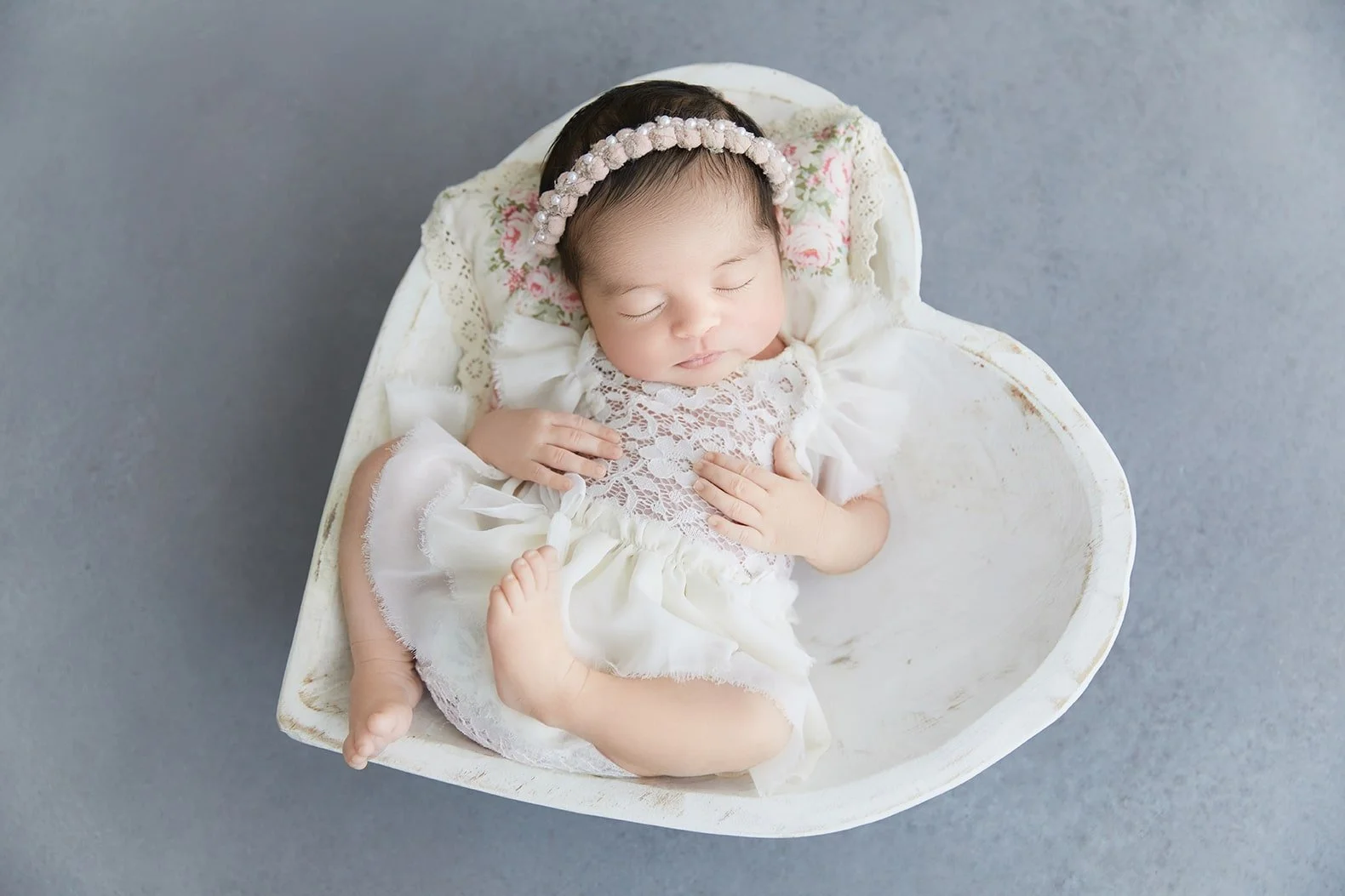
Basket poses are among the most adored in newborn photography, but they must always be done with absolute care. The baby should never be placed directly into a basket without proper structural support. Inside every basket setup, there are layers and rolls unseen by the camera, a hidden architecture designed to cradle the baby securely.
The basket should be weighted and stable on the floor, never on an elevated surface. The interior should be padded and shaped to support the baby’s head, hips, and spine. The baby is never scrunched or compressed, only resting in a natural, comfortable curl.
The charm of this pose lies in how peaceful the baby looks in a whimsical setting. It feels like a fairy tale, but safety is the invisible framework holding it all together.
This is one of the poses I go into great depth on in the Full Newborn Shoot Day Course, where you can watch the shaping process in real time.
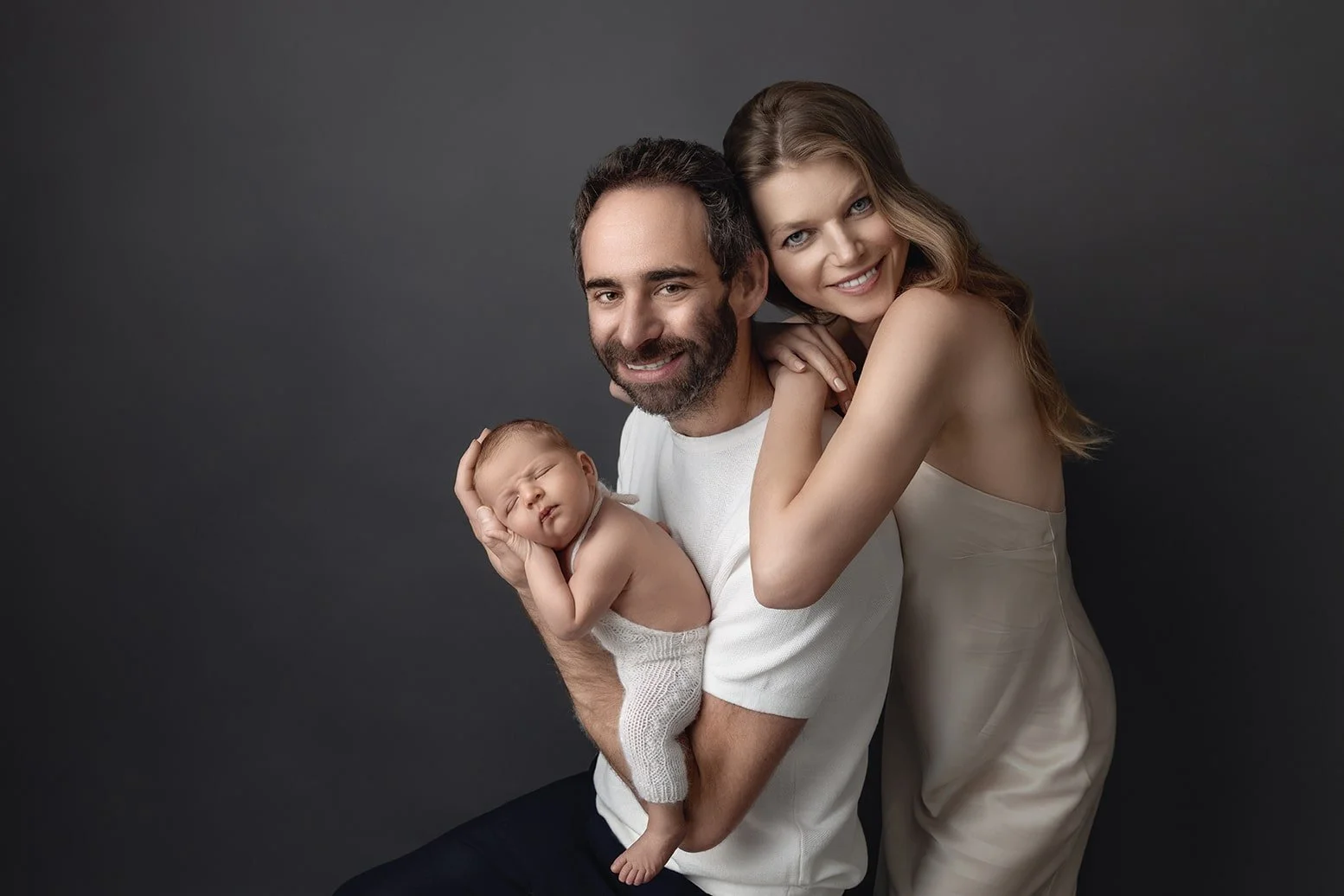
9. Family Portraits That Feel Like Home
Family newborn photos are not about posing. They are about the quiet gravity that pulls everyone closer to the baby. I encourage families to interact, to breathe together, to touch each other gently, to sway if that feels natural. What I want to capture is the way love gathers around a newborn like a soft blanket.
Neutral tones, comfortable fabrics, bare feet if it feels right, all of these create warmth. The family becomes a circle, a shelter, a gentle orbit around this tiny new center of the universe.
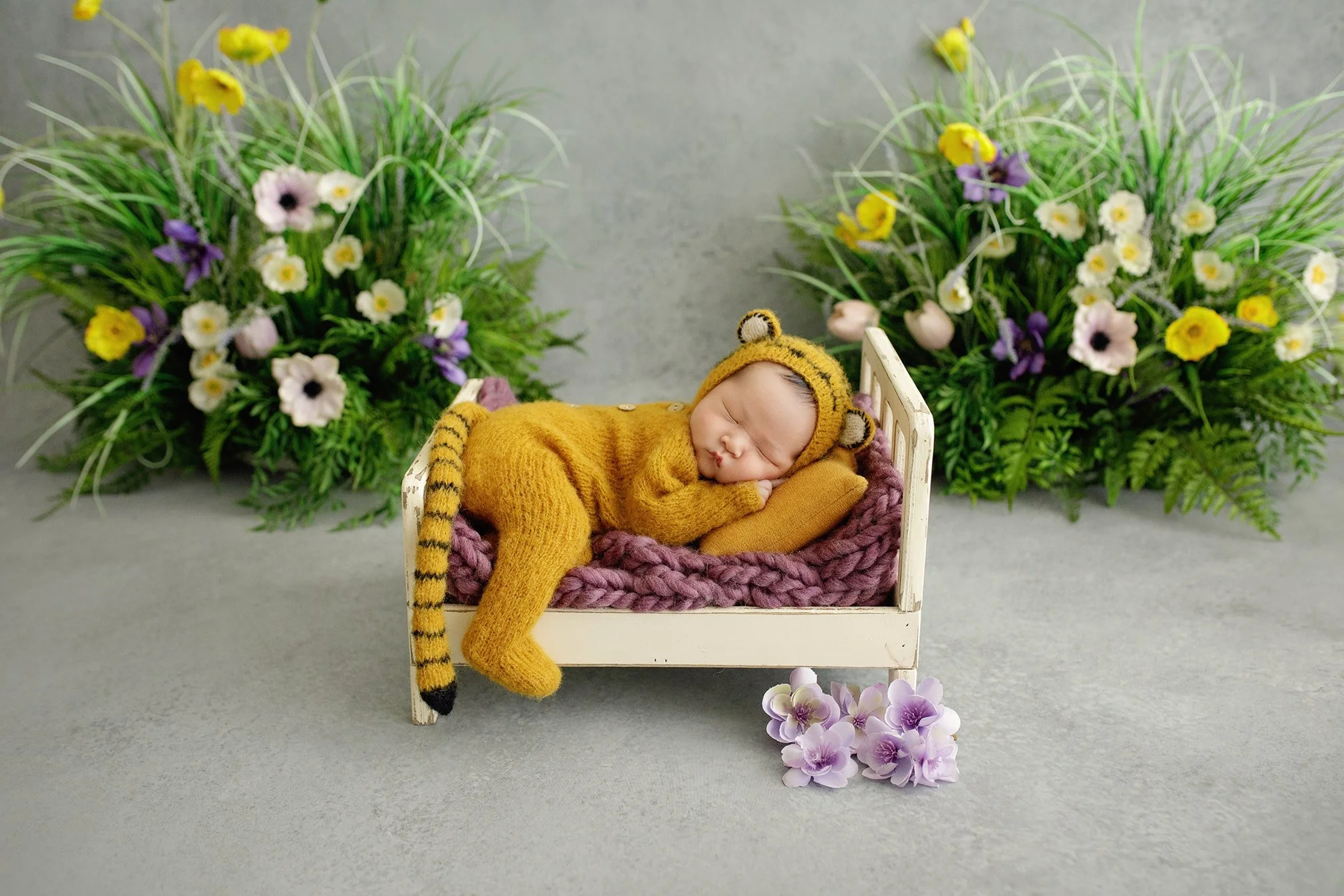
10. The Sleepy Tummy Pose: A Classic for a Reason
There’s a timeless tenderness in the sleepy tummy pose, baby resting on their belly, arms gently folded, cheeks relaxed, tiny back rising and falling with each breath. It’s a pose that speaks to softness and vulnerability, a universal calm that parents often cherish.
But it’s also a pose that requires skill, training, and patience. Newborns cannot support their own head or airway, so every adjustment must be guided with continuous awareness. The neck stays supported, the throat remains open, and breathing is monitored throughout. Movements are minimal and slow, just enough to refine the lines without disturbing comfort. The pose is held only briefly, always prioritizing safety and ease over achievement.
When done well, the result is more than a photograph. It feels sculptural and serene, like time paused for a moment so the viewer could truly see the gentleness of this new beginning.
For those interested in watching this process unfold in real time, from setup to lighting to safe hand placements, the Newborn Photography Course includes full behind-the-scenes guidance.
Conclusion
Newborn photography is not about staging perfection. It is about capturing the quiet, living poetry of a family’s beginning. The tiny hands. The fluttering eyelashes. The curve of the newborn’s face against a parent’s chest. The way love gathers around the baby like light. Years from now, these photographs will not just remind parents of how perfect their baby looked, they'll also remember how those first days felt.
If you are a photographer learning to master this art, be patient with yourself. Be gentle with the babies. Slow down. Breathe. Watch. Listen. The newborn will always tell you what they need.
And if you want to want to learn more, the Newborn Photography Masterclass inside Roxamina Photography Academy was created for teaching you what took me years to master., in under an hour.
FAQ’s About Newborn Photography
When is the best time to schedule a newborn photography session?
The most ideal age for a newborn session is when the baby is between 5 and 21 days old. During this time, your little one is still very sleepy, naturally curled, and comfortable being gently swaddled or guided into those classic newborn poses that feel so soft and serene. That sleepy, peaceful state is what allows us to create those timeless newborn photo ideas you often see in beautiful galleries. If your baby is older than three weeks, don’t worry. Every baby has their own rhythm and personality, and there are still endless possibilities to create meaningful, beautiful photos. The key is always patience, warmth, and following the baby’s natural cues.
How long does a newborn photo session usually take?
A newborn photo shoot moves at the pace of the newborn. A typical photography session lasts between two and three hours, which allows time for feeding, cuddling, soothing, and creating a calm environment where your newborn baby feels safe and relaxed. We are never rushing, never forcing a pose, and never pushing the baby past their comfort. Newborn photography is about the art of slowing down, watching carefully, and guiding gently.
Do I need to bring props and accessories, or are they provided?
Everything needed for the newborn photoshoots is provided in my studio. There is an entire collection of thoughtfully selected props and accessories, including textured wraps, swaddles, soft blankets, knit outfits, bonnets, and delicate headband accents. Each piece is chosen for its softness, its natural beauty, and the way it complements the newborn’s features rather than distracting from them. Fresh flowers and meaningful family items can be included if you’d like to add a personal touch.
What should the parents wear during the newborn photo session?
Neutral tones photograph beautifully. Cream, oatmeal, white, warm beige, soft grey, and gentle pastels allow the baby’s skin tones and delicate features to remain the focal point. Simple textures like cotton, knit, and linen work wonderfully because they feel cozy and timeless. Choose pieces that feel comfortable, soft, and unrestrictive. Family photography during a newborn photoshoot should feel natural and effortless, like a quiet morning spent holding your little one close.
How do you ensure my baby’s safety during the newborn photography session?
Baby’s safety is the foundation of every newborn photography pose and setup. A professional newborn photographer is trained to position the baby so their airway is always open, their joints are never overstretched, and their body is supported at every moment. Hands are never forced, baby’s legs are never pressed into positions they would not naturally settle into, and poses like the classic finn pose are either done with spotter support or not done at all depending on the baby’s comfort. If the baby stirs, startles, or signals discomfort, we pause and soothe. The baby leads the session, not the other way around. Safety and comfort are not steps in the process, they are the entire foundation.
Can I request specific newborn photography poses or creative ideas I’ve seen online?
Yes, you can absolutely share newborn photo ideas that inspire you. The most beautiful photos come from blending inspiration with what is true and natural for your baby. Some babies love being swaddled, some prefer arms free. Some settle beautifully into posed newborn positions, others are happiest in more lifestyle newborn arrangements where they are simply resting in your arms. The magic is in adapting the vision to your baby’s personality. Every baby is unique, and that is exactly what makes every session beautifully different.
About Ramina Magid
Ramina Magid is an award-winning newborn photographer, celebrated for her organic, timeless approach to capturing life’s earliest moments. Originally from Baku, Azerbaijan, Ramina built her dream newborn photography studio in Beverly Hills, where she has photographed more than 800 newborns and families over the past eight years.
Her gentle, safety-focused style and natural light aesthetic have made her one of the most sought-after newborn photographers in California. In 2024, her work was recognized with awards for Best Newborn Photographer in both Beverly Hills and Los Angeles. Ramina’s portraits have reached millions worldwide through social media, admired for their warmth, simplicity, and emotional honesty. See her courses here.
Source: Ramina Magid