
Learn how to photograph beautiful mommy and me photo sessions with maternity photographer Oxana Alex.
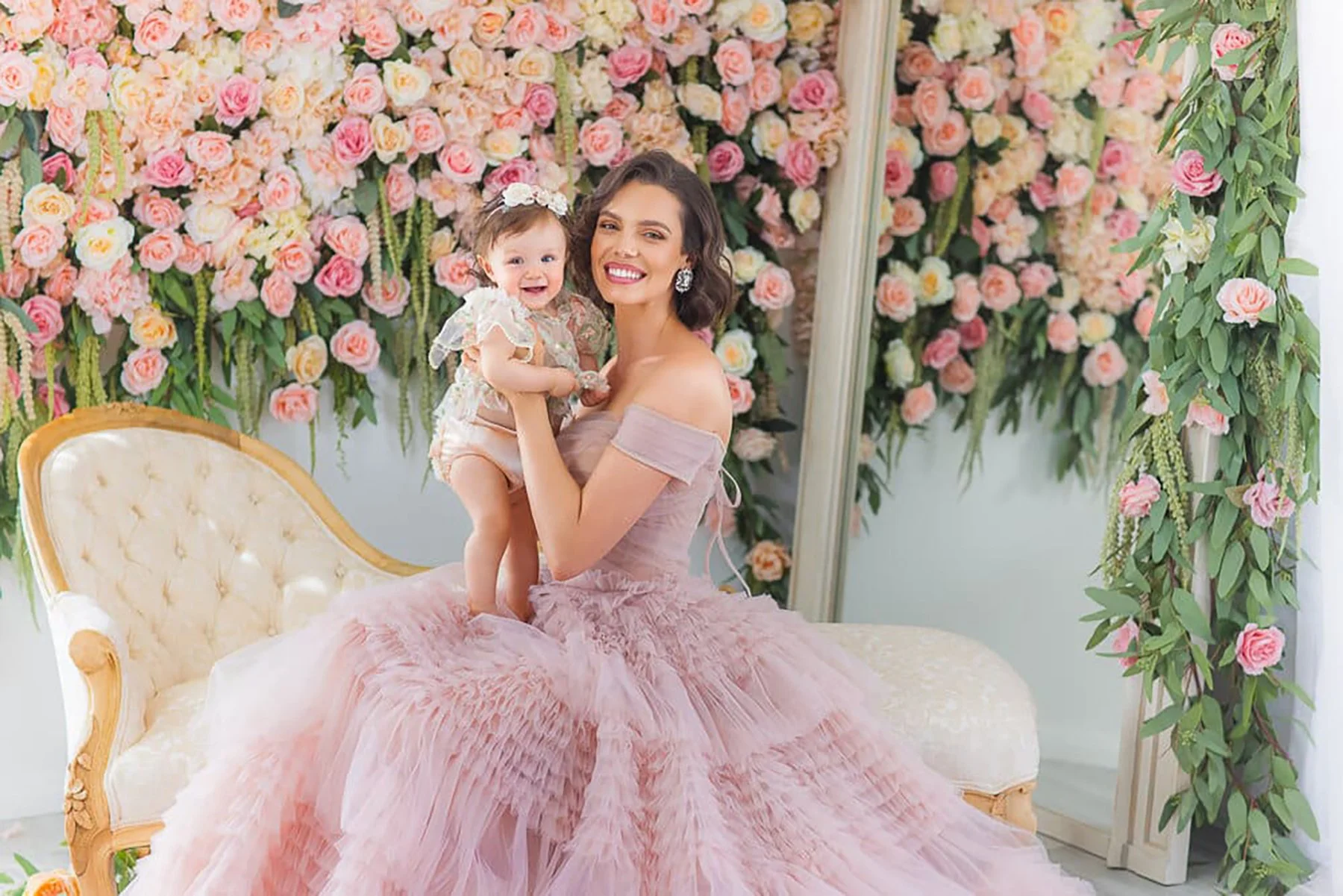
I’m Oxana Alex, a Los Angeles–based fine art, fashion, and maternity photographer, and if you walked into my Beverly Hills studio on a Tuesday morning, you’d probably either see a mom-to-be getting ready for a photo session or a momma humming to a sleepy toddler while I adjust a soft backdrop and warm the room a few degrees.
I began with a camera at home as a new mother myself, determined to hold onto every tiny smile, sigh, and sleepy stretch of my daughter. What started as a personal keepsake became my work, then my calling. Years later, and after more than three thousand photoshoots, I still feel that same spark when a Mommy & Me session shifts into portraits of connection, of trust, of love.
I photograph exclusively in studio because it allows me to shape every element, the light, the temperature, the mood. The result is a fine art aesthetic that’s timeless and true. Years from now, these images will look and feel like you, classic, elegant, and full of emotion.
For parents and photographer looking for a behind the scenes view, see my full Mommy and Me - 4 Years Course here.
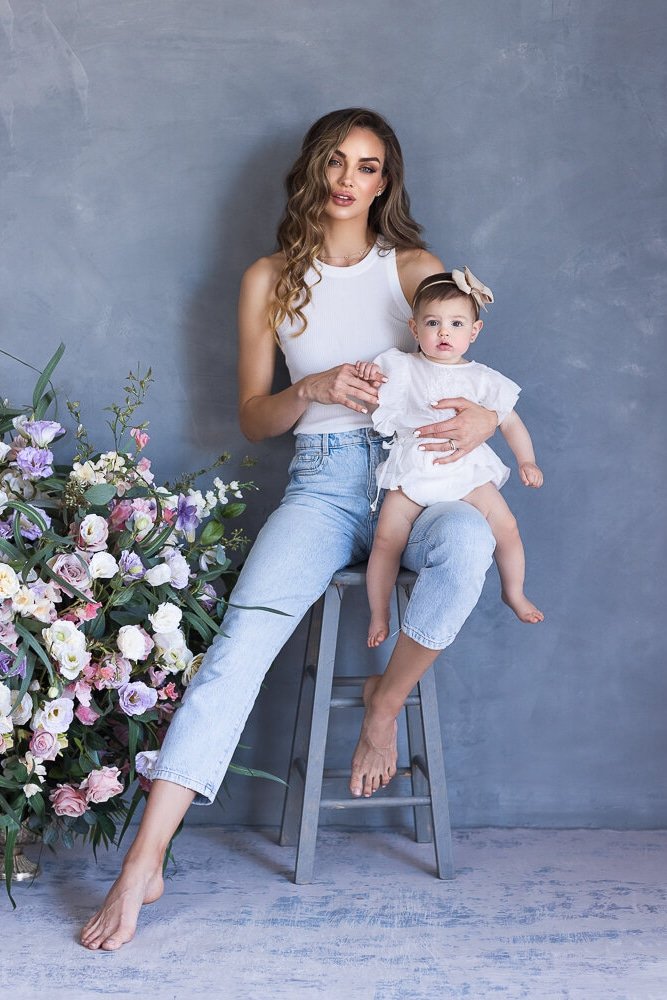
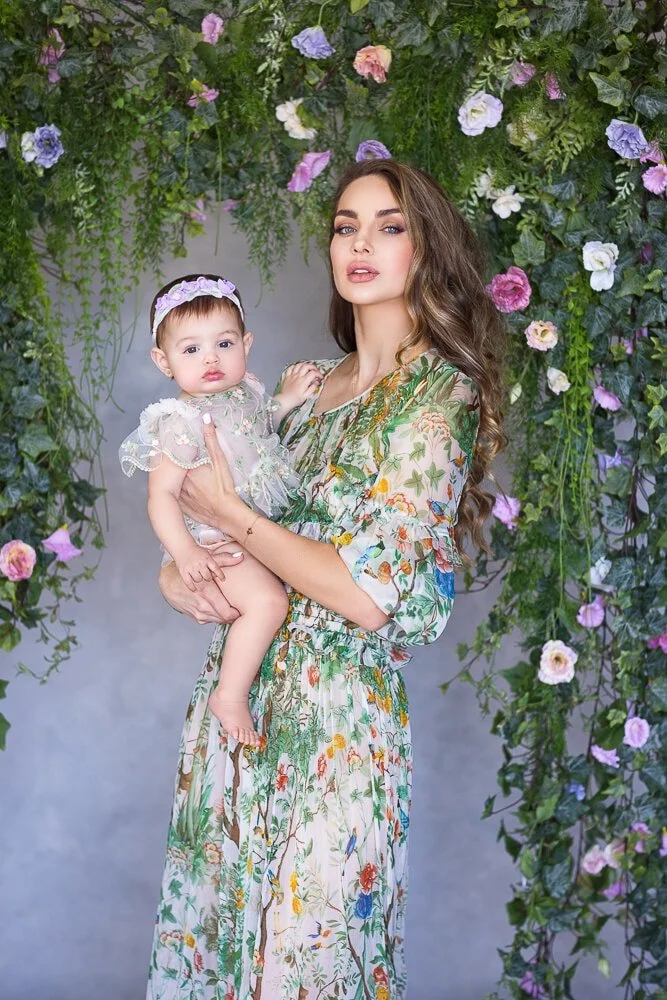
Understanding the Heart of a Mommy and Me Session
A mommy and me session lifts or sinks on the atmosphere in the room. My voice is low and slow. My sentences are short. I narrate just enough to keep mom grounded and the kiddos curious. I also build in silence. Silence lets a mother hear her child, and it lets me anticipate the next little reach or sigh. I keep music at the softest volume. If we’re photographing a newborn, I might play white noise, if it’s young kids, I’ll choose something gentle with a beat so I can encourage a swaying pose without telling them to sway.
The other lever I pull is pace. The first fifteen minutes are for warm-up, simple, close poses, lots of contact. The middle is for play, tiny lifts, cheek-to-cheek, a forehead-to-forehead breath. I close with stillness, eyes closed, hands stacked. Pacing protects attention spans and aligns with a child’s natural rhythm. You’ll feel it. There’s a perfect time to go for that elegant family portrait, and there’s a perfect time to stop. We’ll talk about flow later, but mood management is how we get there.
Planning and Booking: Creating a Stress-Free Experience
The path from inquiry to booking your session should feel like a warm hand to a nervous mom. When someone reaches out, my reply is kind and crystal clear. I outline the session fee, what the session includes, and the timing options, an hour session for most families, or a longer block if we’re adding a maternity or newborn component. I note that there’s no age limit for kiddos, I’ve had one-month-old newborn sessions and mommy and me with college-aged kids. The heart is the same.
Wardrobe and Styling: The Foundation of a Beautiful Session
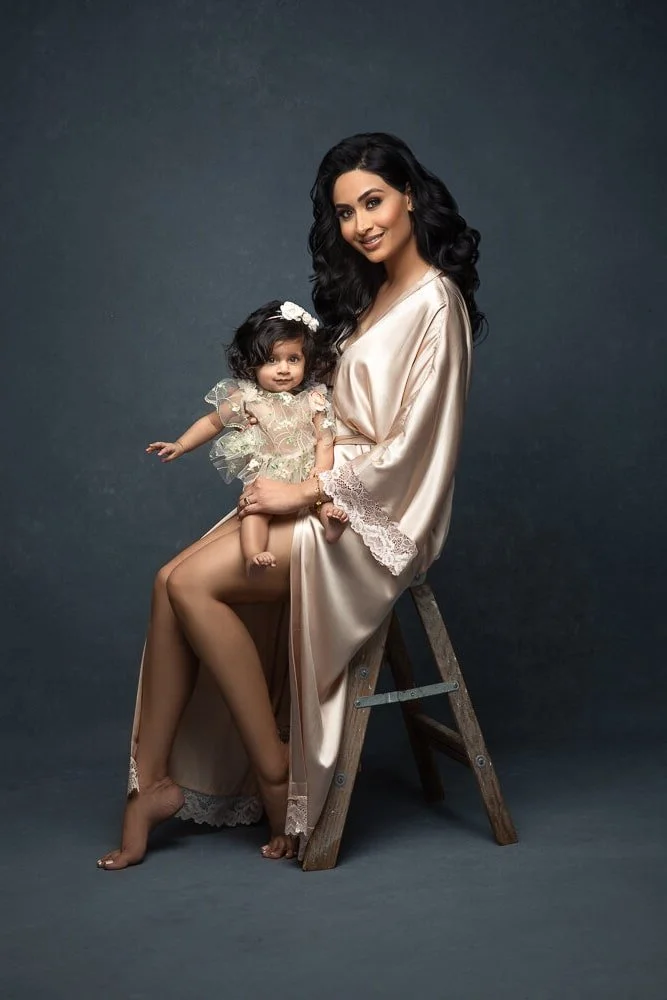
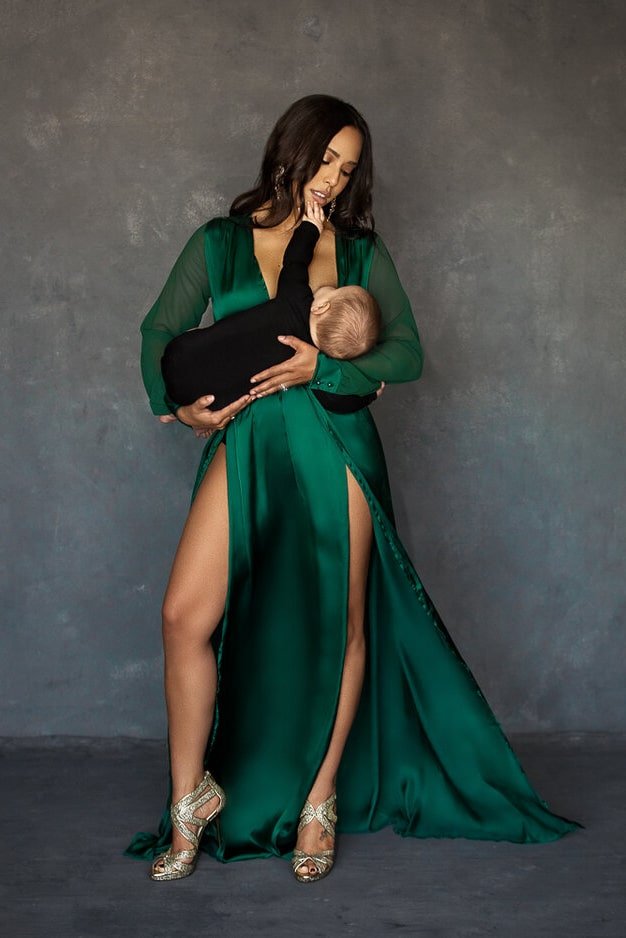
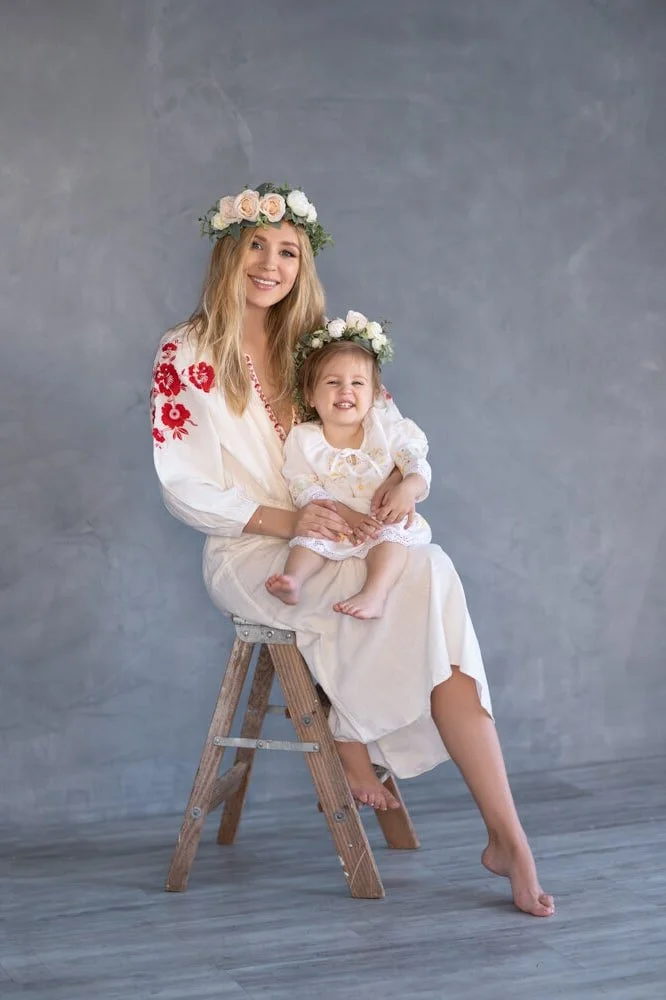
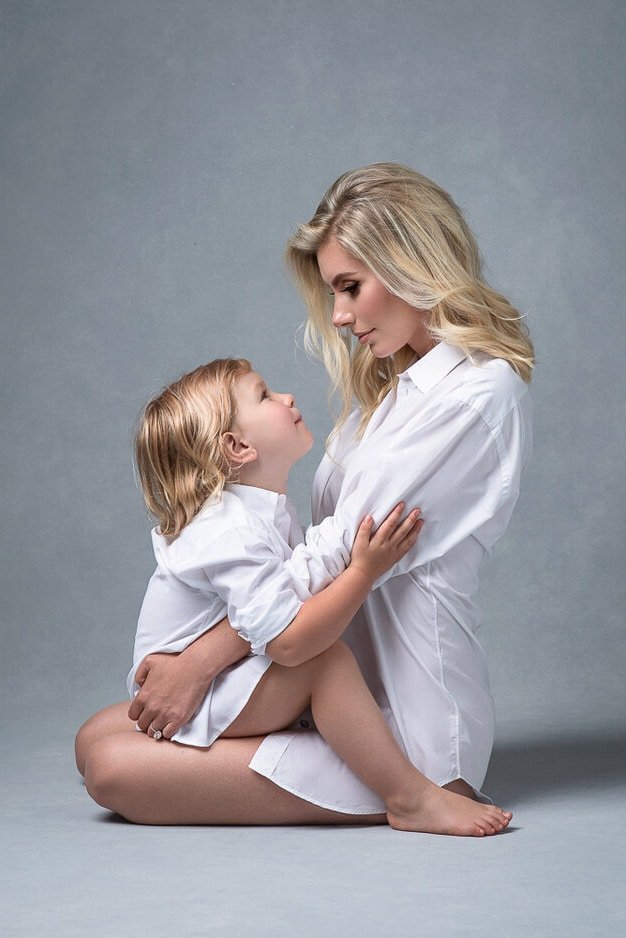
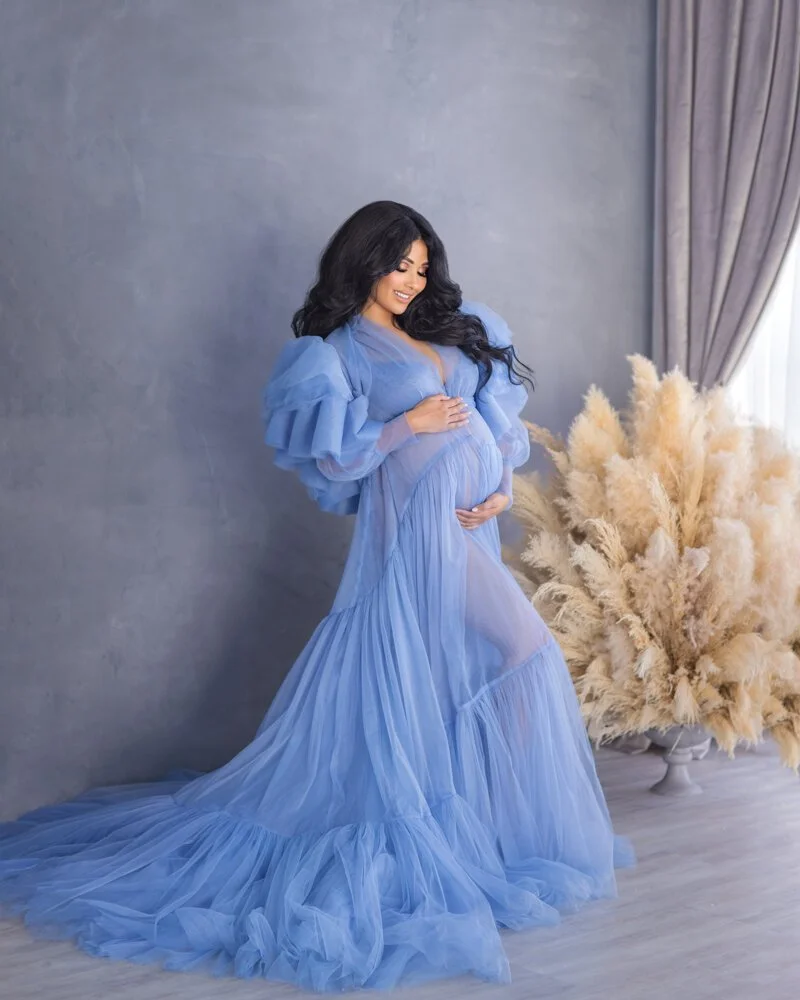
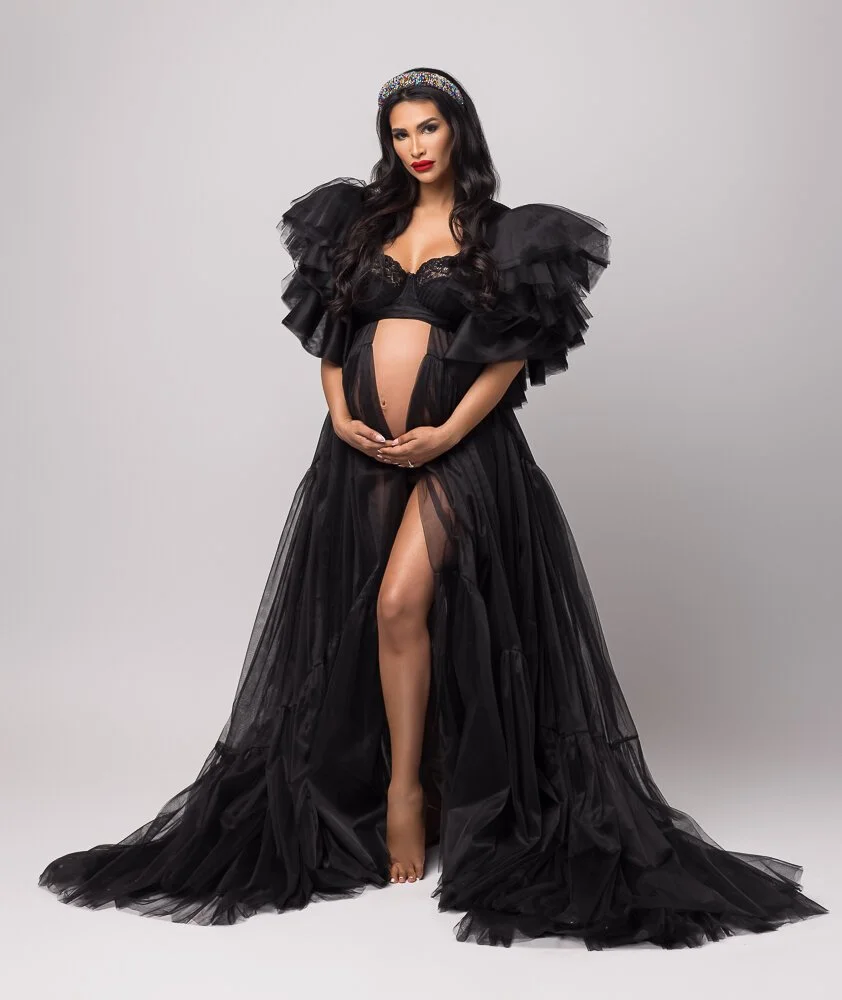
Fine art photographs start with fabric and fit. My client closet is a curated collection of gowns, silks, chiffons, knits with texture that read beautifully under studio light. For maternity mommies, I set aside maternity gowns that skim rather than squeeze, so we highlight the belly line without creating tension across the ribs. For a mommy and me session, I look for necklines that frame snuggles, soft scoop, asymmetric drape, delicate off-the-shoulder that doesn’t fight the arms when a toddler climbs up.
When a mom walks in, we try different gowns so she can see how she feels in them. I talk about movement, if her kiddo is a climber, we pick a gown with structure at the waist so silhouettes stay elegant. If she’s nursing a newborn, we prioritize a neckline that allows easy, dignified breaks. This is posing guidance through wardrobe. Choosing the right gown means I have less to correct with hands and angles later.
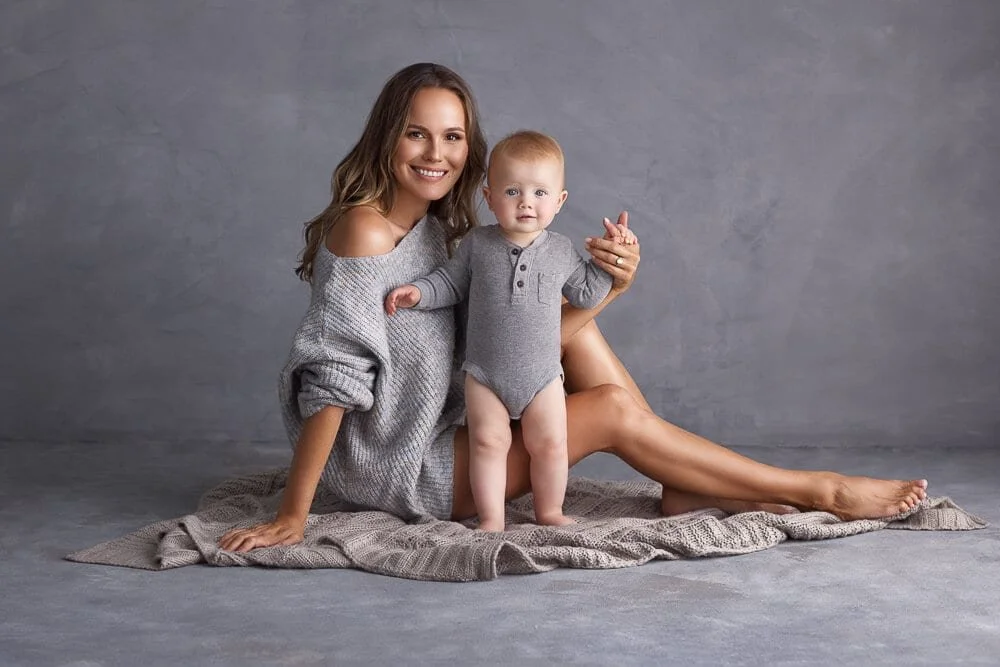
Color is its own language. For my studio backdrops, creamy neutrals, soft grays, or gentle earth tones read as calming, and they allow skin and eyes to be the brightest thing in the frame. If I know we’ll go to black-and-white for part of the gallery, I avoid busy patterns. A minimalist palette gives me multiple consistent editing pathways later.
Styling Little Ones and Newborns
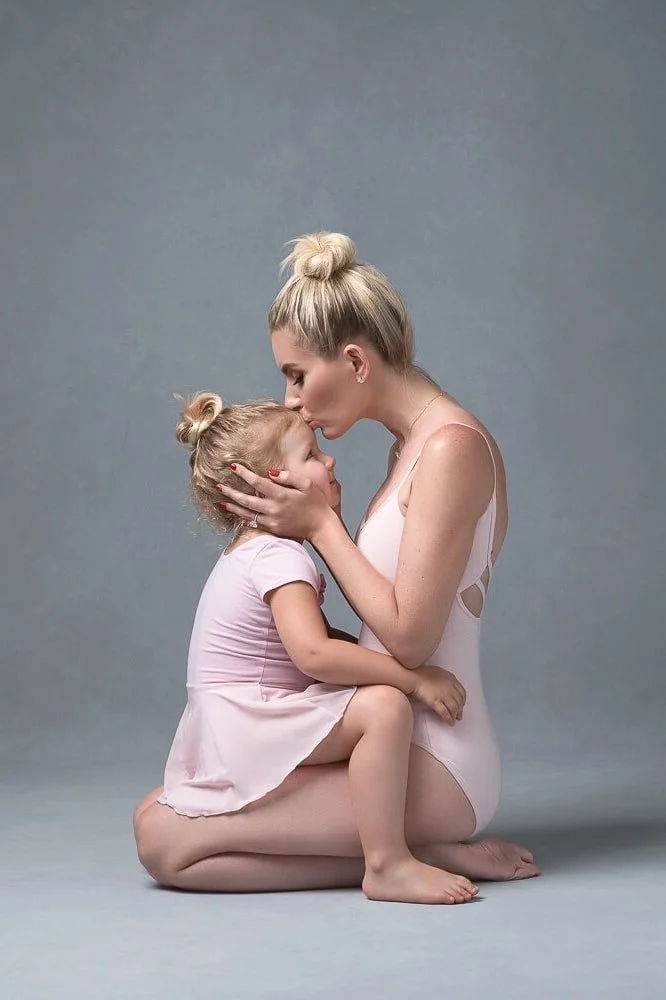
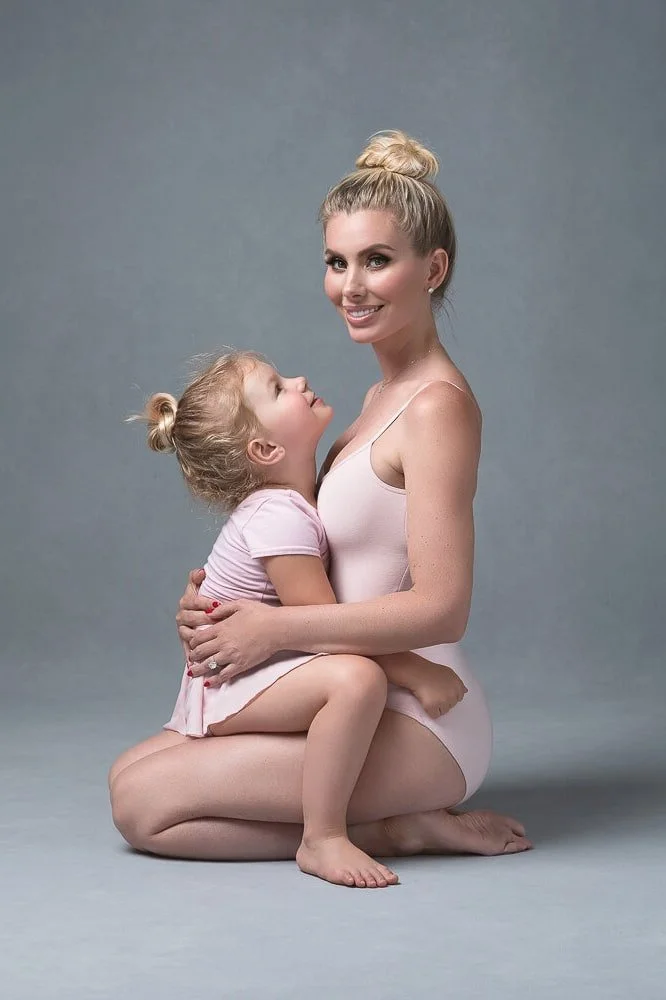
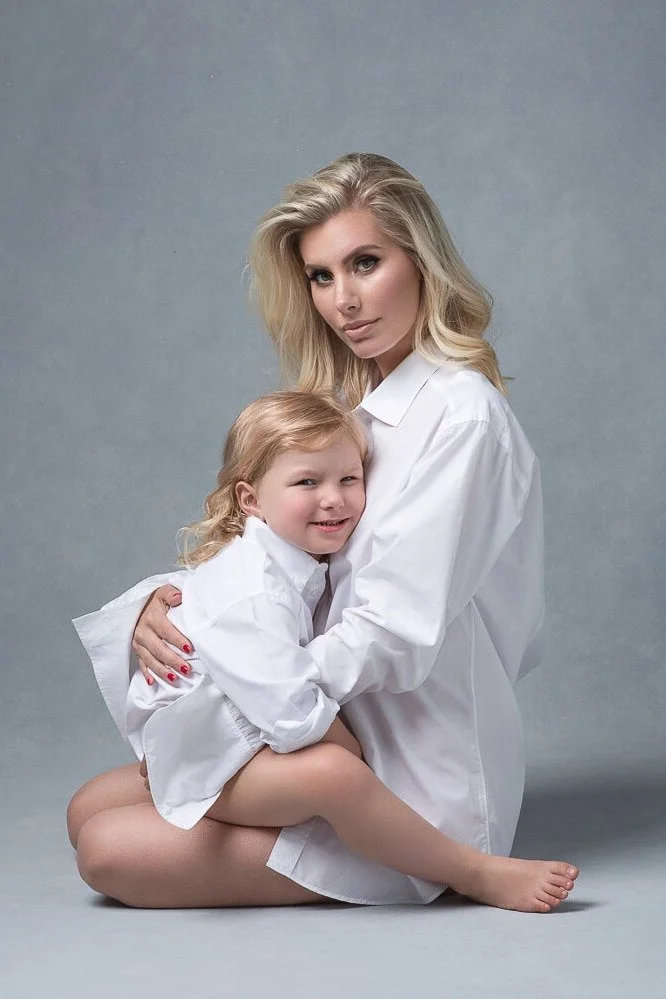
Kids photograph like angels when they feel like themselves. For toddlers and young kids, I choose soft cotton, linen, or fine knit. No scratchy seams. No glitter. No logos. Small textures are your best friend on camera. A collared shirt can look stiff in studio, so I’ll often opt for a simple henley or a knit sweater vest with short sleeves, the arms read as long, the fabric catches the light, and the child moves freely.
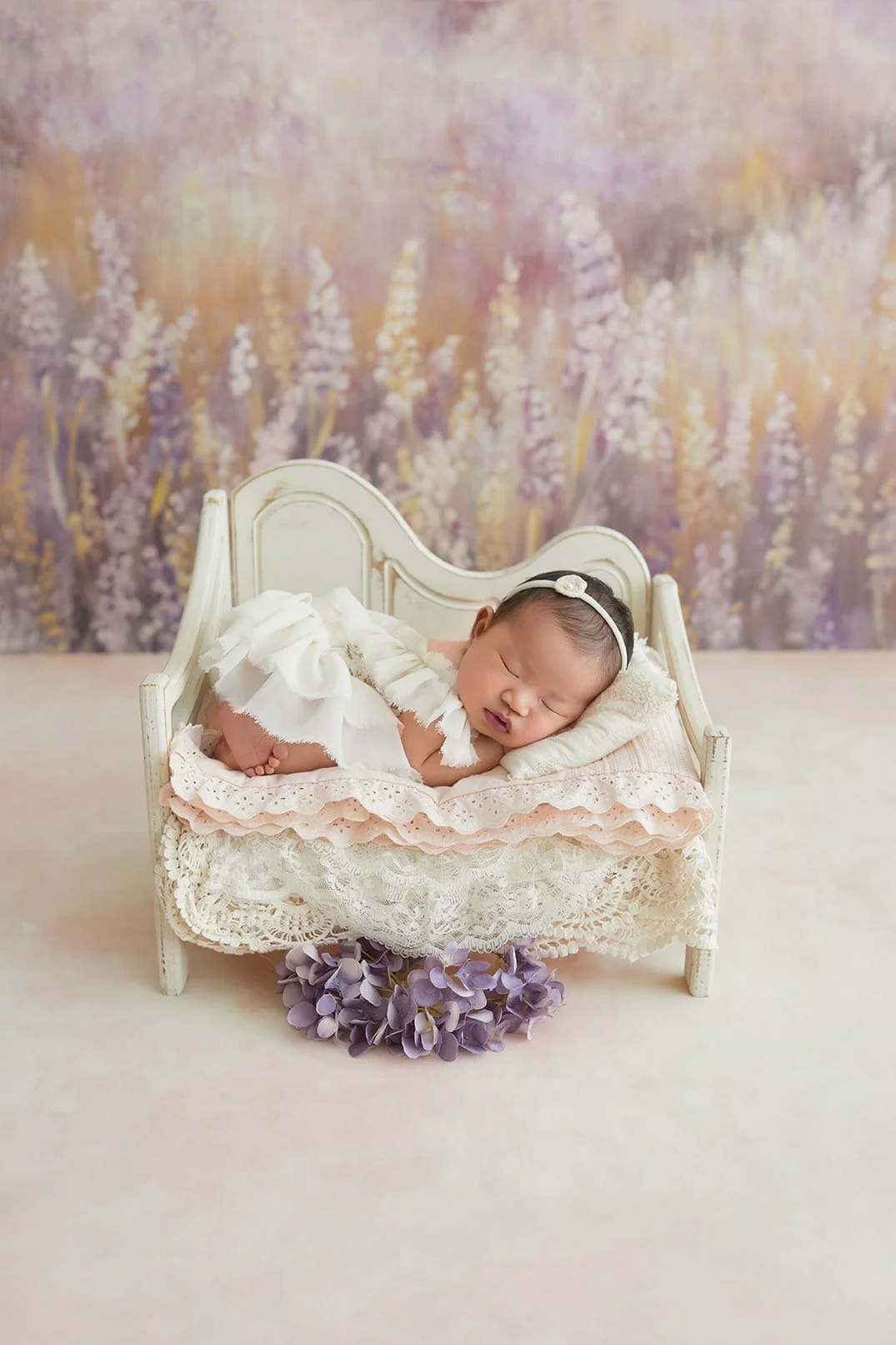
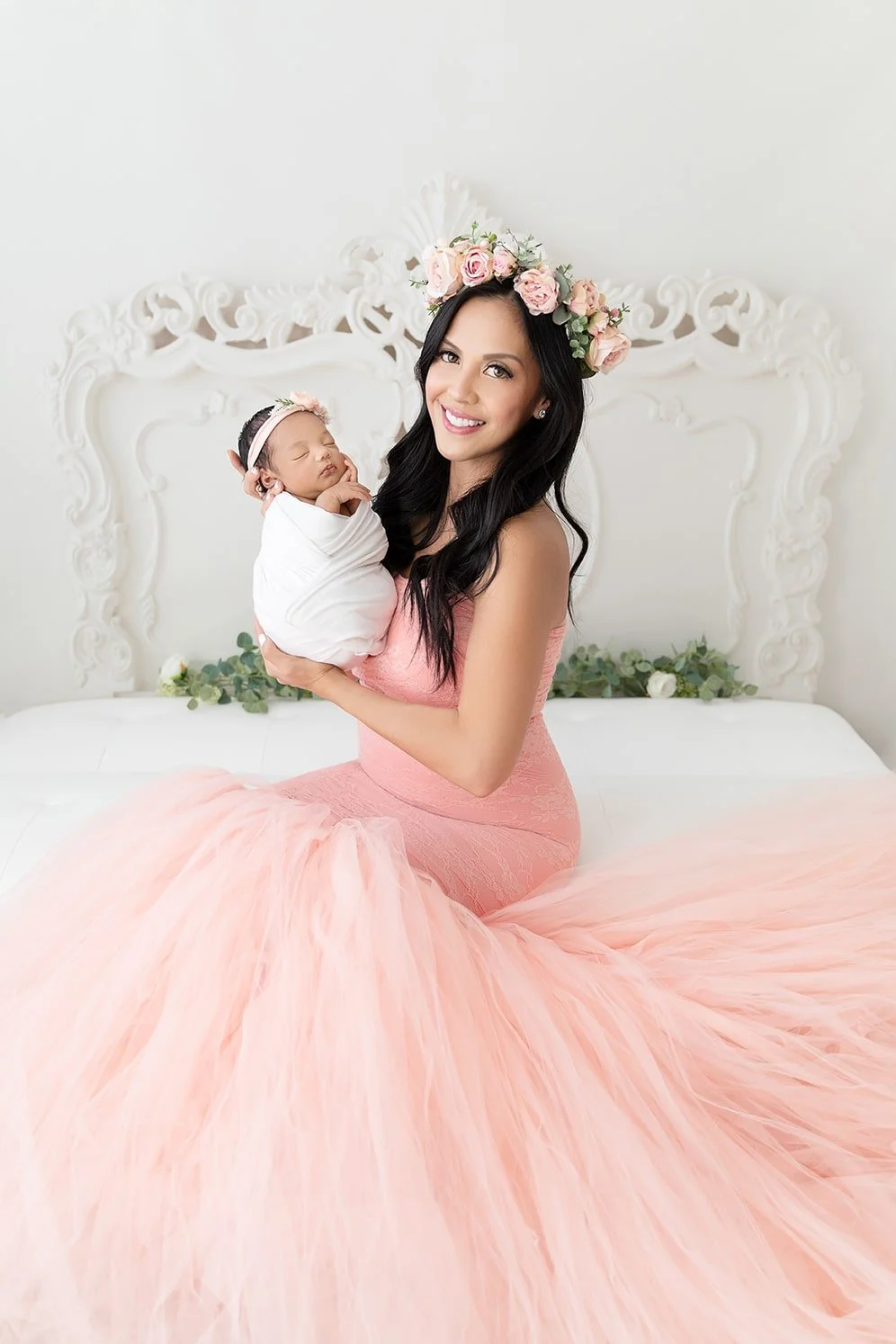
For newborns, I keep it even simpler, a soft diaper cover or a fitted onesie with clean lines. If we’re doing skin-to-skin poses, I pre-warm a plush blanket and keep the studio at 75–78°F so the new baby is relaxed and the mother isn’t rushing. Jewelry is minimal, a small stud earring, a delicate necklace that won’t snag. The goal is a look and feel that is gentle, natural, and unfussy, because the focus is the bond, not the outfit.
One quick tip, if we’re doing a bare feet look for mommy, I keep gentle wipes and a soft brush on hand for the heels. It takes thirty seconds and the difference is visible. The same goes for a toddler’s hair: I want it to look like their hair, not a salon blowout. A quick finger comb and a tiny bit of water often beats any brush.
Studio Setup and Set Design
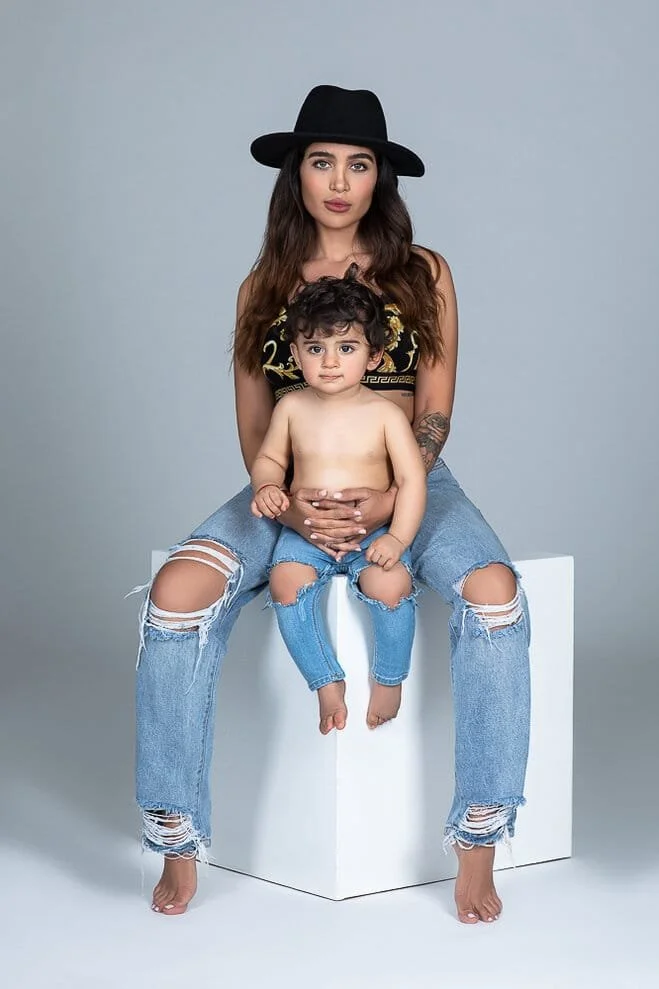
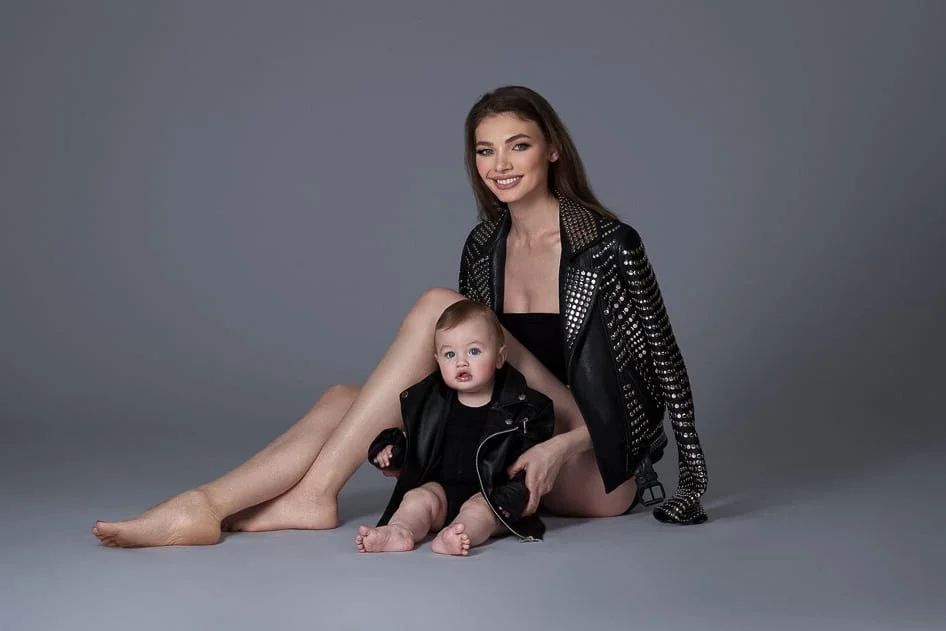
My studio is designed to be a little world where kids can explore but not get lost. I keep furniture low and soft and I move pieces in and out per scene so the frame stays clean. Seamless paper gives me a pure backdrop, hand-painted canvas gives me texture that whispers “fine art” without shouting for attention. I set the scene like I’m setting a dining table, minimal, intentional and beautiful.
Because I shoot only in studio, I create depth instead of relying on location. If I need the frame to feel airier, I pull the subject four to six feet off the backdrop so shadows roll softly and hair separates from the background. If I want intimacy, I move them back and feather the light so the edges go painterly. I always leave negative space on the side the subject is facing into, it gives the gaze somewhere to travel, and it feels calm.
Intentional Use of Props
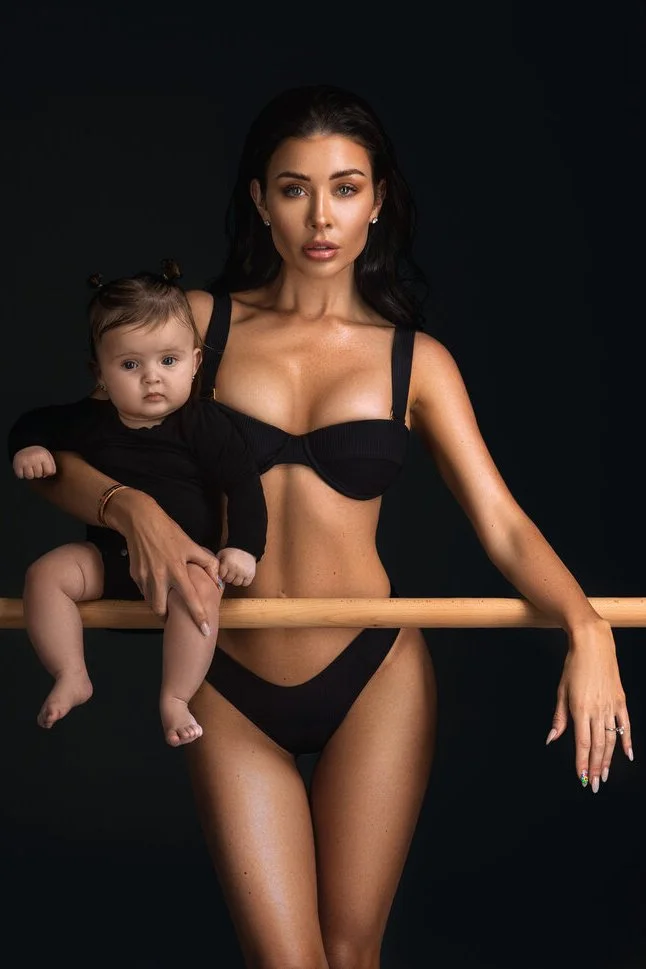
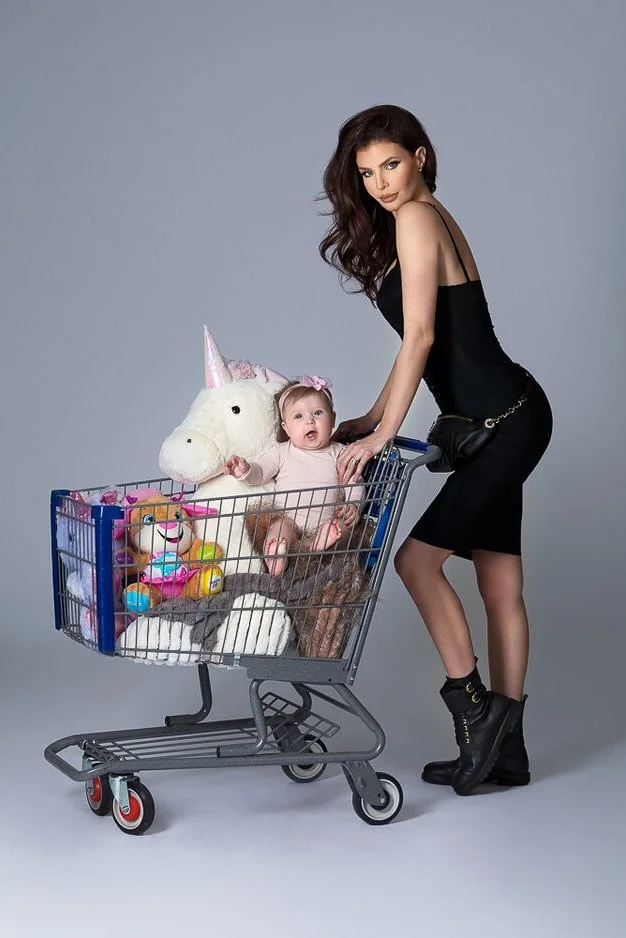
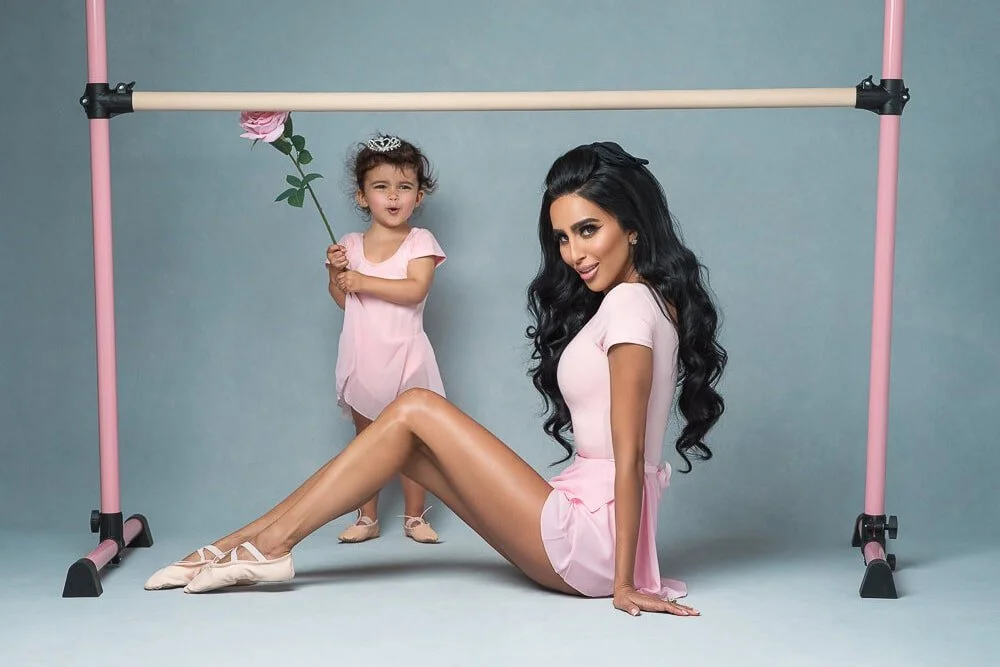
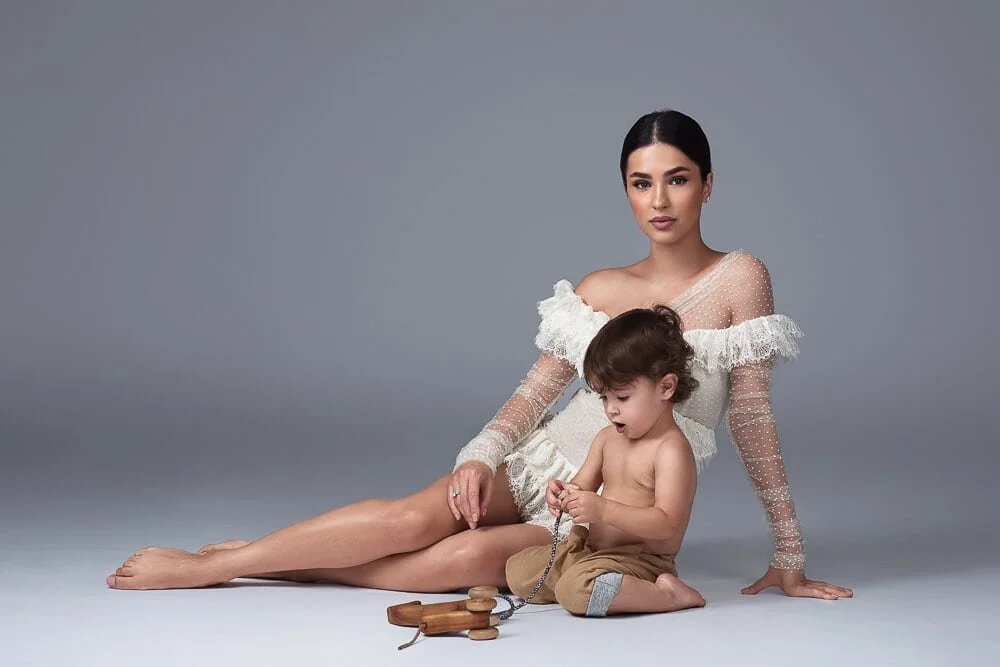
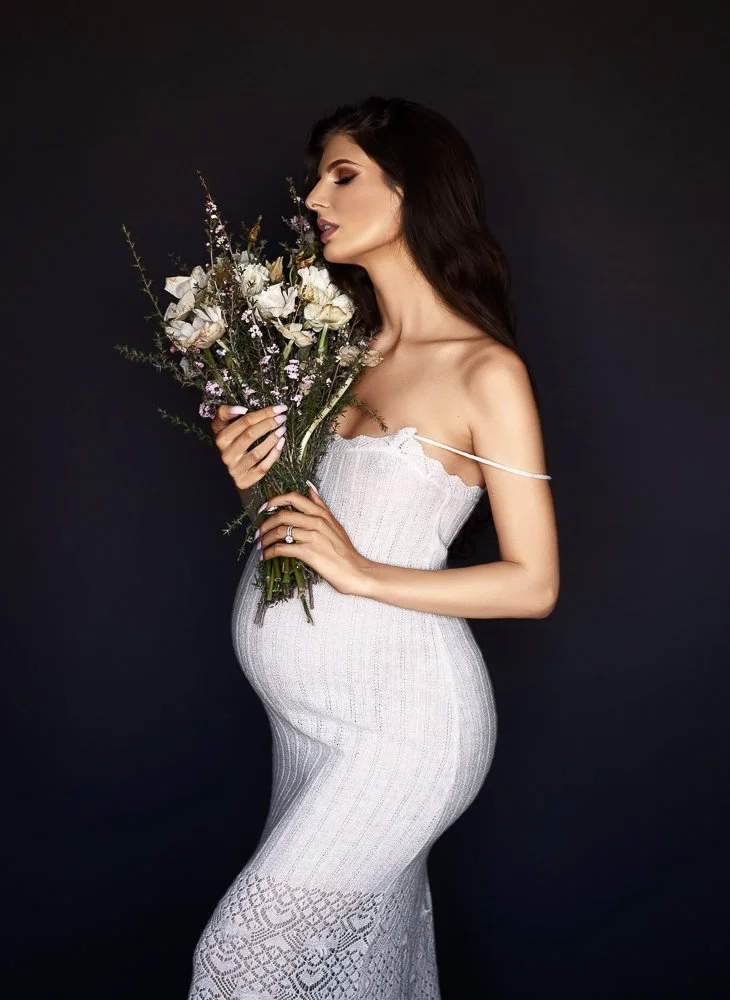
Props can be magic or mayhem. My rule is simple, if a prop steals focus from the relationship, it’s out. If it deepens the story, it stays. A knit throw to hold a newborn? Perfect. A single bloom that mirrors a child’s gesture? Lovely. A wooden rattle that a toddler clutches when shy? Keep it. But big baskets, complicated signage, or anything with words becomes a distraction. I keep a small tray of tactile items, a soft ribbon, a feather-light scarf, a tiny book, these are perfect because toddlers like to do something. If their hands have a gentle task, their shoulders drop and their faces relax. That’s your picture.
For safety, I use weighted stools and sandbags under drapery stands so nothing tips. If a pose requires a hand near the newborn for safety, I shoot a plate (an empty frame) first and then a second frame with the hand in place so I can composite later if needed. Safety wins every time. The photo will still be stunning.
Lighting for Mommy and Me Sessions
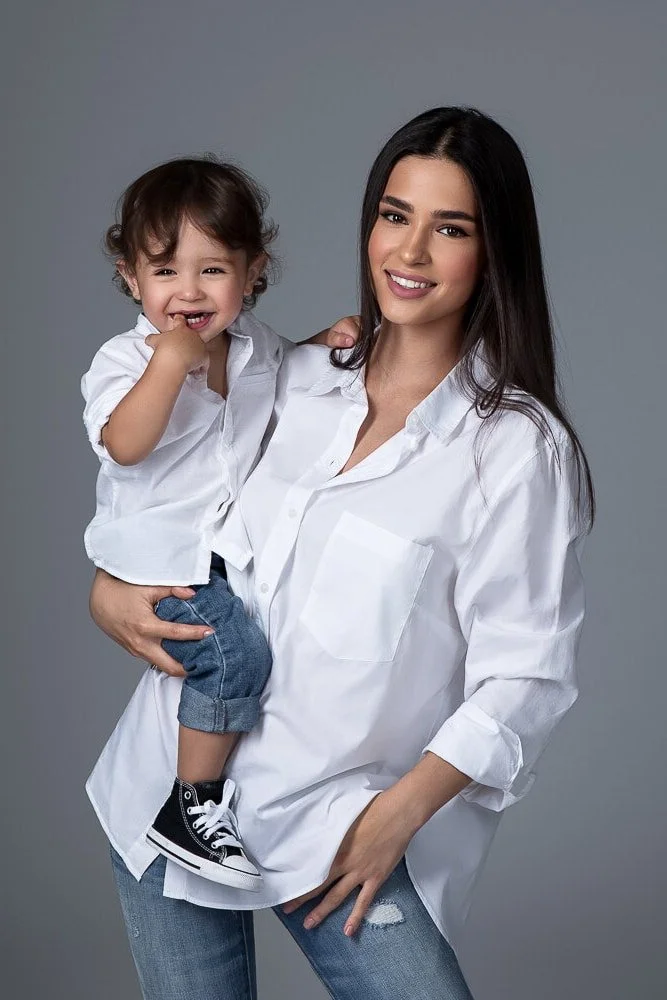
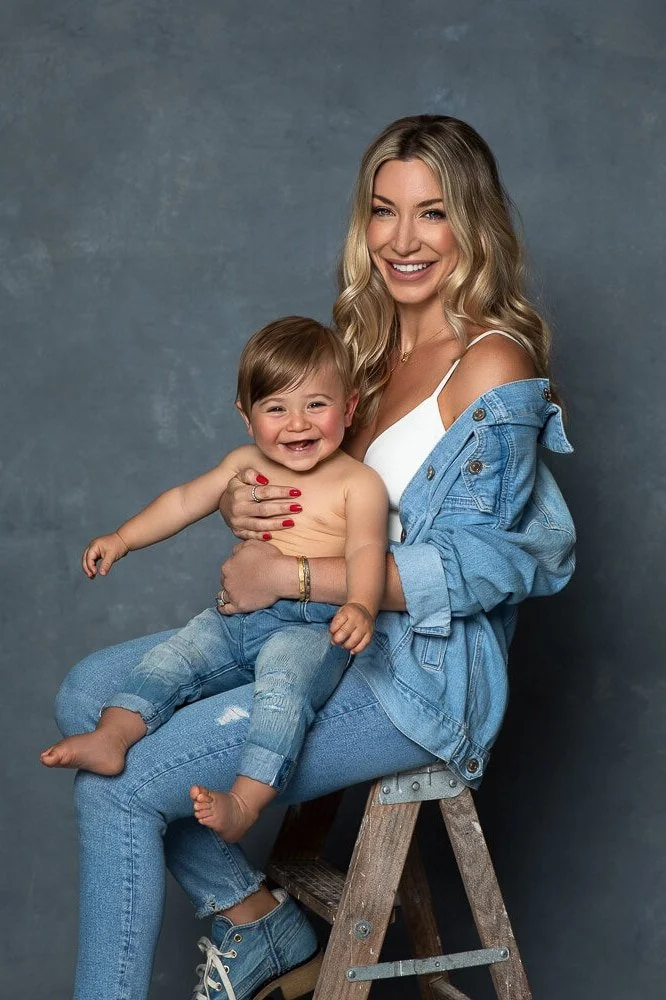
Light is how I carve emotion. In studio, I often mix soft natural light with controlled modifiers to shape faces and protect eyes that might be a little tired. If I use window light, I diffuse it with a sheer to eliminate hot spots, then I place a white reflector low and forward to lift under-eye shadows. For a mommy who is a week postpartum, that tiny fill can be the difference between “I look exhausted” and “I look like myself.”
For my fine art look, I place the main light at a gentle angle, think late afternoon sun. I feather it slightly so the brightest part of the beam doesn’t smack the cheekbone; it glances by and wraps. For toddlers, I keep the catchlights high and clean, large, luminous eyes feel alive. If the child is especially active, I widen my working aperture to f/4 or f/5.6 so I have a little more depth without losing that creamy falloff.
If you want to master every variant of this, where the reflector goes, when to kill the fill, how to balance mixed light so it doesn’t look muddy, see my Maternity Photography Lighting Course Bundle here.
When to Use Dramatic Light (and When Not To)
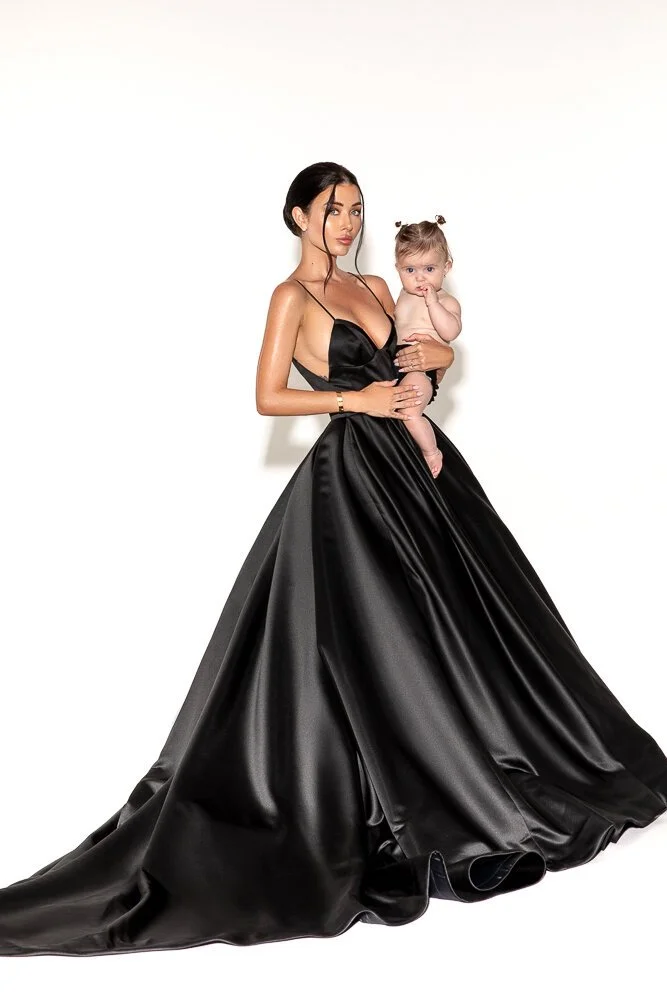
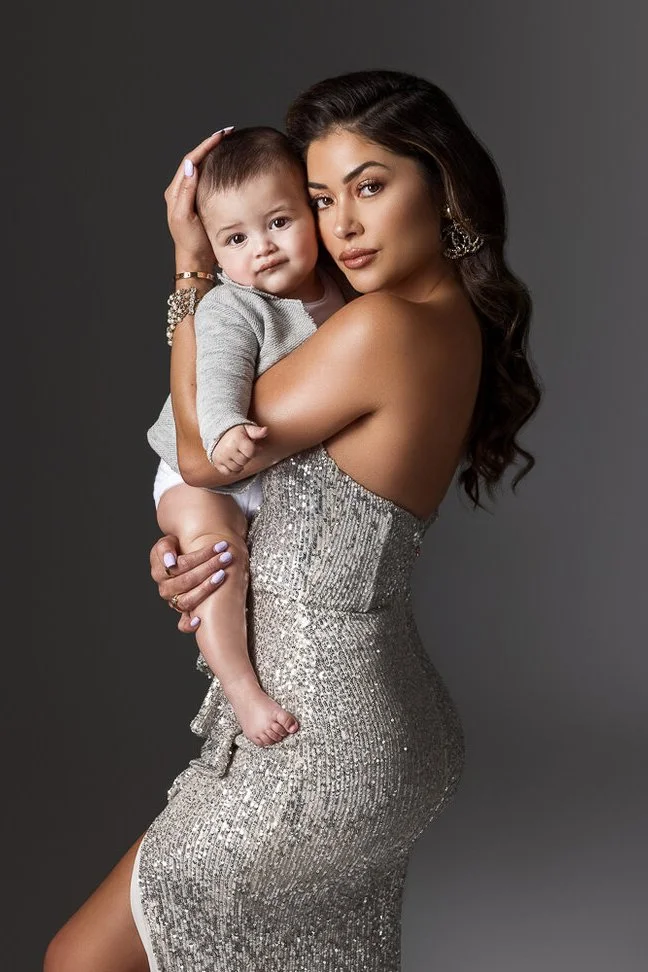
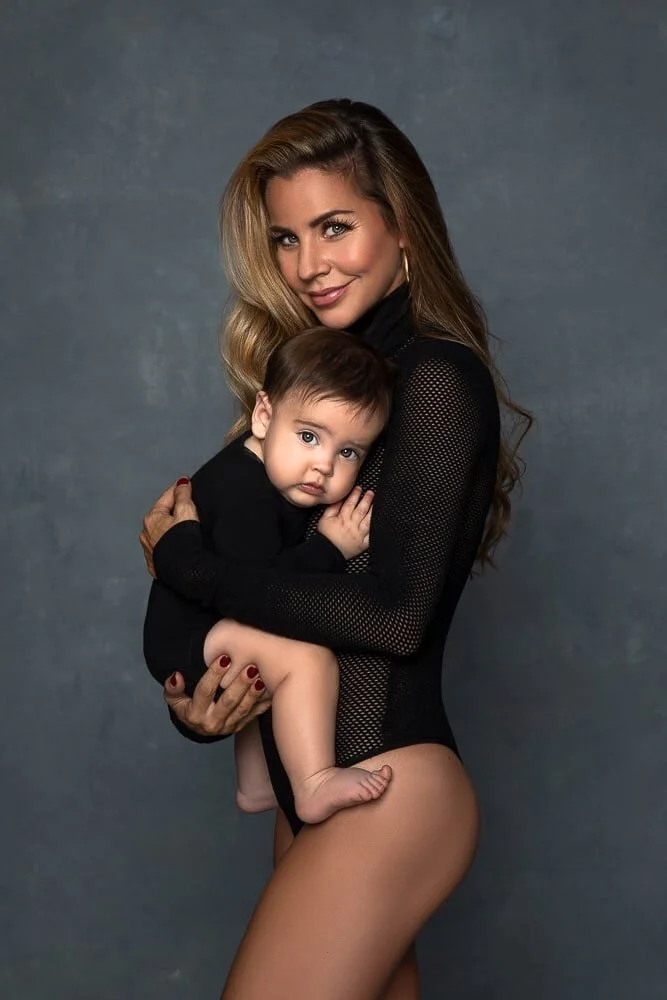
Dramatic light is spice. Used thoughtfully, it adds unforgettable dimension. Used everywhere, it overpowers tenderness. If a mother has asked for a more editorial feel, I’ll let the backdrop fall darker and keep the light close so it wraps and falls quickly. For a silhouette, I backlight the pair and expose for the highlight on mom’s profile as she kisses the toddler’s temple. The key is to hold onto warmth.
Children need to feel safe inside the light. If the shadows feel moody but the child looks uncertain, I’ll dial back to a kinder, more even wrap and try again. The mood should serve the bond, not compete with it.
Posing Mothers and Children with Ease
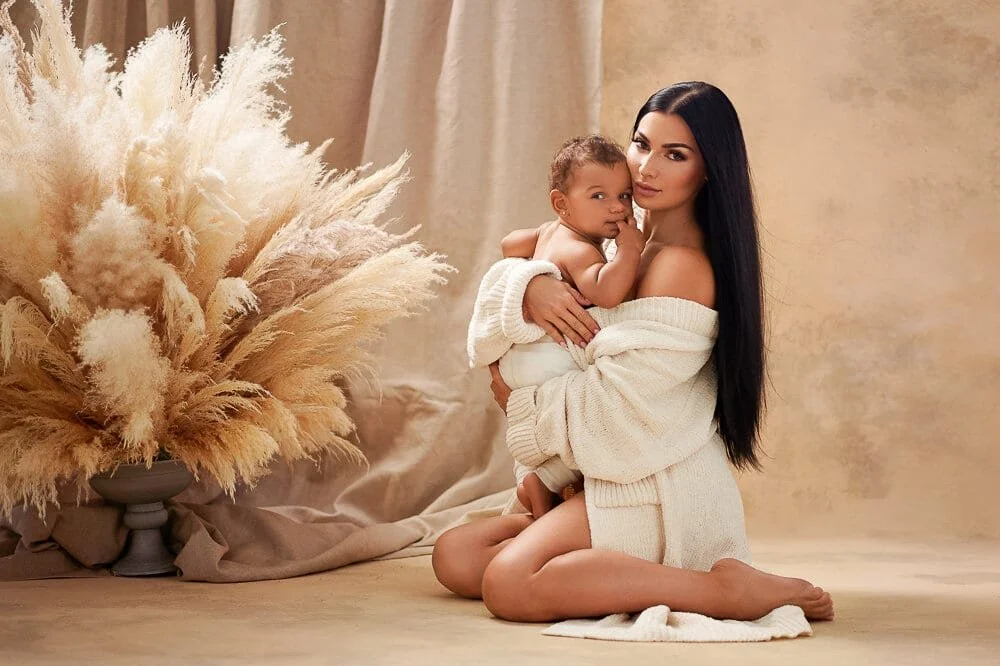
Posing for mommy and me is less freeze and more flow. I pose mom first, weight on the back foot, front foot lightly forward, shoulders long, chin slightly out and down to keep the jawline clean. Then I invite the child into the pose.
With a newborn, we begin with skin-to-skin holds where the baby’s cheek rests on the curve below the mother’s collarbone. I like the hands stacked, one under baby’s bottom, one across the back, to read as secure and elegant. If the newborn fusses, we pivot to a sway. I keep one light consistent so exposure doesn’t change as she moves. If we need to pause for feeding, we do, I plan plenty of time to plan into every schedule.
Toddlers need tasks and tiny victories. For a two-year-old who won’t sit still, I rely on motion poses that end in stillness, two steps forward, nuzzle, hold. I set my shutter speed high enough to capture the transition moments.
Bigger kiddos bring fresh energy. I’ll invite them to match mom's pose for one frame, then relax into a hug for the next. With teens, I treat them like co-authors and encourage interaction.
If you want deep dives into age-specific flows, see the Mommy & Me – 4 Years Course (my playbook for 0–4-year-olds) and our Family Maternity Photography Course here.
Directing the Flow of the Session
Every successful photography session has a skeleton. Mine looks like this. We begin close, seated or standing, cheek to temple, eyes either closed or down. Then, we build motion by standing or doing slow turns like a step, a sway, or a tiny lift. I capture the laughter and those in-between glances that feel like home. We hit the climax with the hero portrait, a confident, clean family portrait where everyone looks connected and calm.
Knowing When to Take a Break
Young children have a limited cooperation window. When attention starts to waver, eyes drifting, shoulders tightening, hands becoming restless, that’s the signal to transition toward taking a break or closing the session. Shift into calm, connected poses, a gentle forehead touch, a cuddle seated together, or a quiet moment with eyes closed. Then wrap.
Ending at the right moment is just as important as perfect lighting. Leaving on a high note allows families to walk out feeling confident and cared for. That sense of ease stays with them, shows in how they remember the session, and influences how they speak about it to others. The goal is for the experience to feel simple, supported, and emotionally understood.
Editing for Emotional Impact
Editing should feel like exfoliation, not paint. I begin with exposure and white balance so skin looks alive. I warm by half a step if the room reads cool and lift the midtones just enough to brighten the cheeks. I keep contrast true but gentle, fine art does not mean flat, but it does mean measured. I guard the hands, over-bright hands pull attention from faces.
Black-and-white is my secret for photographs that need quiet. If the child’s sweater color dominates or if there’s a complex palette that distracts from expression, I convert. In black-and-white, the curve of the jaw, the slope of the nose, the highlight in the eye, those become the poem. I’m careful with grain, a hint feels cinematic, too much feels gimmicky.
Creating a Cohesive Gallery
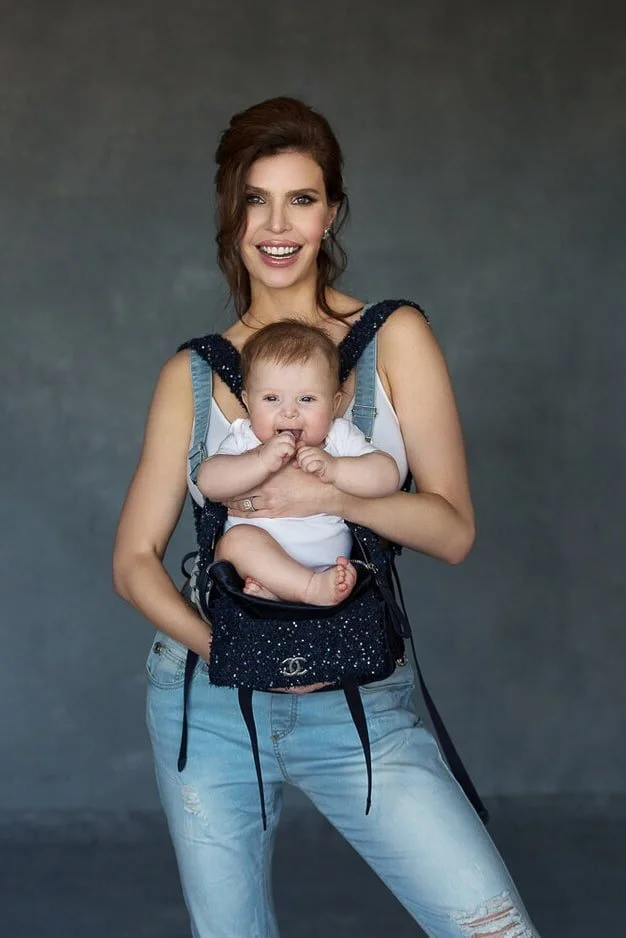
A gallery is like a story. I sequence from close to wide, from calm to playful to calm again. I avoid near-duplicates, if two frames are almost the same, I choose the one with better hand shape or cleaner jawline. I include a few frames where the child is delightfully imperfect, tongue out, cheek squished, because parents always love those. And I always deliver a refined yet generous number of digital images so the family feels taken care of without drowning in choices. If your process includes a sneak peek, send it soon after the session while the glow is still in the air. One or two luminous frames keep excitement high before the ordering appointment.
Mother’s Day, Christmas Minis, and Beyond
If you’re offering Mother’s Day promos or Christmas minis, design them so they are genuinely beautiful, not just efficient. A mommy and me mini session should still feel like a beautiful session. Use one great set, a gown ready at the rack, and a lighting setup you can repeat consistently.
Communicate the age limit (if any), and always share that you’re happy to discuss newborns separately since they need different pacing and safety.
Maternity + Newborn Photoshoot Combinations
When families plan both maternity and newborn sessions, the continuity creates a beautiful visual story. Photographing both in the same studio setup allows the gallery to flow from pregnancy to early days seamlessly. Textures and colors can echo, a maternity gown that relates softly to the newborn swaddle, tones that feel like the same breath.
The ideal time for maternity portraits is often around 28–34 weeks, depending on comfort, while newborn sessions are easiest in the first two weeks when babies tend to be sleepier and more flexible.
For photographers wanting a structured approach to capturing this two-part story, the DIY Maternity & Newborn Photography Course Bundle and the DIY Maternity Photoshoot Course on ROXAMINA offer step-by-step frameworks that families can use at home or that professionals can adapt to studio or on-location work.
Hair and Makeup That Survive Snuggles
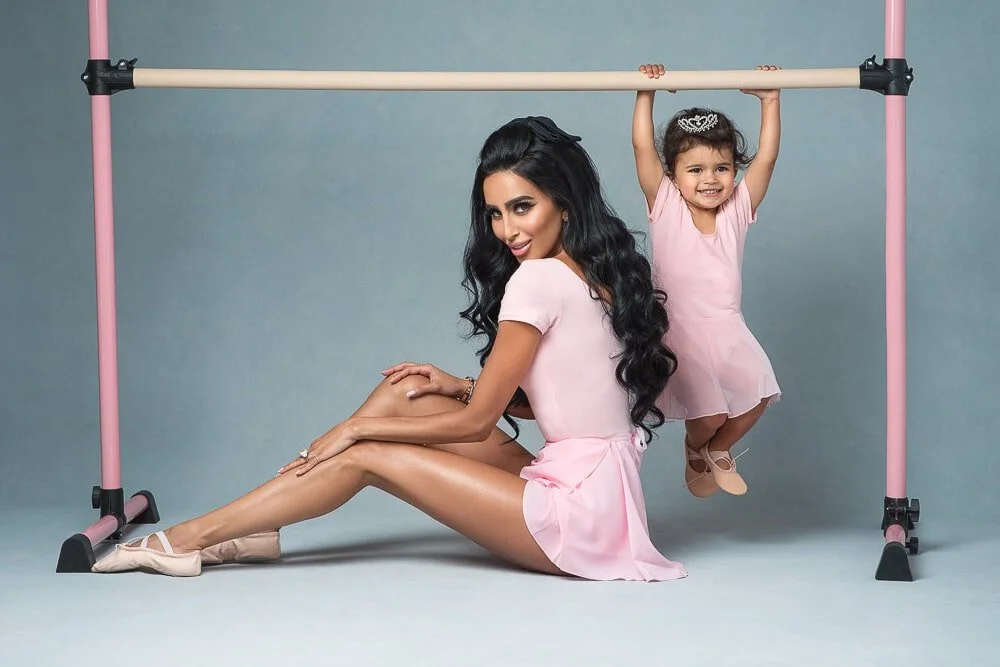
Professional hair and makeup are wonderful, but they need to be cuddle-proof. I brief artists to avoid sticky gloss and heavy powder that transfers to little cheeks. I keep cotton buds, micellar water, and translucent powder ready for quick fixes.
And for flyaways, add a little hairspray on a spoolie brush. If a blowout drops, I pivot to soft, tucked-behind-the-ear styling which reads romantic on camera and stays put during nuzzles.
Your Role in Mommy and Me Photoshoots
A mommy and me session is a collaboration between a mother, a child, and the person who witnesses them with a camera. If you hold the space with kindness, if you light with respect, if you pose with empathy and a gentle sense of humor, you will create images that families cherish for a lifetime. I’ve photographed celebrities, influencers, and neighbors in equal measure, and I promise you this, the most precious moments rarely announce themselves. They tiptoe in when you make room for them.
Conclusion
If you want to go deeper on the exact lighting maps I use, the way I shape movement into still frames, and how I direct couples when a maternity session becomes a family portrait, you’ll find full, step-by-step training inside ROXAMINA Photography Academy, start with the Maternity Photography Lighting Course Bundle, the Natural & Mixed Light Course, My Signature Maternity Style Lighting Course, Posing Couples in Maternity Shoots Course, Mommy & Me – 4 Years Course, and the Family Maternity Photography Course.
Whether you’re building your first mommy and me mini session or crafting a museum-worthy fine art series, remember, this work is about honoring the miracle of motherhood in a way that feels true. Your studio can be a sanctuary. Your camera can be a gentle listener. And your images can be the heirlooms that help a family remember exactly how powerful and radiant this chapter felt.
About Oxana Alex
Oxana Alex is a Los Angeles–based fine art and maternity photographer known for her signature couture studio style. Over the past decade, she has photographed more than 3,000 maternity sessions, creating timeless portraits that celebrate strength, beauty, and the magic of motherhood. Her work has been featured in Elle, Harper’s Bazaar, and L’Officiel.
Through Roxamina Photography Academy, Oxana teaches parents and photographers around the world how to master lighting, posing, and creative direction in maternity photography.
Source: Oxana Alex Photography