
Capture every precious newborn moment! Learn everything you need to know for a professional baby photo session.
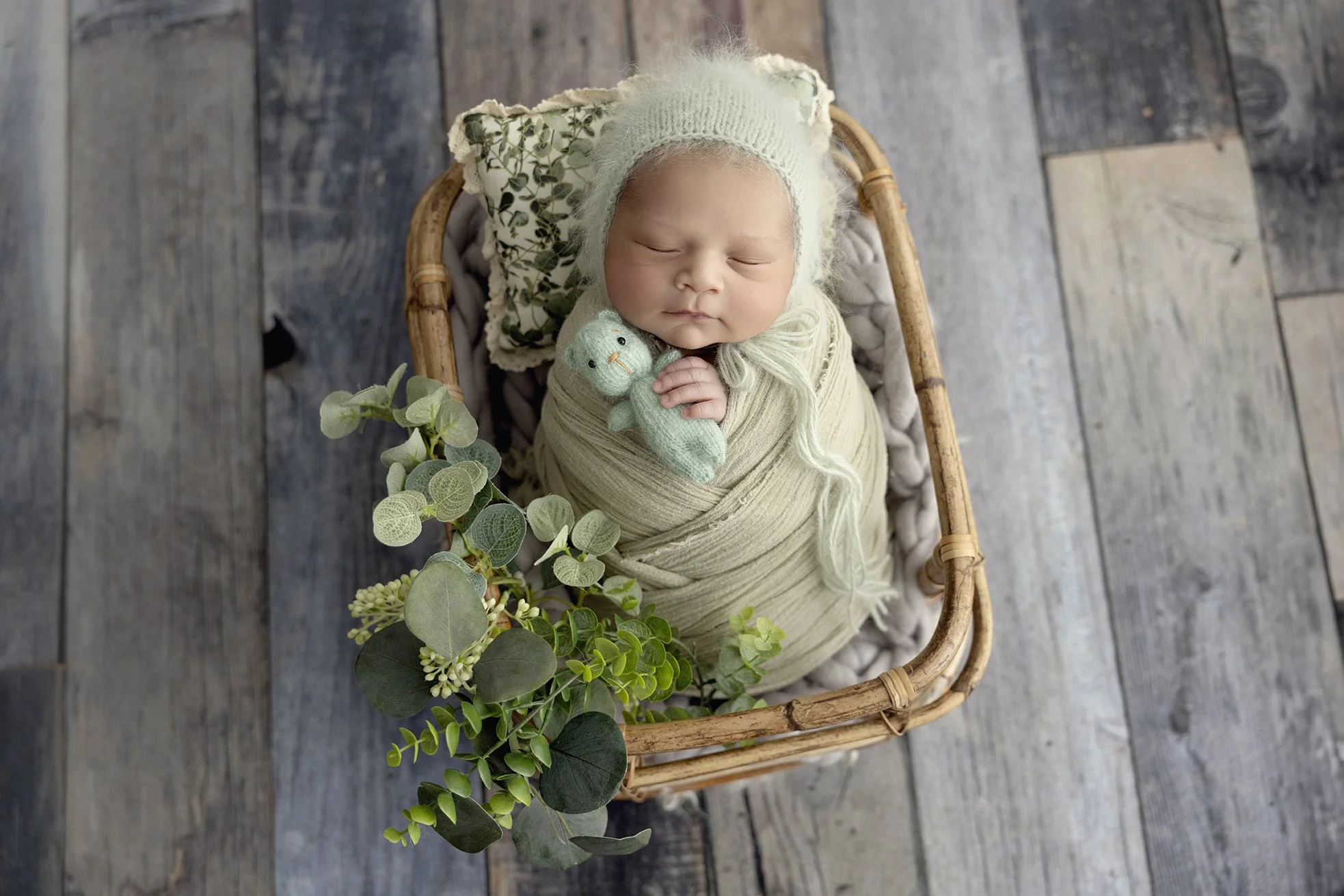
I’ve photographed over 800 newborn babies in my studio in Beverly Hills, and every time I hold a baby in my hands, I remember the feeling of my own early days of motherhood, the overwhelming love, the exhaustion, the awe, and the wish that time could slow down just for a moment.
Achieving those dreamy newborn photographs is not simply a matter of clicking a shutter. It is ninety percent environment, safety, patience, and presence, and only ten percent camera work. Beautiful newborn photos happen when the baby is warm, comfortable, secure, and deeply relaxed. Newborn photography, when done with intention, is not just about creating beautiful images. It’s about preserving the feeling of your baby’s very first chapter.
Whether you are a parent hoping to take meaningful newborn photos at home, or a photographer beginning your journey into newborn photography, this guide is your deep dive into the real work behind the scenes.
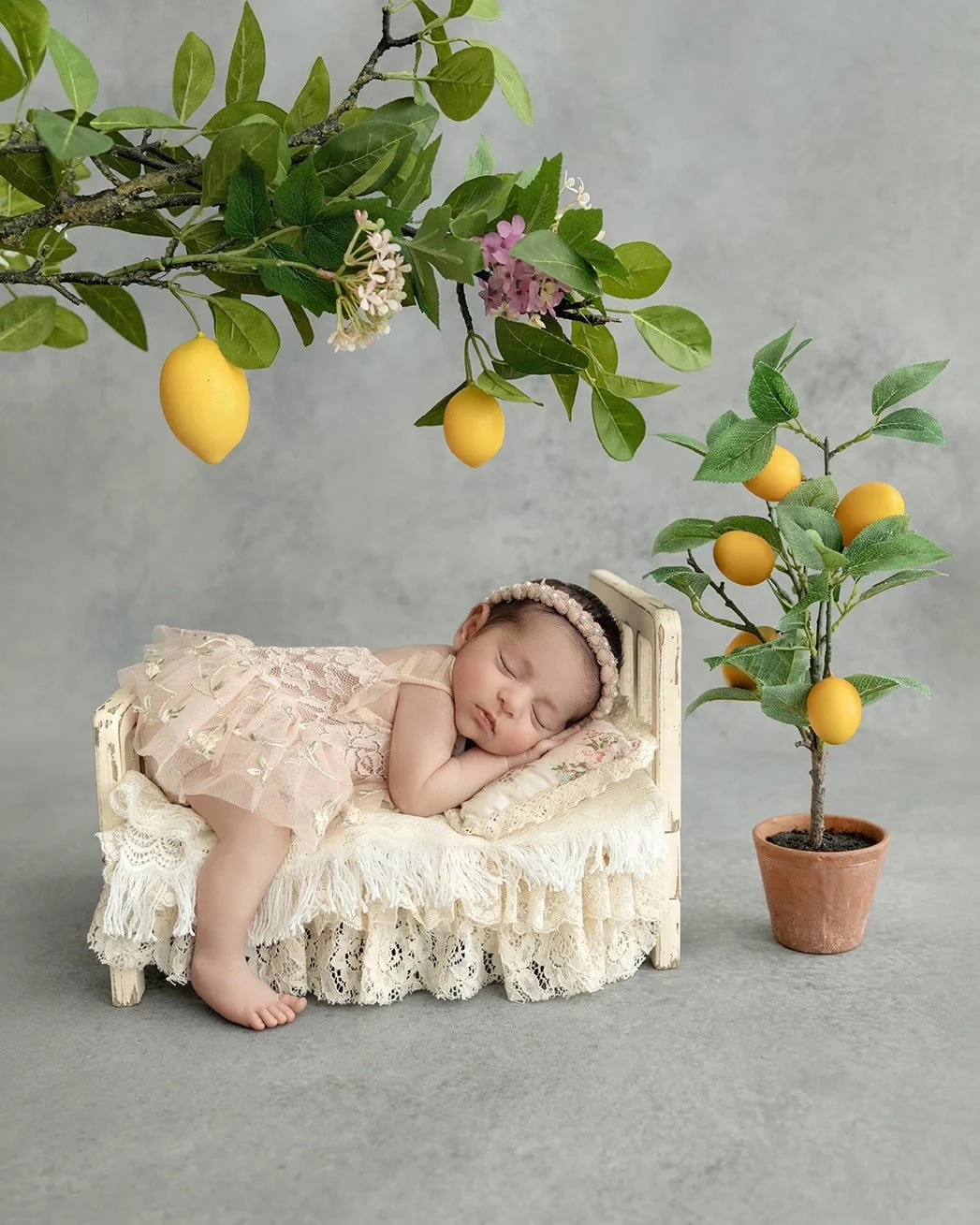
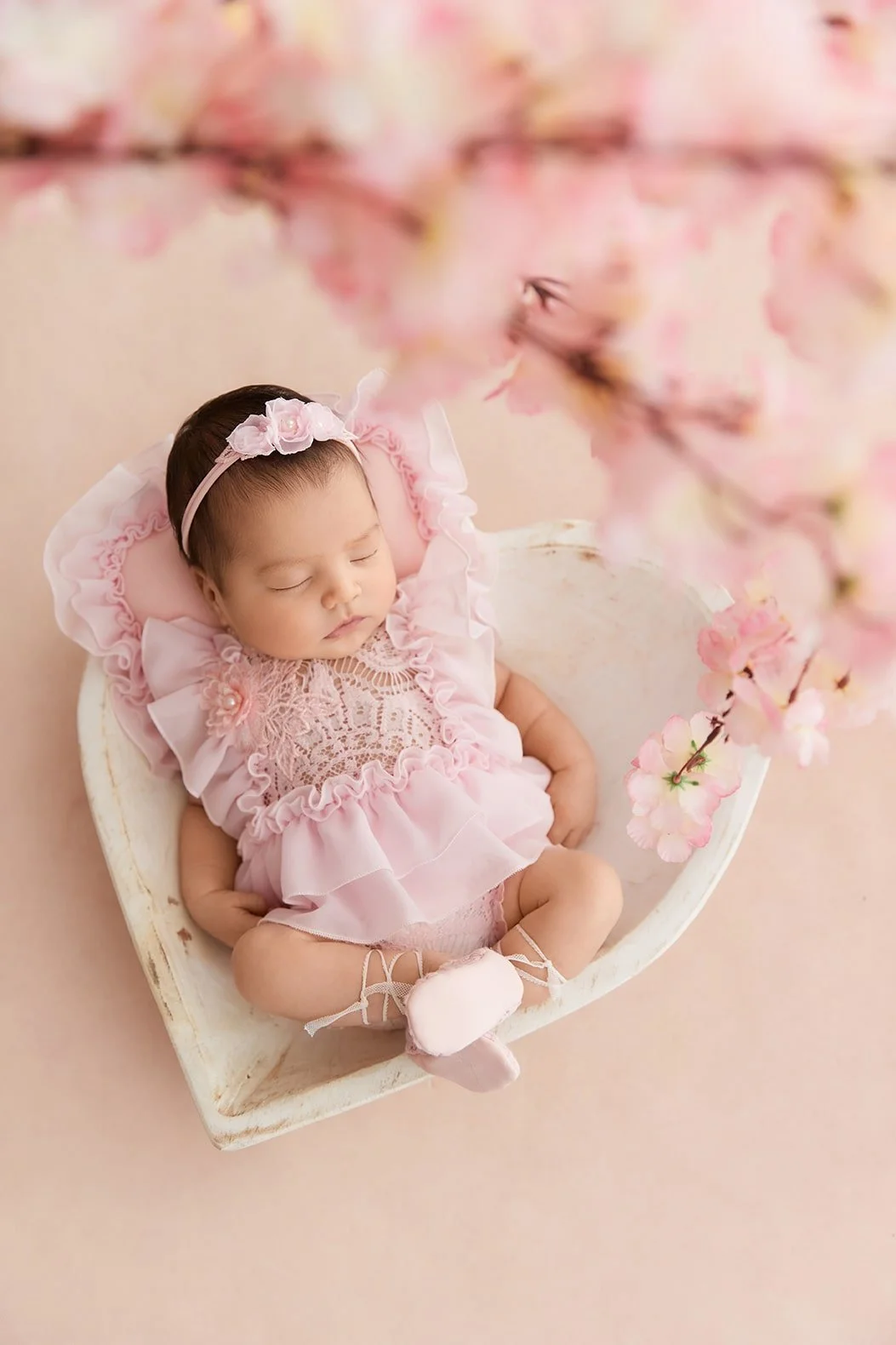
Why Safety Is the Core of Newborn Photography
When a newborn arrives, the first priority is to create an environment that signals safety. Their entire short life has been spent in warmth, in darkness, in constant motion and sound. So the studio must be warm enough that the baby can settle comfortably. Keep the temperature between 80 and 85 degrees because a baby’s body cannot yet regulate heat. If their hands or feet turn mottled or cool, they wake. If they are too warm, their skin reddens or their breathing shifts. Temperature is adjusted constantly, not by a thermostat alone, but by watching the baby’s coloring.
Sound works the same way. you can use gentle white noise, not loud, not startling, but a low, steady hum that mimics the womb. When babies hear that sound, their nervous system recognizes it as safety. The goal is always to reestablish the sleep rhythm they know. Even the way I move around the studio is slow, quiet, unhurried. Babies feel the energy in the room more than the objects in it. If the photographer rushes or tenses, the baby reacts immediately. If the photographer’s hands communicate steadiness, everything softens.
Safety is the entire structure of the session. Parents sometimes assume that newborn photos are automatically safe because babies are small and sleepy. But newborn photography is a specialty for a reason.
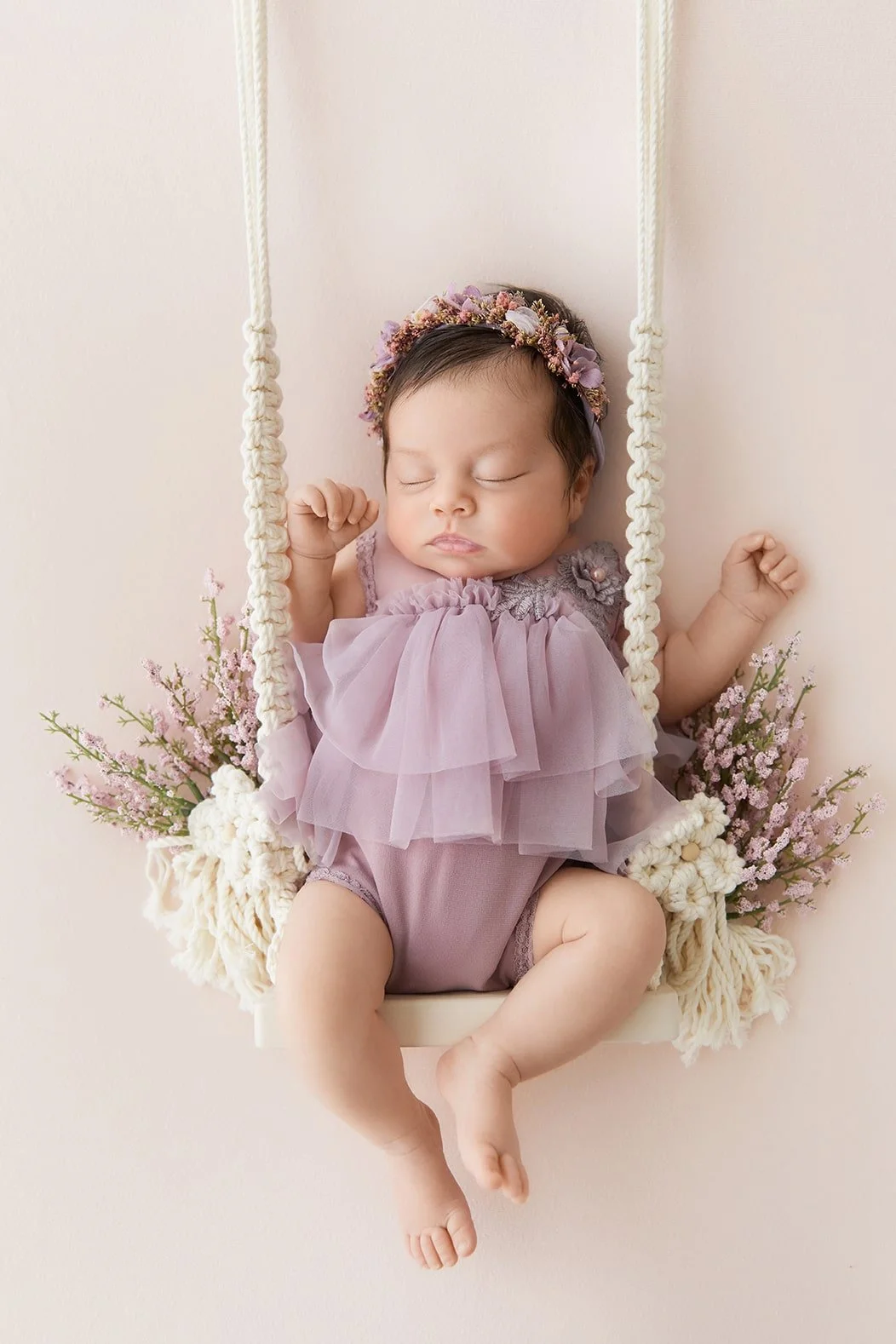
A newborn photographer must know how to support a baby’s head and neck in every pose, how to keep airways open, how to check for circulation changes, how to handle even the tiniest joints without stress. Many poses seen online are created using composites, meaning a hand was supporting the baby at all times and later edited out. A baby should never be placed in a prop without stabilizing supports, never be suspended, and never be balanced. If it looks gravity-defying, it was created with hands that remained on the baby the entire time.
This is also why choosing a professional newborn photographer matters. If you are a parent searching, ask about training, about insurance, about how props are weighted and sanitized, about how composites are performed. These are not intrusive questions. A properly trained newborn photographer will welcome them. If you are a photographer learning this craft, invest in learning safety before you learn styling.
The Sleepy Window And A Baby-Led Flow
Newborn sessions are best held when the baby is 5–21 days old. In these first two weeks, babies are naturally sleepy, naturally curled, and more easily settled. Their bodies still remember the position and warmth of the womb. But life does not always line up perfectly with calendars. Some babies arrive early, some late, some families need more time to adjust, some babies are simply more alert from the very beginning. And that is completely fine. The session adapts to the baby, not the other way around.
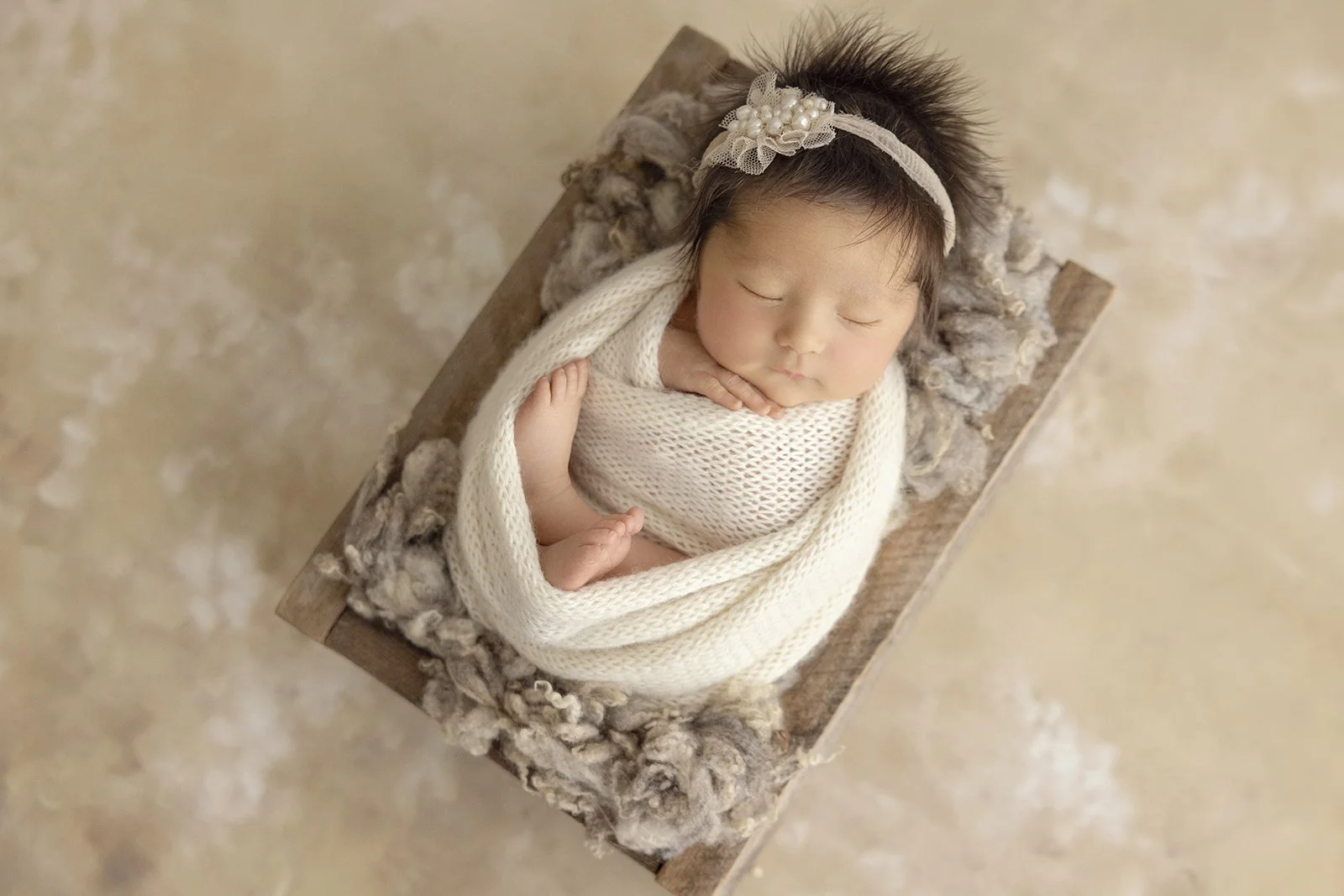
The first hour of the session is always about settling. If the baby arrives awake, I begin with wrapped sets. Swaddling helps the baby feel contained and secure, and when the swaddle is done correctly, it is not tight, it is supportive. There are specific wrapping techniques I use depending on the baby’s temperament, a fully secure wrap for babies who are very alert, a hands-out wrap for babies who like to self-soothe, or an airy texture wrap for when the baby is already deep in sleep and I want softness and movement. The wrap should hug the torso gently without restricting hips or breathing. If a swaddle is too tight, you’ll see the baby’s hands ball into fists or see tension appear around the mouth. These micro-signals are how you know when to adjust.
See my full course on Newborn Wraps here.
Natural Light That Flatters Baby’s Skin
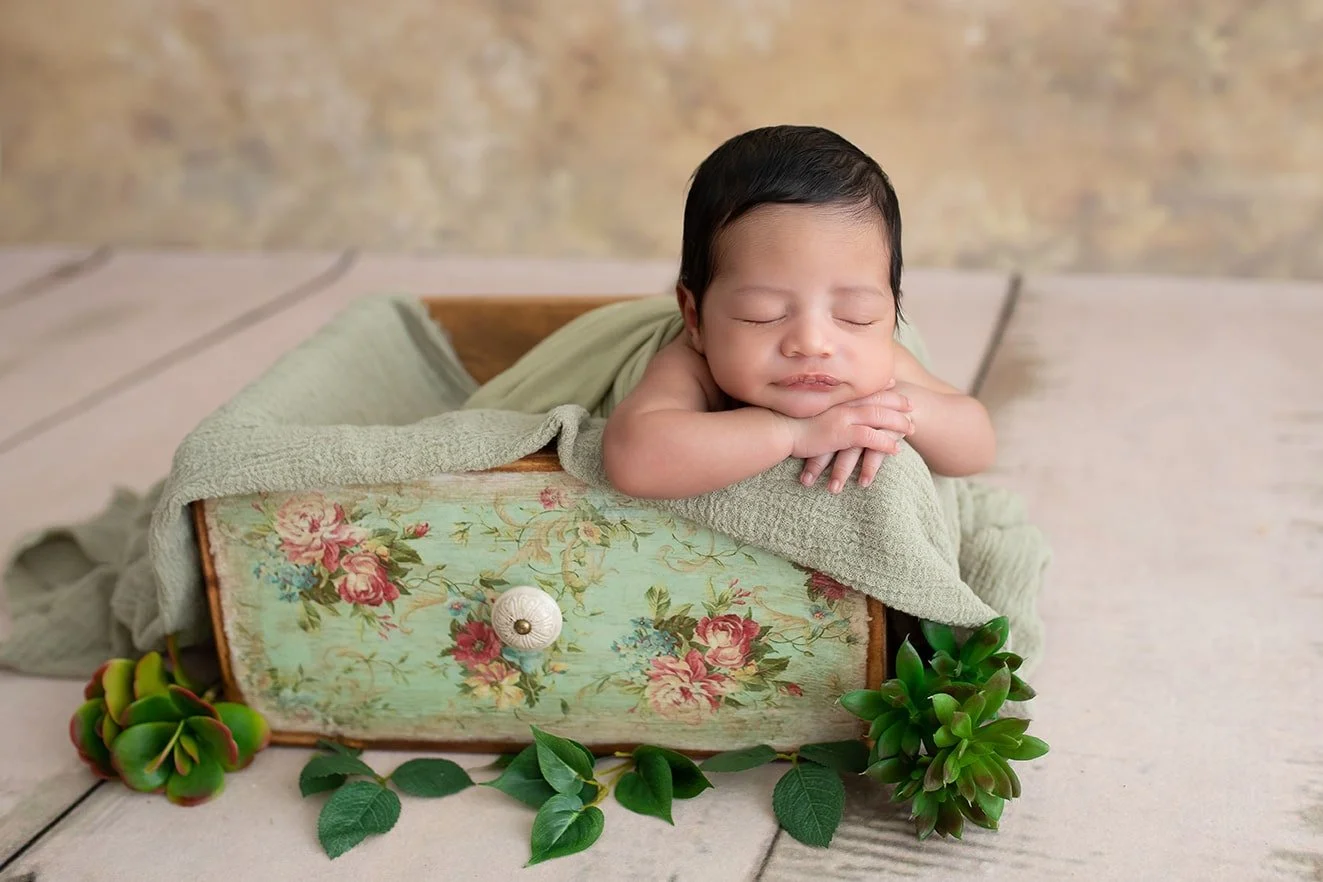
Light is where the photograph comes alive. I work with natural light because it flatters newborn skin. The soft direction of light across the baby’s cheeks reveals the subtle peach fuzz along their jawline and shoulders, the curve of their nose, the tiny flutter of their eyelashes. The best newborn light is indirect, never direct sun. I position the posing table so that light falls gently from the side, creating depth and shape without harsh shadows. A reflector placed on the opposite side bounces just enough light to soften the shadow under the chin. If you are photographing at home, find the room with the softest daylight. Turn off overhead lights. Bring the baby near the window and let the natural light do the work.
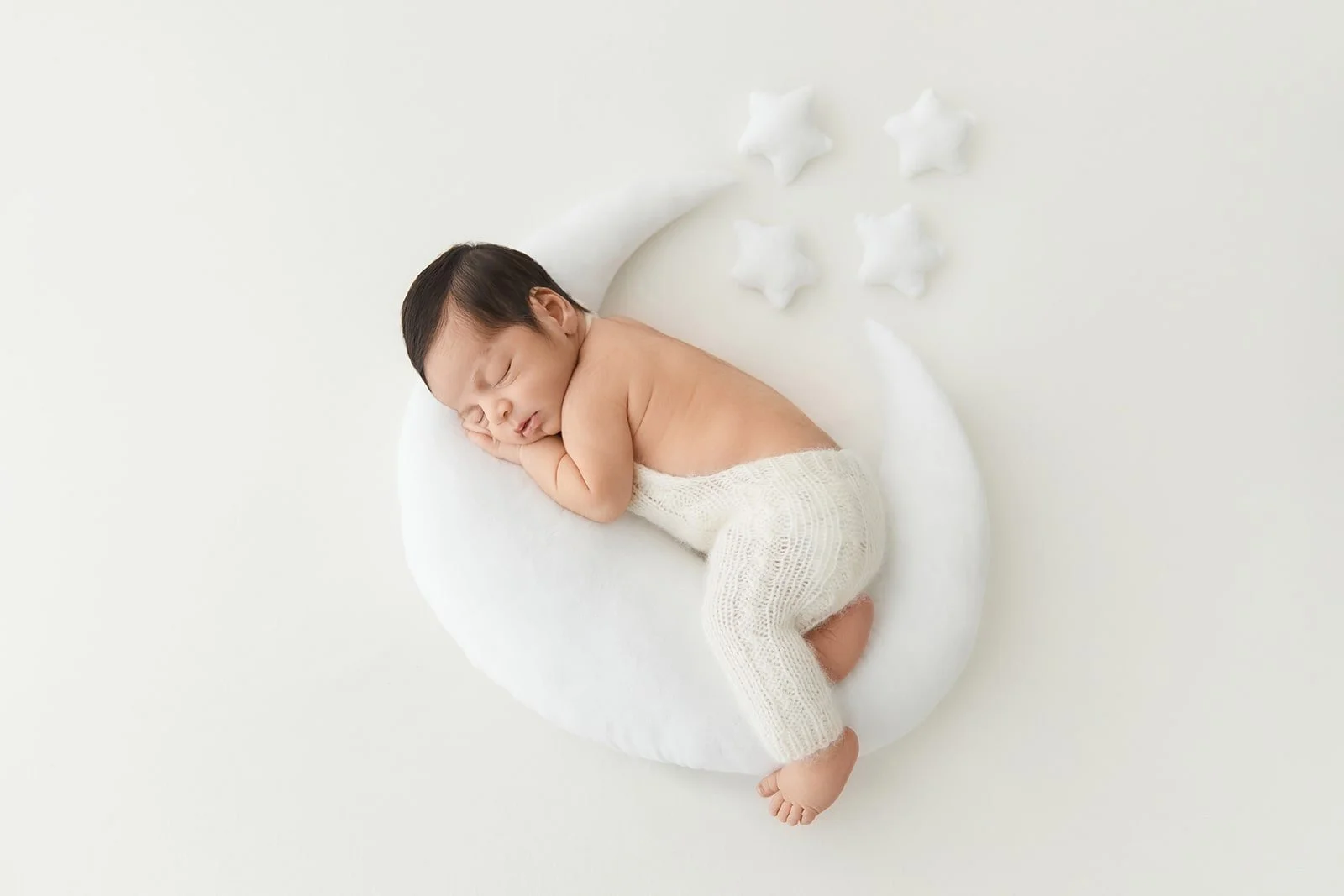
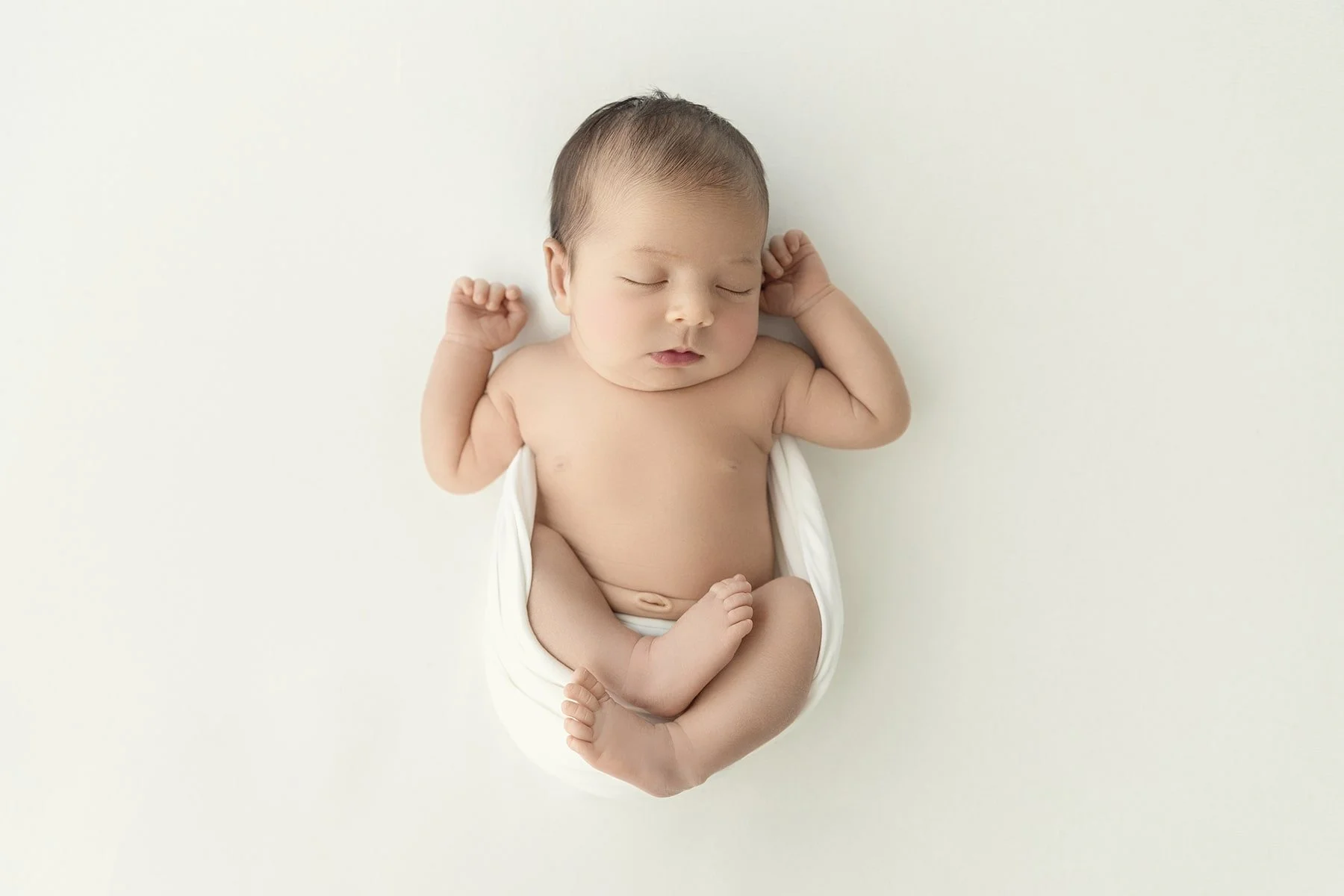
Once the baby is sleeping deeply, I transition into unwrapped or lightly wrapped poses. This is where you see the sweetest details, the tiny hands tucked under the cheek, the natural curl of the back, the relaxed lips. Every baby has their own preferred position. Some love being curled on their tummy; some prefer side-lying, some are happiest on their back.
Props, Backdrops, And The Two-Set Strategy
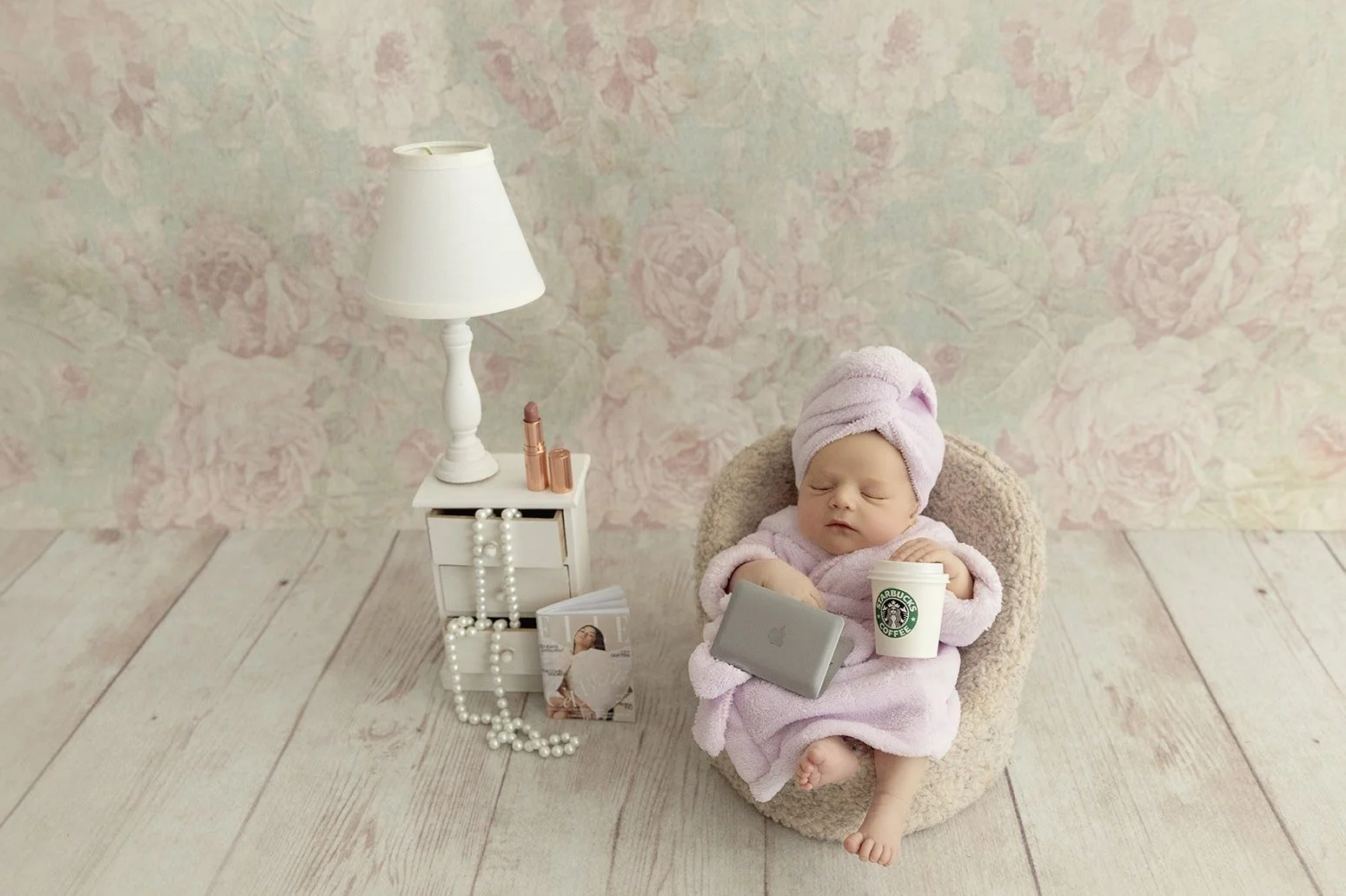
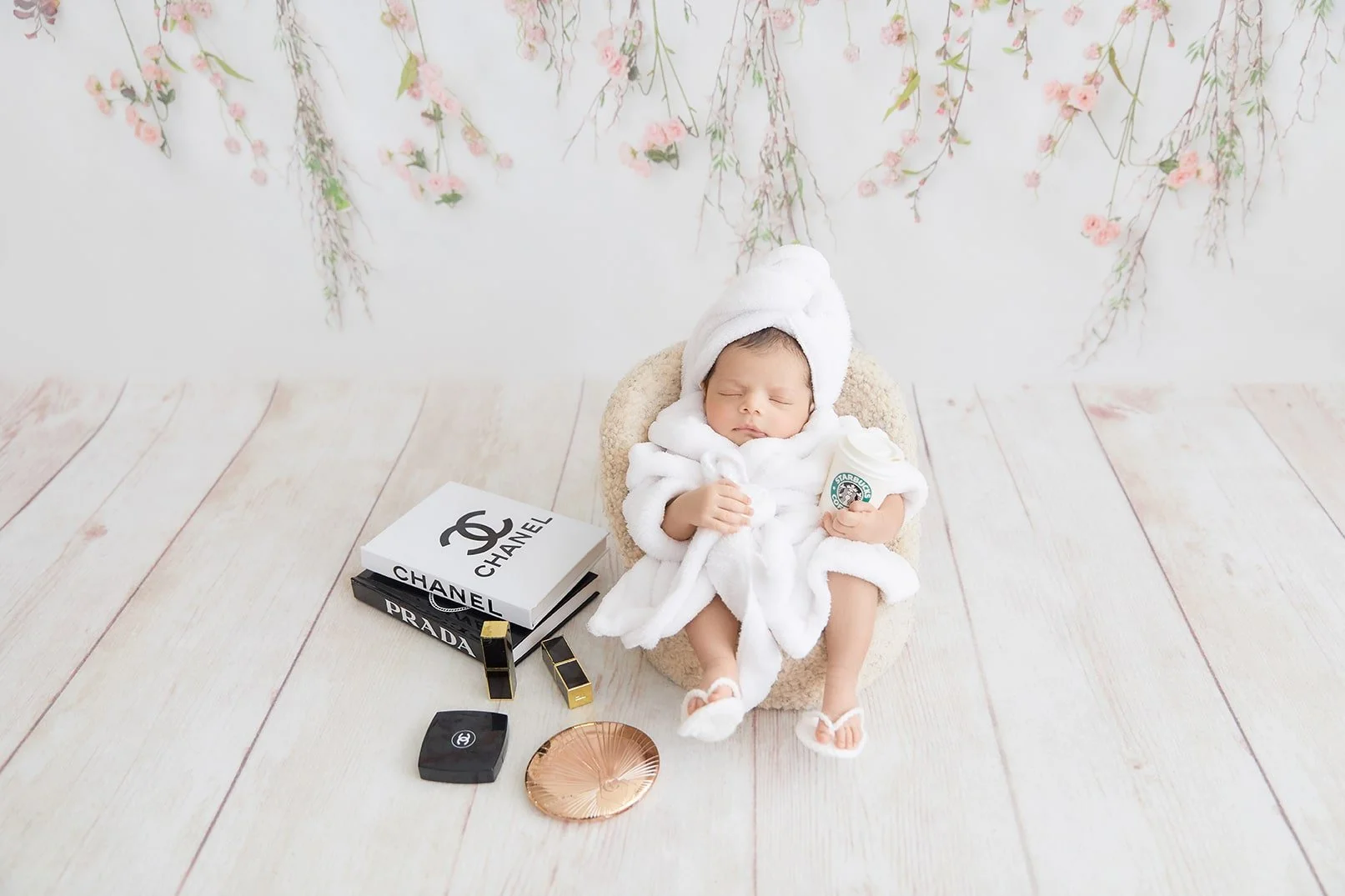
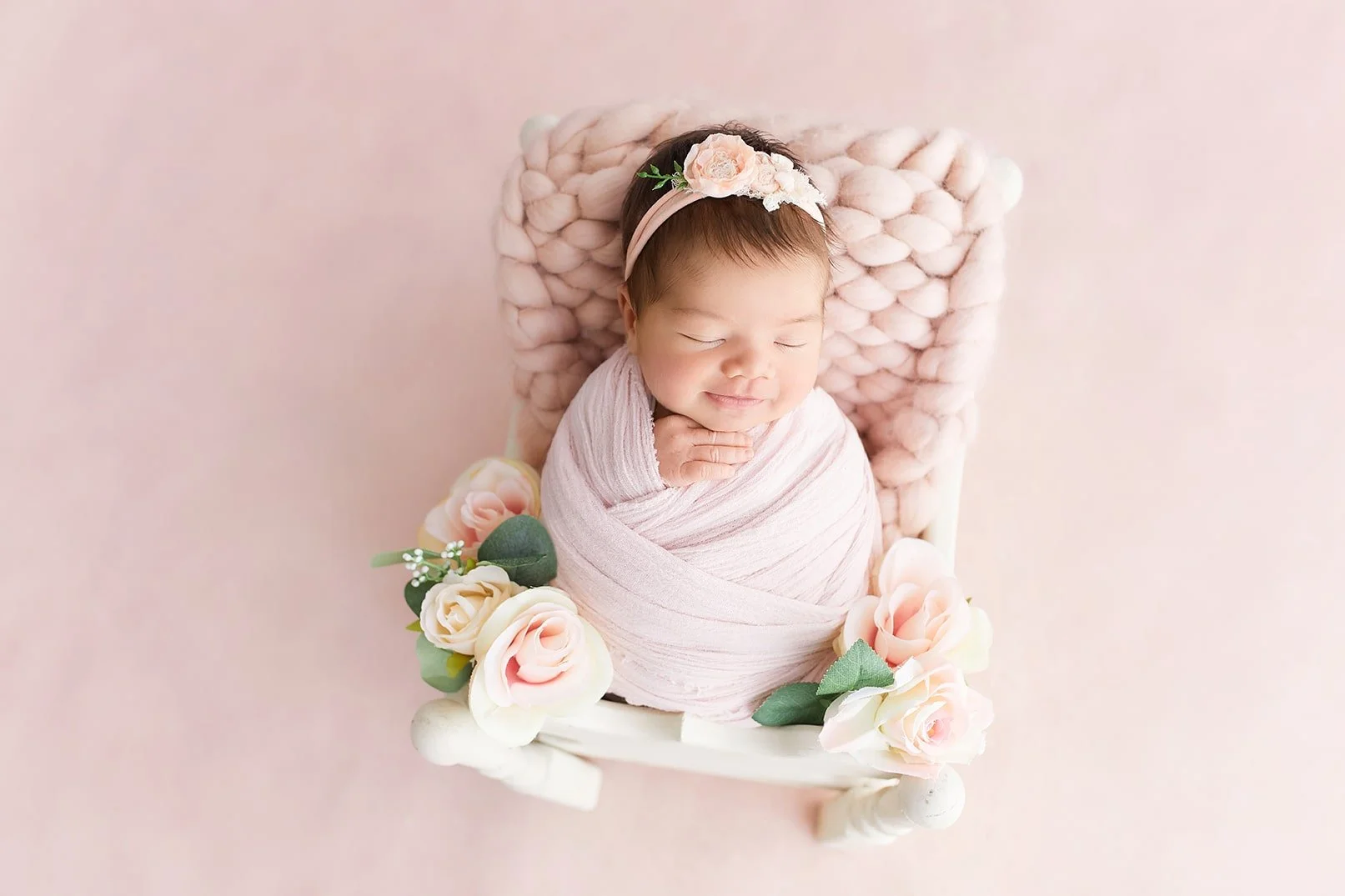
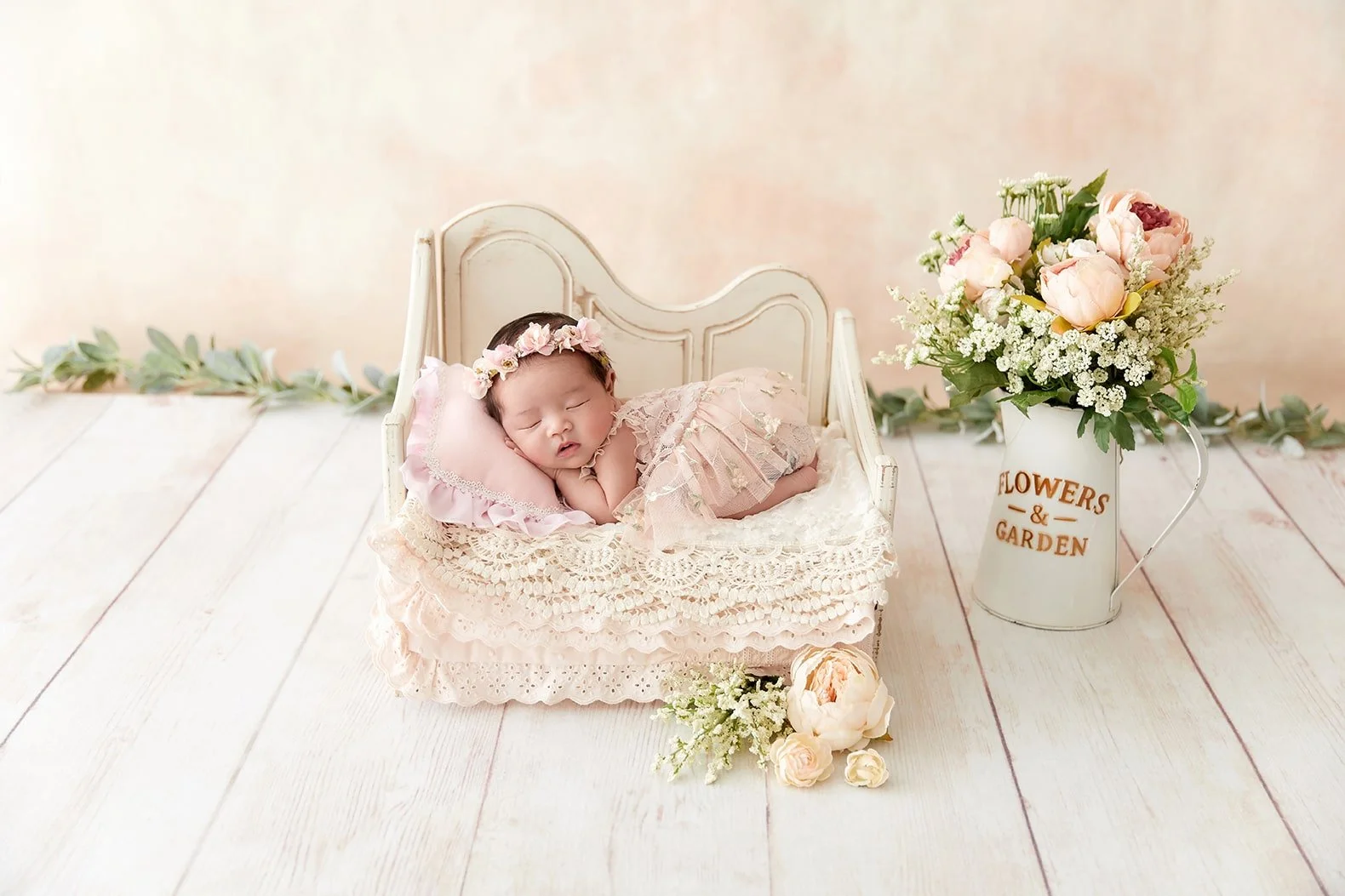
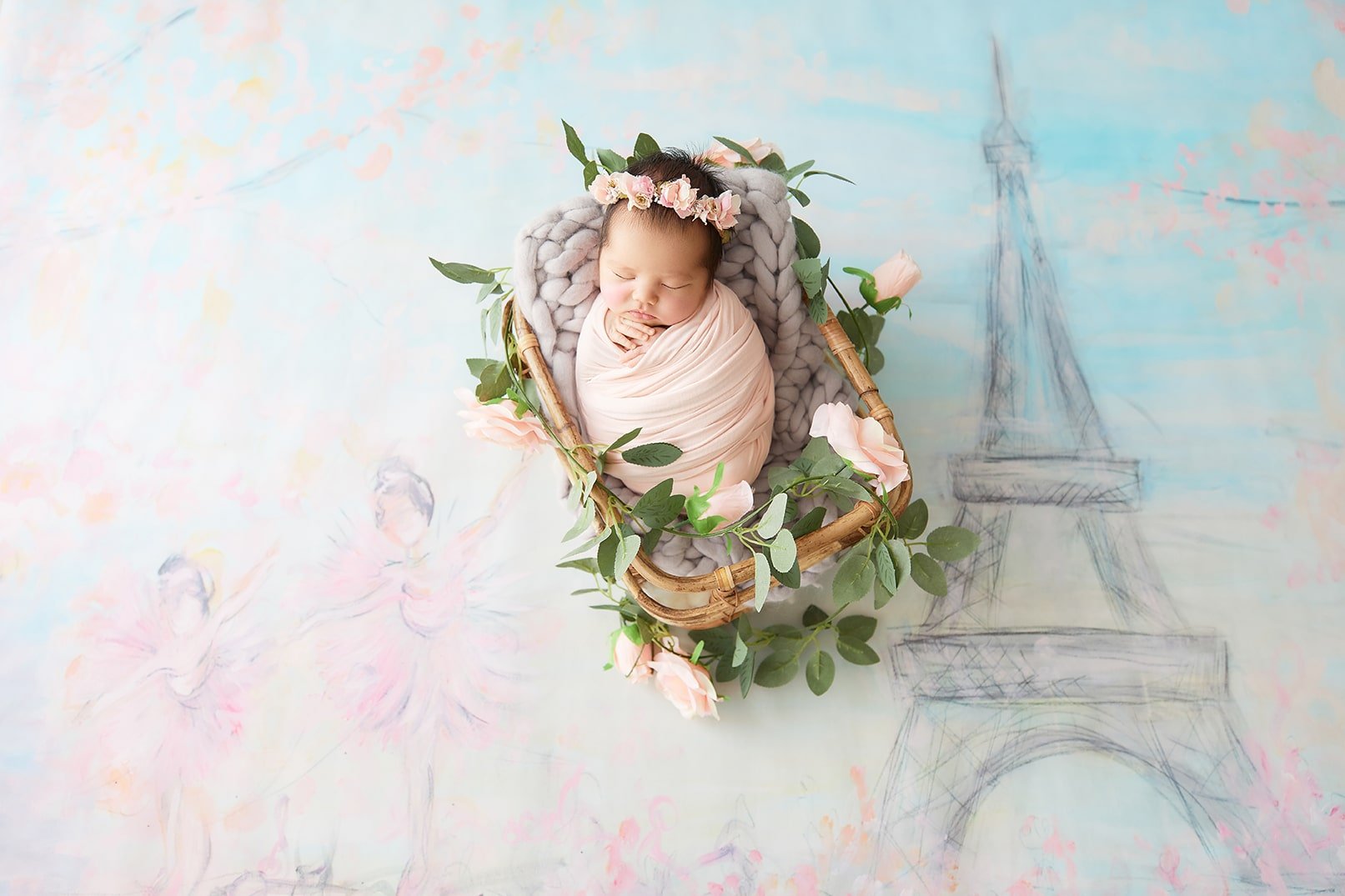
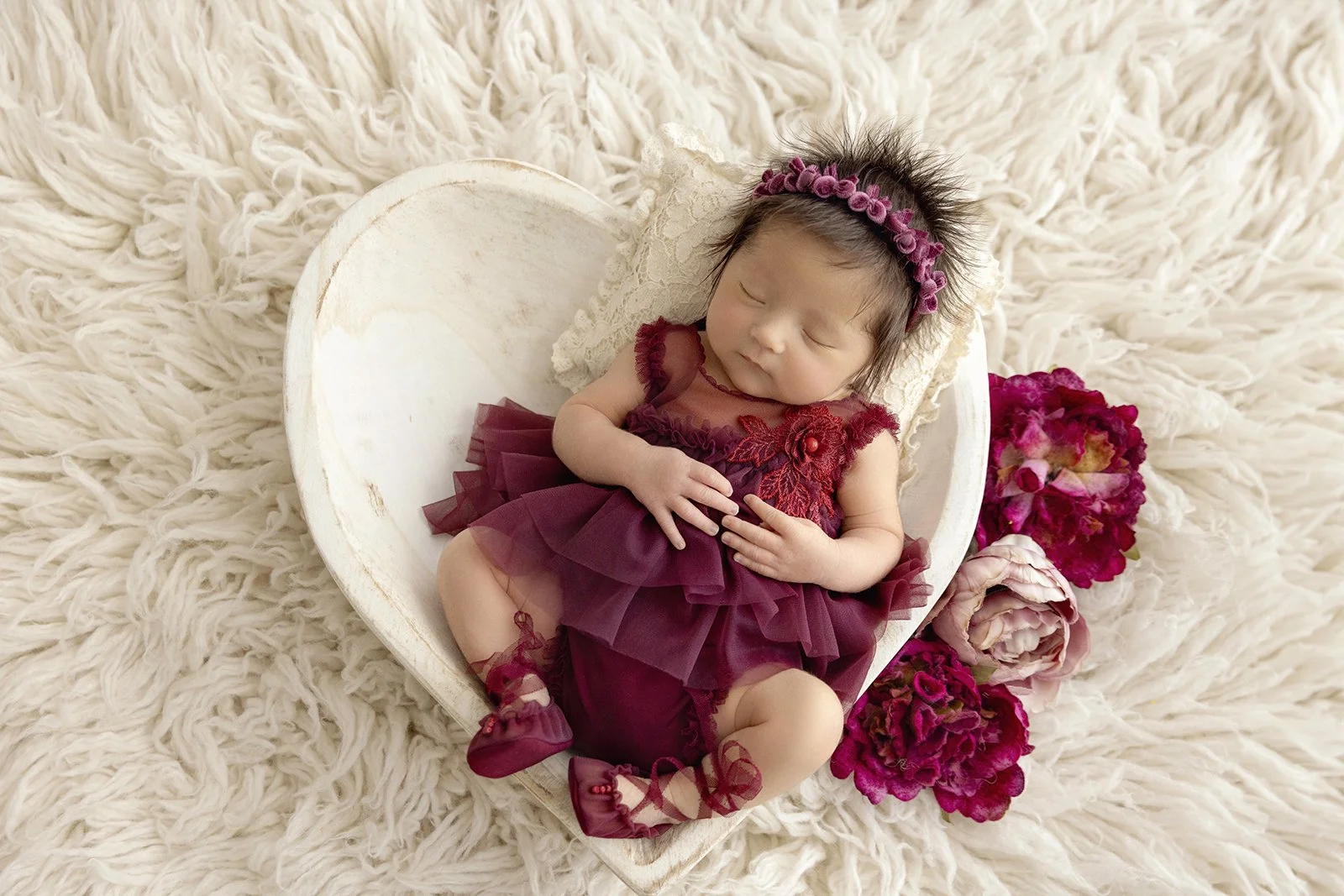
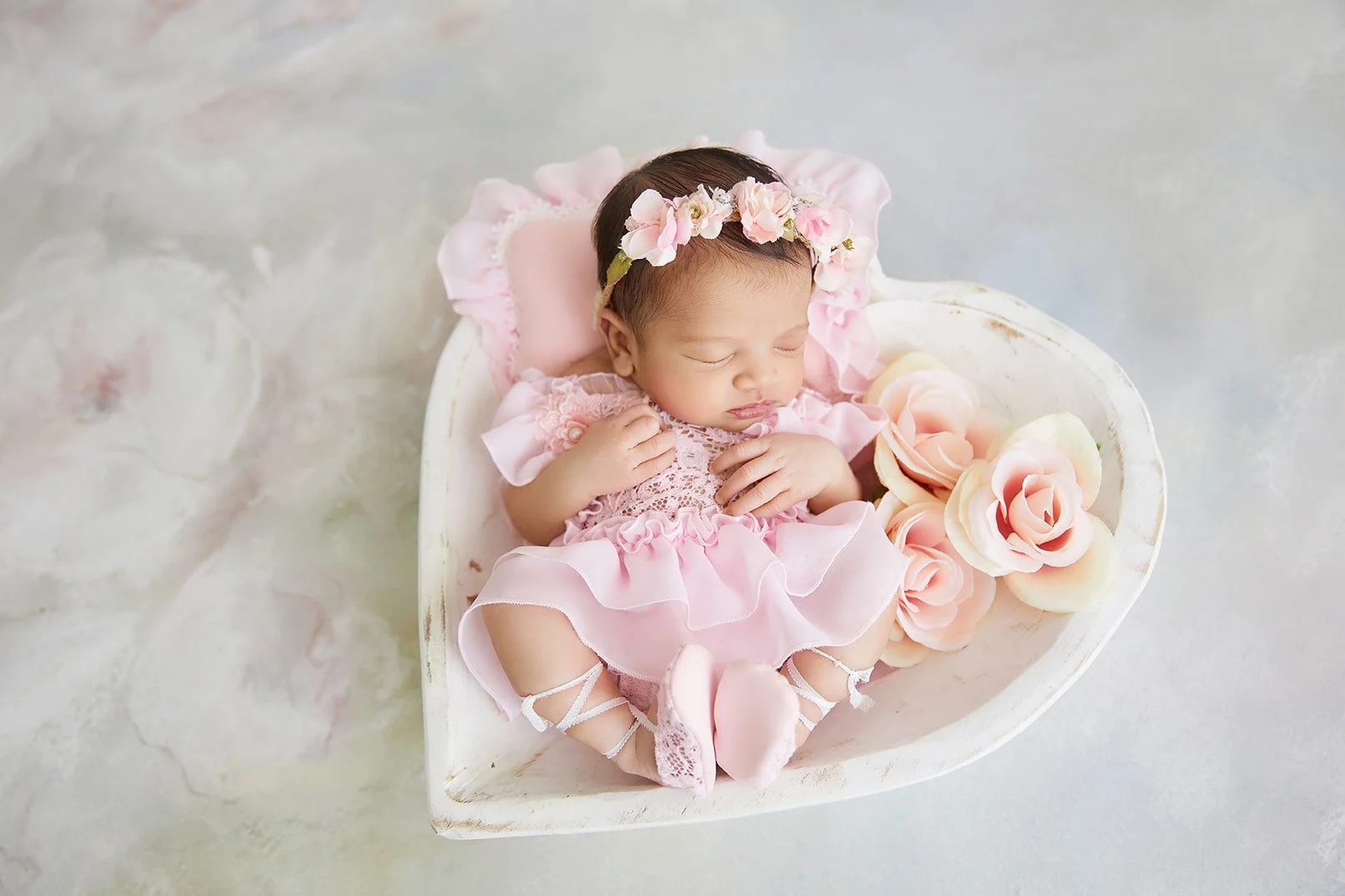
Props are used sparingly and always safely. I use neutral tones and gentle textures that support the baby’s skin tone instead of competing with it. Every bowl or basket is thoroughly weighted and padded, and the baby is never actually balancing. What looks like a simple pose is often supported by layers of rolled cloth, hidden stabilization, and a slow, careful settling process. The baby is always supported. Always comfortable.

Capture Photos When the Baby Is Awake
Awake babies are their own kind of magic. When a newborn is awake, their eyes search the world softly, slowly, curiously. The key is to lower stimulation. Keep the environment calm. Let the baby look. Photograph the hands touching their cheek or the way their eyes naturally follow the shape of your face.
If the baby becomes unsettled, cries, stiffens or pulls hands tight, the reset is gentle and intentional. A burp often solves more than you expect, tiny tummies trap little air bubbles that make everything feel uncomfortable. If the brow furrows return after a burp, pause and swaddle more securely, increase white noise slightly, and offer a feed before the next transition. I love the parent chest reset, this is 10 quiet minutes on a parent’s chest, skin-to-skin if possible, then a slow return to the posing table when eyelids grow heavy.
Newborn And Family Photos That Feel Like Home
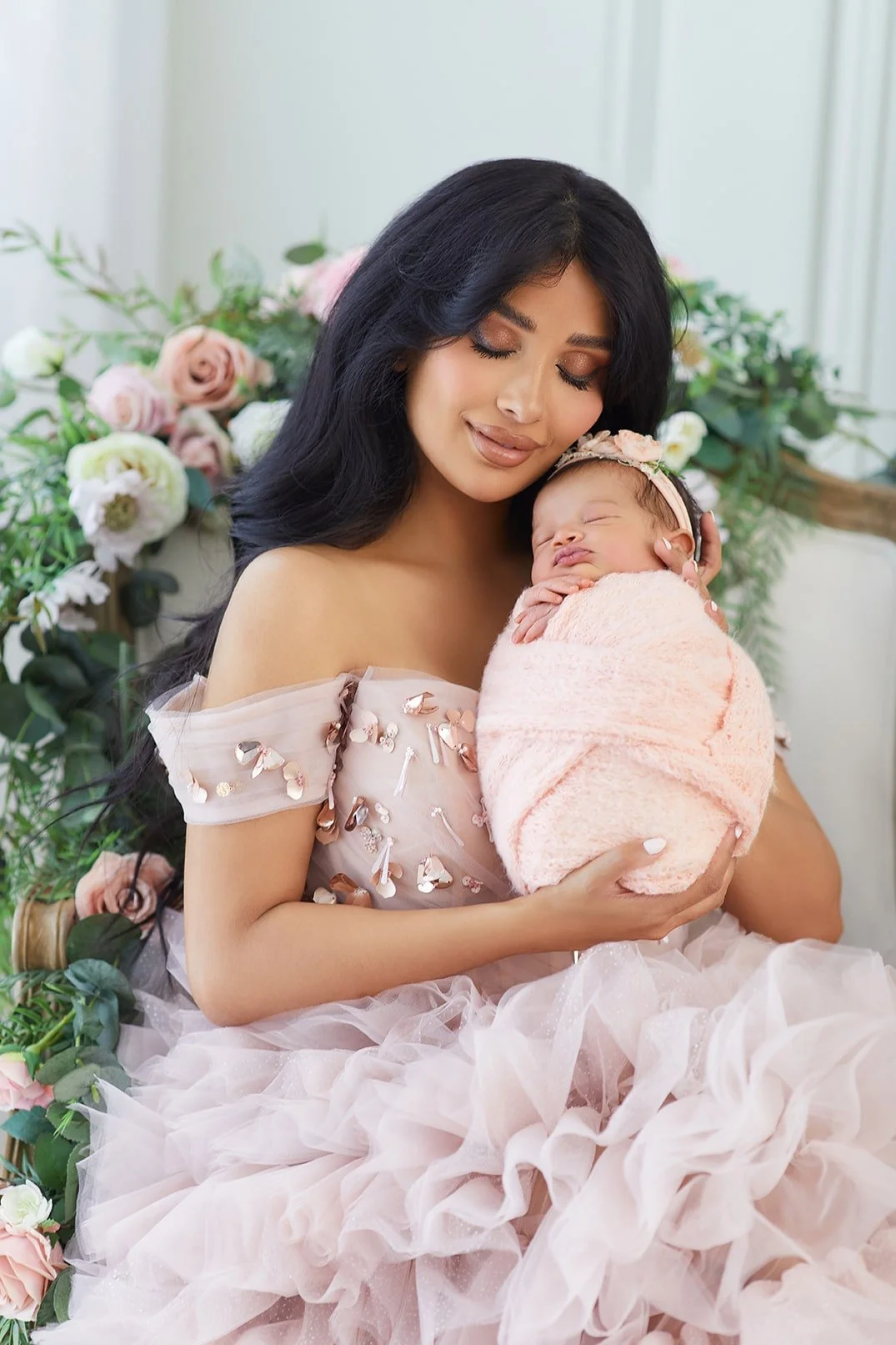
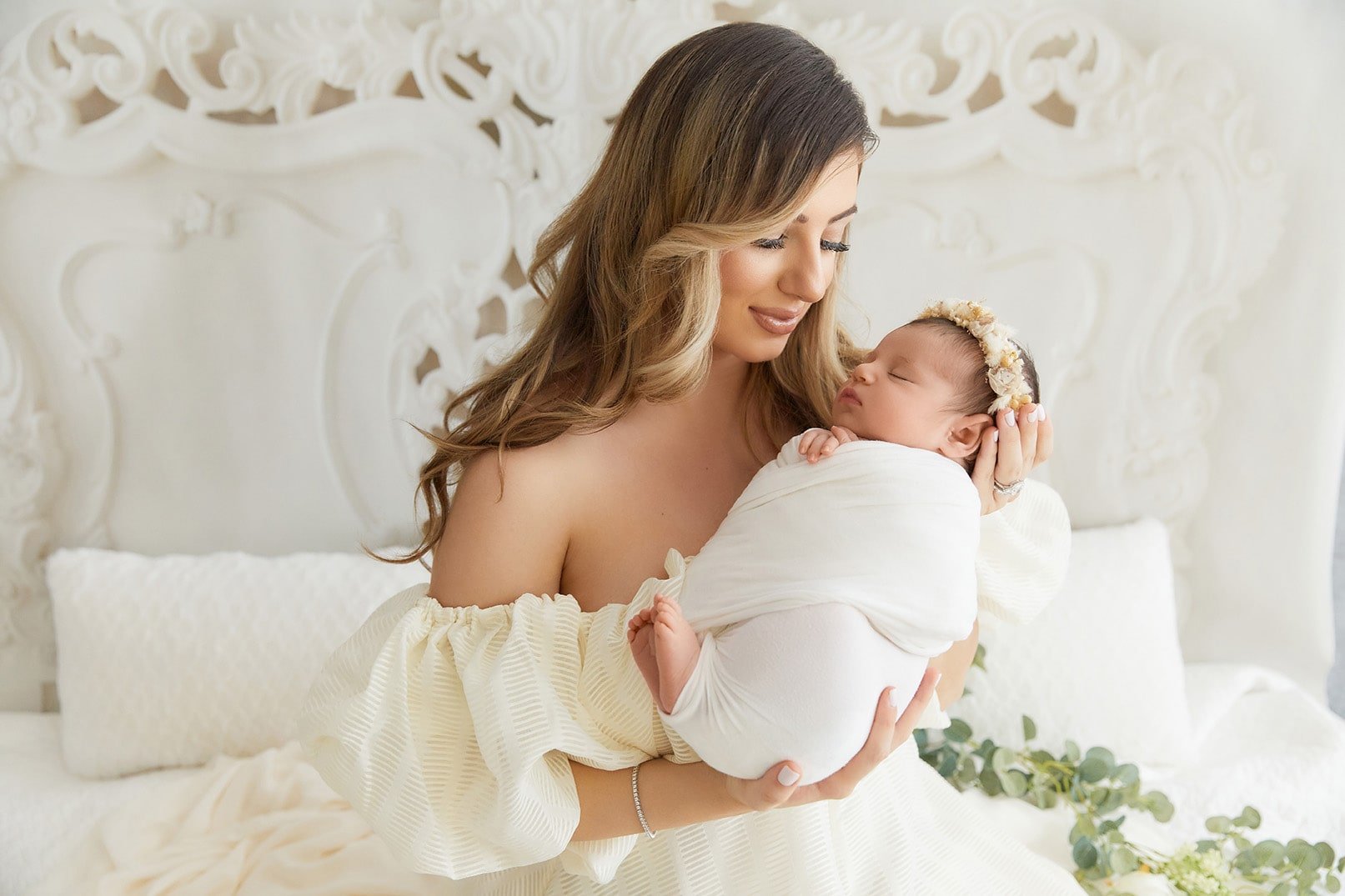
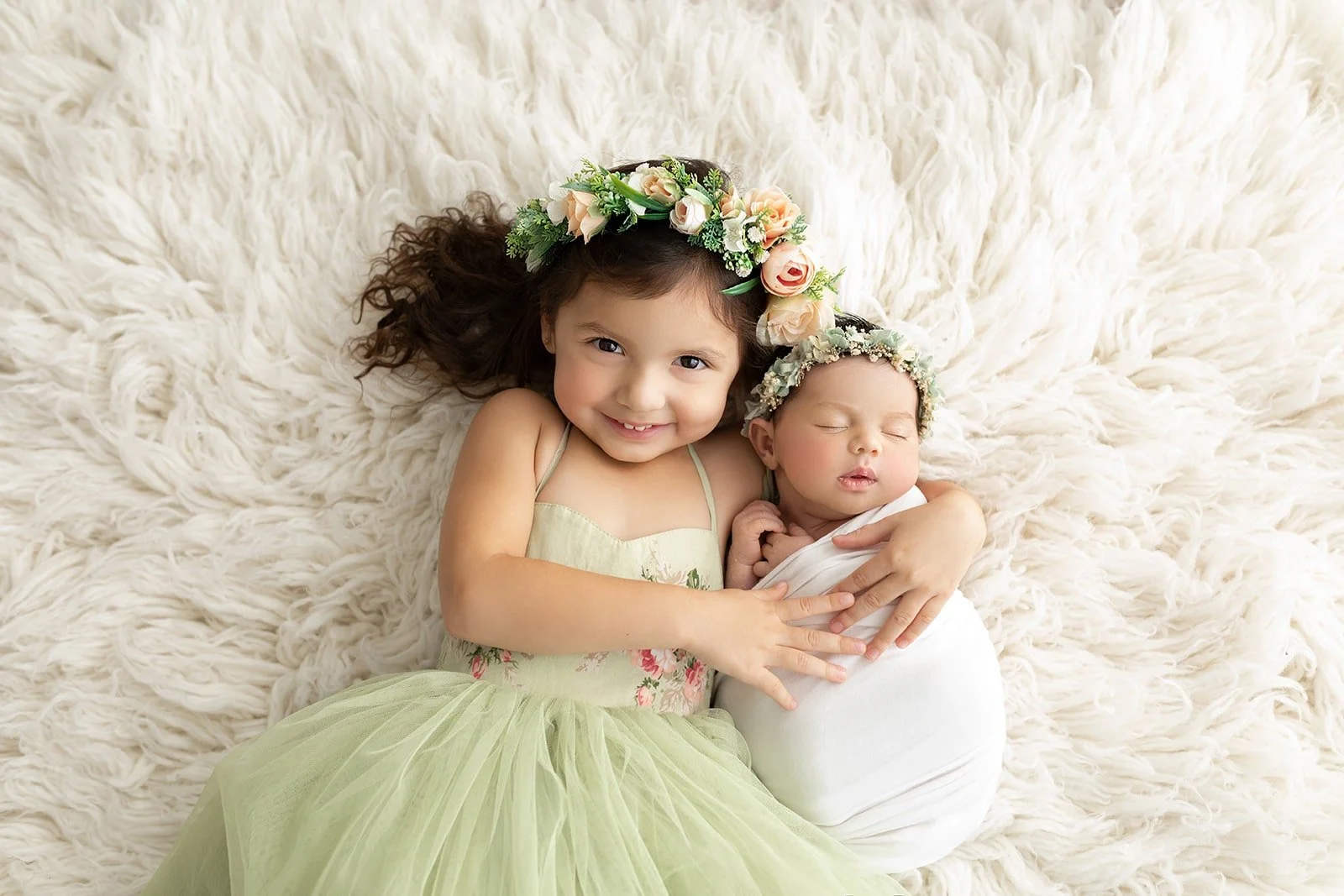
Family portraits with a new baby are about closeness, warmth, and the quiet awe that settles in a home when a new baby is born. I guide parents into positions that feel like how they naturally hold their baby, cheek to forehead, nose to hairline, hands cradling the back and hips, shoulders slightly turned so the baby’s face finds the light.
For families who love a lifestyle newborn feel, take a few frames on the bed by a large window, a quiet moment in the nursery, a family photo on the sofa with feet tucked under a textured throw.

Editing That Keeps Baby Looking Like Baby
Even out temporary redness or jaundice tinges gently, protect undertones so skin remains true, and keep the barely-there lanugo that catches the light. Whites stay warm, not icy, contrast stays soft so eyelashes and lips look like morning rather than studio drama. Photographers may use frequency separation sparingly, but the goal is never porcelain.
File Delivery, Privacy, And A Gallery That Ages Well
Parents are in the busiest season of their lives. Galleries should be clean, intuitive, and easy to save. Curate with intention so the story reads like a short film, start with a wrapped portrait that anchors the set, an unwrapped detail that hums with softness, a family photo that holds everything together, and a few black-and-white conversions where emotion is the color. For archiving, keep the photos on a 2 drives, always keep your shots in at least two places.
When Baby Is A Little Older For Newborn
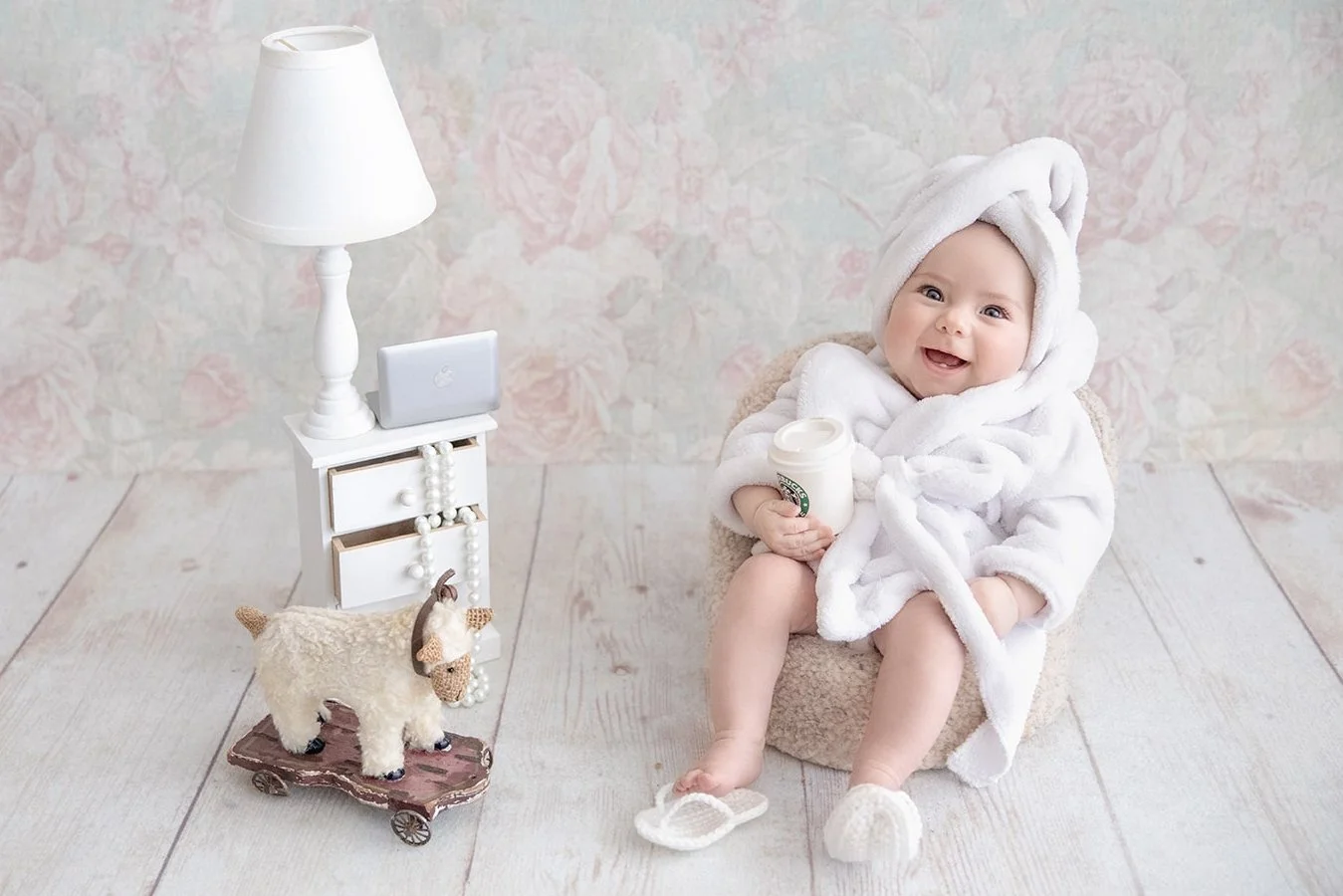
Sometimes life only makes the session possible after the first few weeks. Four to six weeks old can be lovely, more alert, stronger eye contact, longer stretches of quiet wakefulness. Poses change. You trade curled tummy poses for swaddled comfort, parent snuggles, and simple back-lying portraits with hands-out wraps that invite sweet expression. The images feel a touch more awake, a little beyond the first chapter, but still tender and timeless. Photographers prefer to treat these sessions as a bridge between classic newborn and lifestyle newborn, so expectations stay joyful and realistic.
In-Home Versus Studio
An in-home session prioritizes comfort and familiarity. The pace is slow and quiet, using the softest available window light and meaningful household details: a neatly made bed, a favorite blanket, the chair where late-night feedings happen. Posing is natural and close, with hands supporting the baby at all times. The atmosphere feels personal and lived-in, and the photographs reflect that—warm, intimate, and rooted in the family’s daily life.
A studio session offers consistency and precision. The space is prepared with controlled lighting, properly sanitized props, temperature regulation, and a posing table designed specifically to support a newborn’s body safely and comfortably.
Backdrops, wraps, and textures are selected intentionally to create clean, timeless images without visual clutter. Everything is within reach, which keeps the workflow efficient and calm.
Maternity To One Year: Building A Cohesive Story
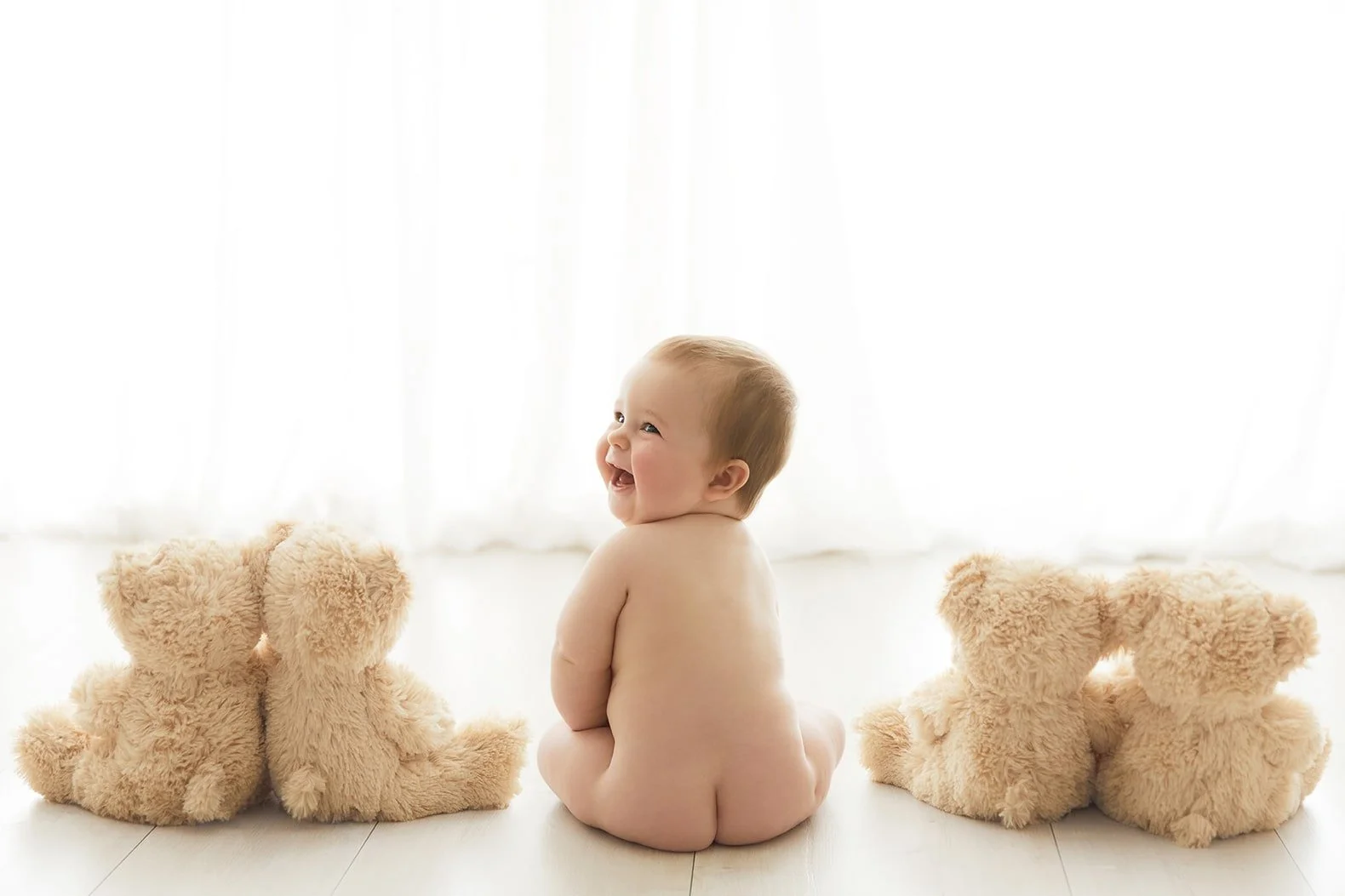
The newborn stage is chapter one, but the story loves company. Maternity sessions celebrate anticipation, sitter sessions (usually six to nine months) capture those wide-mouthed grins and sturdy little sits, first birthdays honor personality and independence.
Design palettes that flow from bump to baby’s first without feeling matchy, soft neutrals, organic textures, and recurring visual notes so the album feels intentional.
If you want to plan your arc with clarity, my Sitter Session (6 Months) Course and the Cake Smash for Girls Course or 1 Year Boys: Cake & No Cake Course show lighting, set design, and pacing that keep milestones cohesive and elevated.
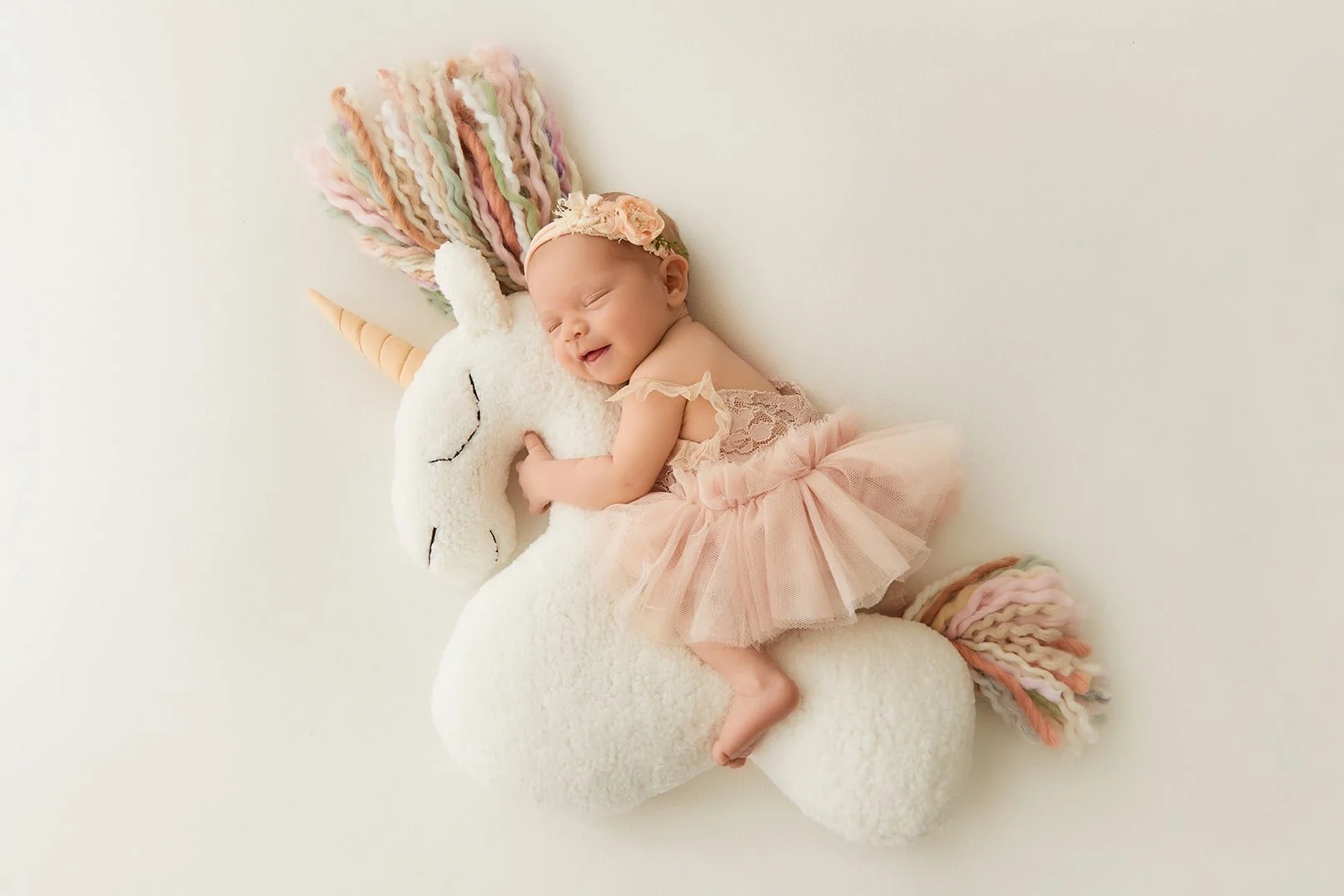
Why I Teach This Work
I teach because beautiful, safe newborn photos change how families remember the start of their story, and because new photographers deserve a roadmap that honors both art and responsibility.
If you’d like the full, hands-on playbook, the Newborn Photography Masterclass, the Full Newborn Shoot Day Course, and the DIY Newborn Photoshoot Course will give you beautiful, replicable systems, from posing table to parent arms, from first hello to final images.
Newborn photography is not about chasing perfect poses. It’s about preserving the heartbeat of a moment. One day, these images will take you back to the first time you held your little one and felt your whole world change.
Frequently Asked Questions
How do I plan for feeding during the session? Should I feed right before we leave the house?
It’s natural to want everything to go just right, but newborn photography is built around feeding, not the other way around. Instead of feeding right before leaving home, feed at the studio. Babies almost always need to top up once they arrive, especially after being in the car seat. A session begins with warmth, swaddling, and a slow, peaceful feed that leads into that first deep sleep window. If the baby needs to feed again mid-session, we pause without stress. Feeding is not an interruption, it is part of the rhythm that makes the session gentle and baby-led.
How do we include the rest of the family, especially parents, in the newborn session?
Newborn family portraits are less about posing and more about closeness. The best images happen when parents hold the baby the way they naturally do, cheek to forehead, hand supporting the back, gentle sway for comfort. These are the images that capture the way your baby fits into your arms in the first days.
What if we want photos at home instead of the studio?
A home newborn session tells the story of where your baby began. A window, a quiet corner of the bedroom, or the nursery chair is all that’s needed. The camera sees only what is intentionally included, so there is no need to prepare your entire home. For parents who want a cozy, familiar feel, in-home sessions are a beautiful option.
What if my baby cries the entire session?
When a baby cries, we listen. We pause. We burp. We swaddle more securely. We hold skin-to-skin. Sometimes the session begins with a long embrace in a parent’s arms instead of jumping into posing. That moment often becomes one of the most meaningful images of the entire gallery, a mother’s hand cupping the back of her baby’s head, eyes closed, breathing together.
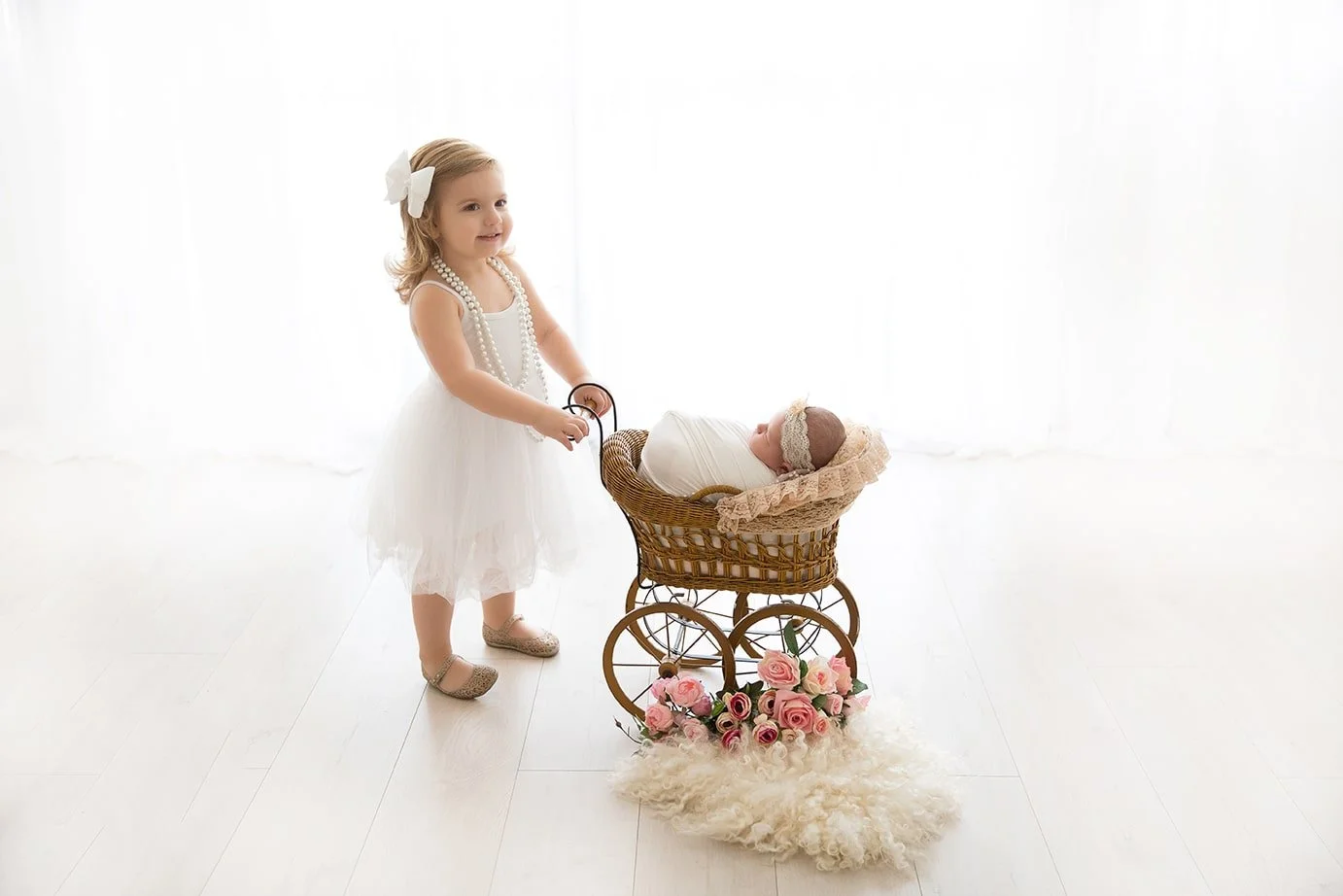
What about siblings? My toddler is… a toddler.
Toddlers are beautifully unpredictable,which is exactly why we structure sibling photographs first, and we keep them brief, playful, and pressure-free. I never ask a sibling to “hold still.” Instead, I give them jobs to do tot make them feel important. If a sibling needs space, we let them wander and return naturally. The best sibling photographs are born from genuine curiosity, not commands.
Why does newborn photography cost what it costs?
Newborn photography is a specialty built on training, patience, sterilization protocols, safety certification, custom props, insurance, backup equipment, editing artistry, and careful time handling the most precious life you have ever held. The pricing reflects expertise, responsibility, and the emotional weight of the images being created.
You are preserving a moment that will never return in the best, safest way possible. These photographs become part of your family history. Many parents tell me they didn’t realize how priceless these images would feel until their baby was a few months old and the newborn softness had already changed.
What if I need a newborn photographer at the last minute?
Reach out anyway. Babies rarely follow exact due dates, and I always leave room in my schedule for last-minute newborn families. Even if your baby is already here, even if you feel overwhelmed and unsure where to start, even if today is the first day you’ve had the energy to think about photos, send the message.
For those of you who are not near my studios in Los Angeles and Dubai, see my courses here.
Conclusion
Newborn photography is about more than creating beautiful photos. It’s about honoring the first days of parenthood, the softness, the awe, the closeness, the way your baby fits entirely in the cup of your hand.
Whether you choose a studio newborn photo session or an in-home newborn session that feels cozy and familiar, the heart of the experience is the same: warmth, quiet pace, and a baby-led flow. A newborn and family photographer gently guides each moment, watching the baby’s cues, keeping the room warm, and ensuring the entire process feels stress-free for you. There is no rush. No performance. Just genuine love held still.
About Ramina Magid
Ramina Magid is an award-winning newborn photographer, celebrated for her organic, timeless approach to capturing life’s earliest moments. Originally from Baku, Azerbaijan, Ramina built her dream newborn photography studio in Beverly Hills, where she has photographed more than 800 newborns and families over the past eight years.
Her gentle, safety-focused style and natural light aesthetic have made her one of the most sought-after newborn photographers in California. In 2024, her work was recognized with awards for Best Newborn Photographer in both Beverly Hills and Los Angeles. Ramina’s portraits have reached millions worldwide through social media, admired for their warmth, simplicity, and emotional honesty.
Source: Ramina Magid