
12 Simple Newborn Photography Tips for Parents
Capture perfect newborn photos! Discover 12 simple newborn photography tips for parents. Learn to pose your baby & create stunning DIY newborn pictures.
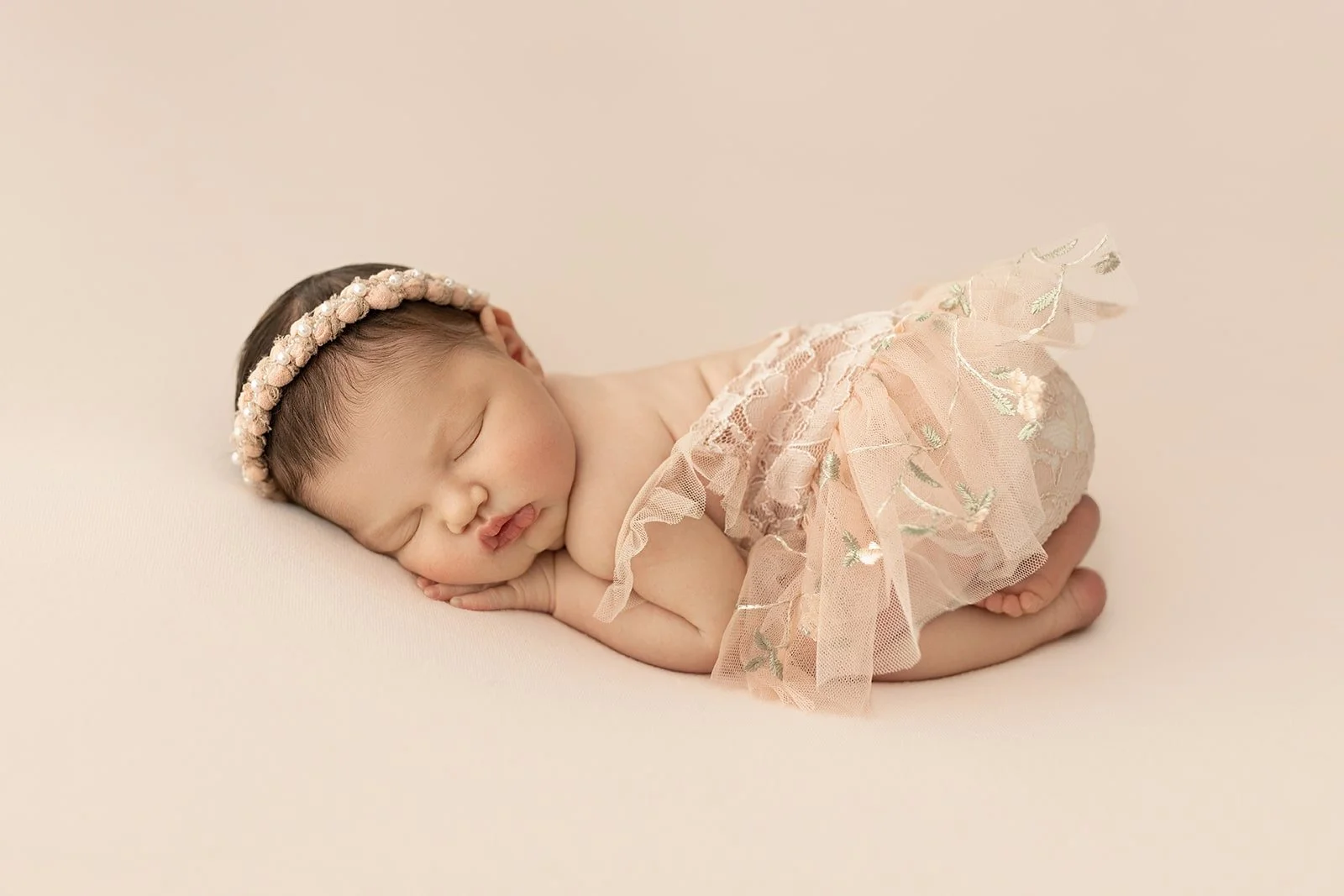
Those first days with a new baby are full of so many tiny moments you want to hold onto forever, how they curl into your chest, the way their fingers wrap around just one of yours, the soft newborn stretches right after a feed. And because babies change so quickly, newborn photography is the best way to preserve this stage while it’s still here.
Over the past eight years, I’ve photographed more than 800 newborns in my natural light studio in Beverly Hills and received numerous awards for my work. In this guide, I’m sharing newborn photography tips that I teach photographers during classes, things like when to schedule your newborn photoshoot, how to help your baby stay sleepy and content, how to use natural light to flatter your baby’s features, how to swaddle safely, how to keep poses comfortable and supported, and how to naturally include siblings and parents in the photos.
Whether you're booking a professional newborn photography session or planning diy newborn photos at home, these steps will give you the clarity and confidence to create soft, natural, beautiful newborn photos that you’ll treasure for many years for come.
1. Schedule Your Newborn Photography Session Early
Newborns are wonderfully predictable in the very beginning. During the first three weeks, most tiny newborn bodies are still curled into that familiar fetal position, the startle reflex is strong, and long sleepy stretches come easily. In a newborn session, that combination is gold. The curl allows a gentle, supported pose; the sleepiness allows careful transitioning between setups, the reflexes make a snug swaddle feel reassuring.
Waiting too long changes the rhythm. Around week four, babies often wake for longer stretches, become more curious and easily stimulated, and may work through a growth spurt that brings extra hunger and cluster feeding. That’s why a professional newborn photography studio encourages parents to schedule the newborn photoshoot for 5–21 days after birth. It keeps the window open for those dreamy, relaxed, posed newborn photos, while leaving plenty of space for lifestyle newborn moments if baby is more alert.
Families sometimes worry that arriving at day 18 or 20 means too late. It isn’t. Many newborn photoshoots at this age are gorgeous, the approach simply shifts. The posing flow moves toward more wrapped poses, basket or bed props that cradle the body, and serene side-lying angles that support an older newborn’s gentle stretch. If curiosity wins and the sleeping baby turns into a quietly awake observer, that’s a gift too, wide-eyed newborn pictures with natural light can be striking, especially with a soothing swaddle that lets the baby’s face be the star.
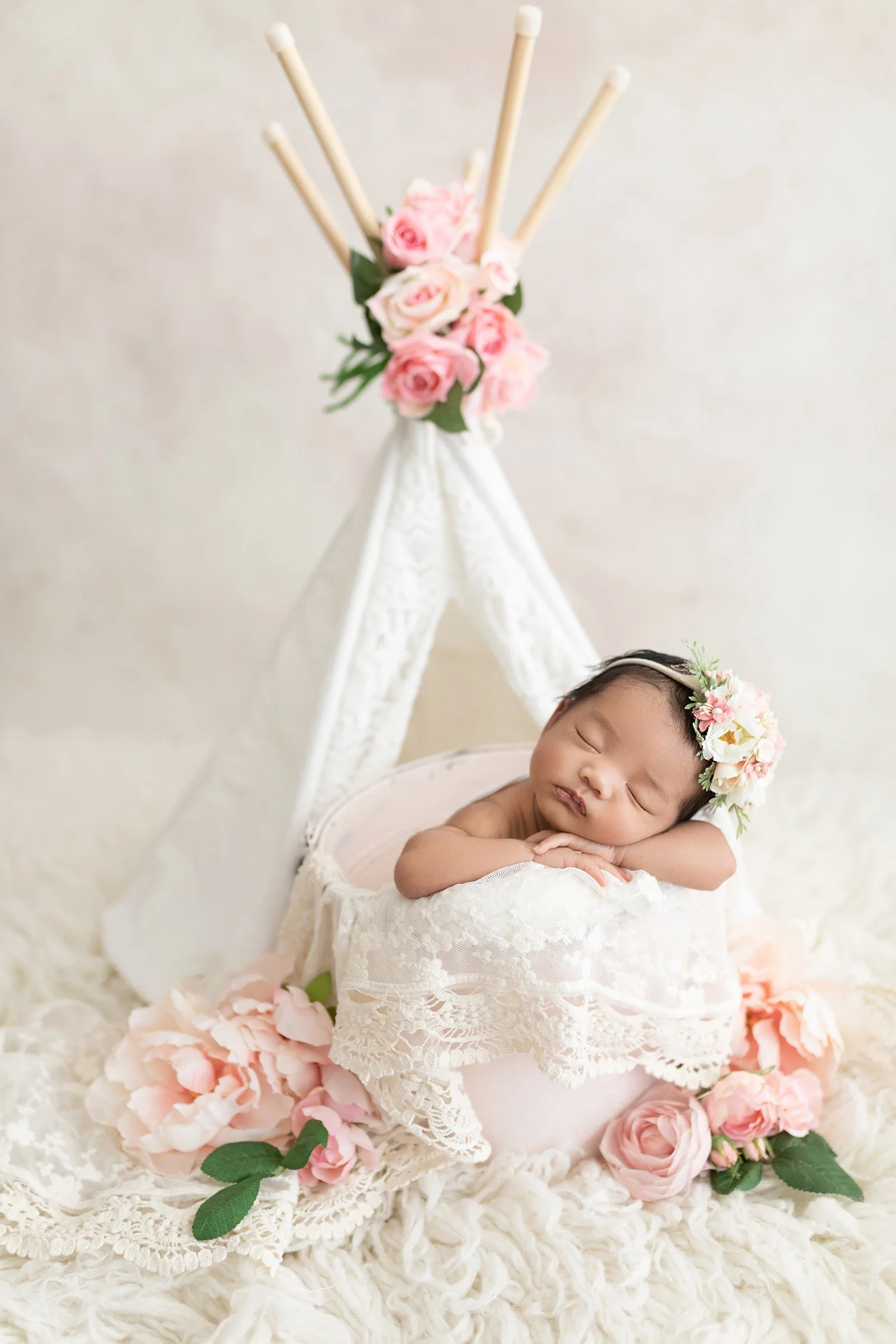
Why Booking During The Second Trimester Matters
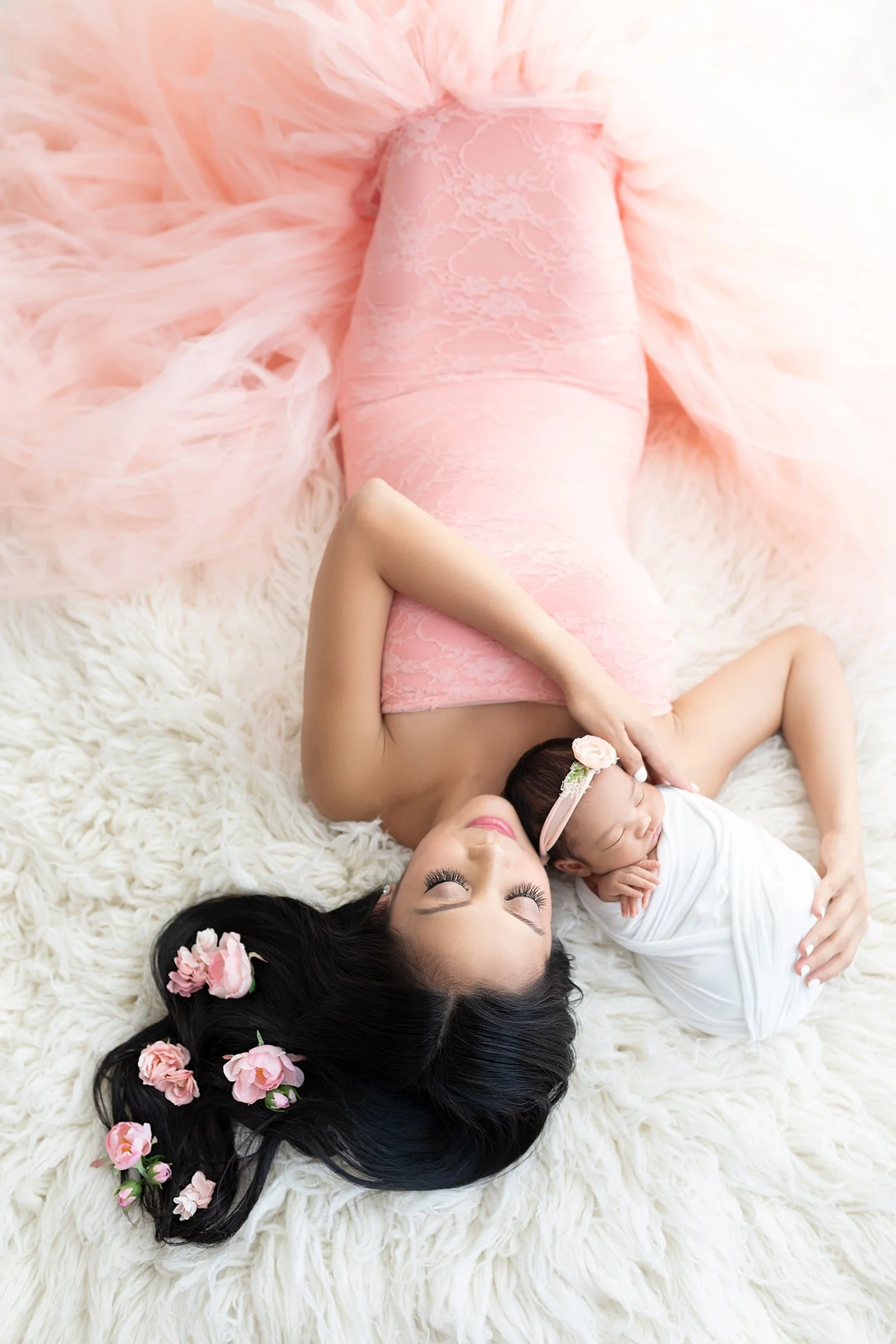
New parents don’t need one more thing to juggle in the final weeks of pregnancy. Booking during the second trimester takes the pressure off. It puts the due date on the studio calendar, holds space in the weeks around it, and builds in time to talk about preferences, favorite tones, whether a lifestyle newborn feel or more posed newborn photography speaks to the heart, and how a maternity portrait can weave into the story.
After the birth, a quick message within three days helps convert that tentative spot into your newborn shoot date. Morning start times around 10 or 11am are the sweet spot for a successful newborn photo session, the baby is usually more settled, parents are fresher, and natural light is gentle and flattering.
For parents who want to truly understand the full rhythm, from pre-session planning to the tiny adjustments that create a perfect shot, my Full Newborn Shoot Day Course shows the entire experience, setup by setup, using both natural and soft studio light.
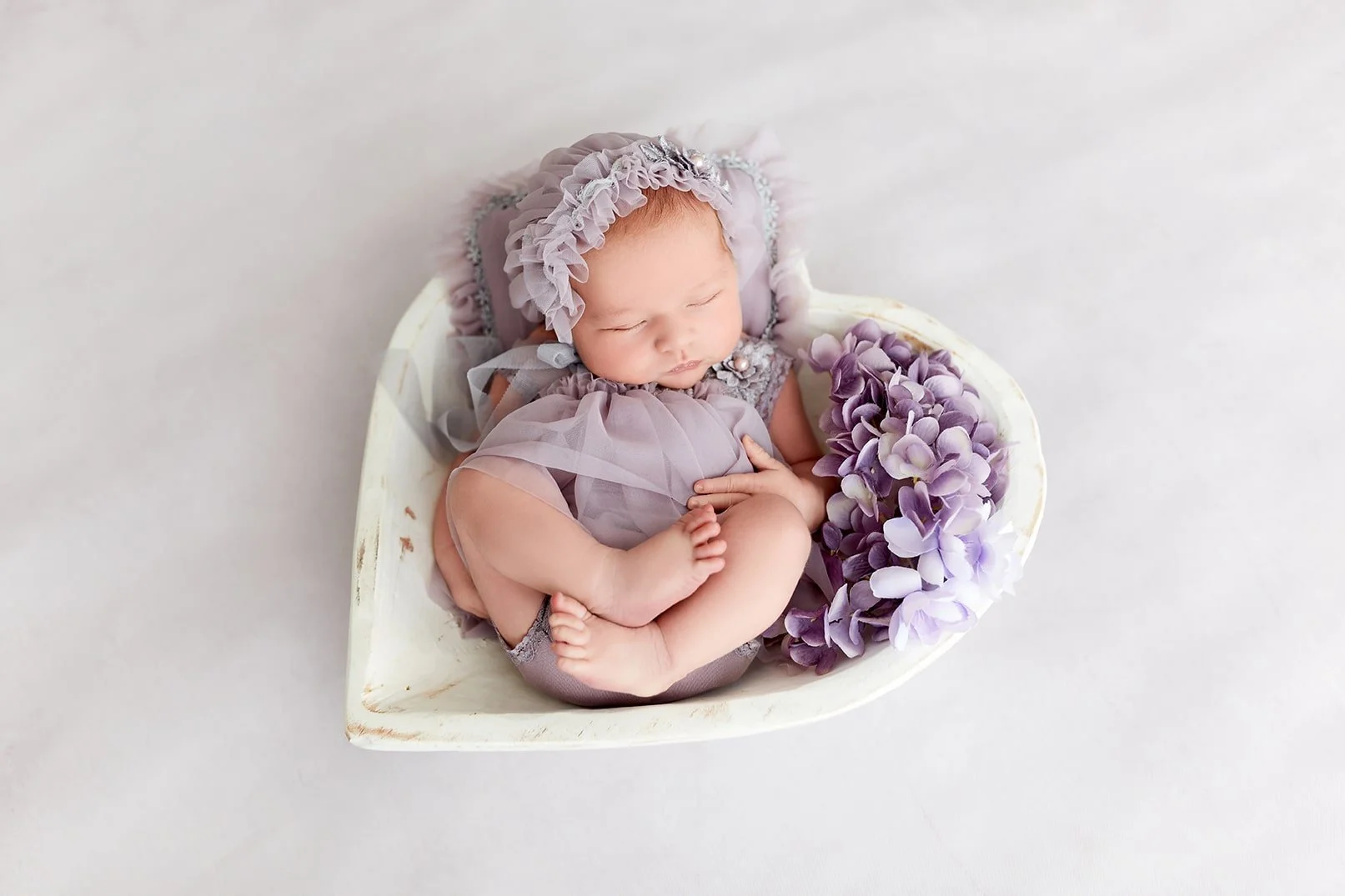
2. Create A Calm, Cozy Environment Before The Session
Creating a calming that environment is the foundation of every successful newborn photography session. Warmth tells the nervous system it’s safe to relax. In-studio, the ambient temperature sits around 78–82°F so a swaddled or lightly wrapped newborn stays at a comfortable baseline. Hands are warmed before every transfer. Everything that touches a baby, wraps, blankets, flokati, hats, and each prop, is clean, sanitized, and soft against the skin. When a baby drifts into deeper sleep, the tiny facial muscles relax, breathing settles into a steady rhythm, and fingers and toes soften. That’s the moment when a gentle transition into a new pose can happen without a startle.
Parents often notice that even a small draft or a cool surface can wake a sleeping baby. That’s why changing pads are lightly warmed, and why the first contact with a bed, basket, or posing surface is a slow glide rather than a quick set-down.
In a diy newborn photoshoot at home, mimic this by pre-warming a safe, firm surface with a heating pad set to the lowest level for a few minutes, removing it before baby is placed so the material is just cozy, never hot. Comfortable baby equals relaxed features, and relaxed features equal beautiful newborn photos.
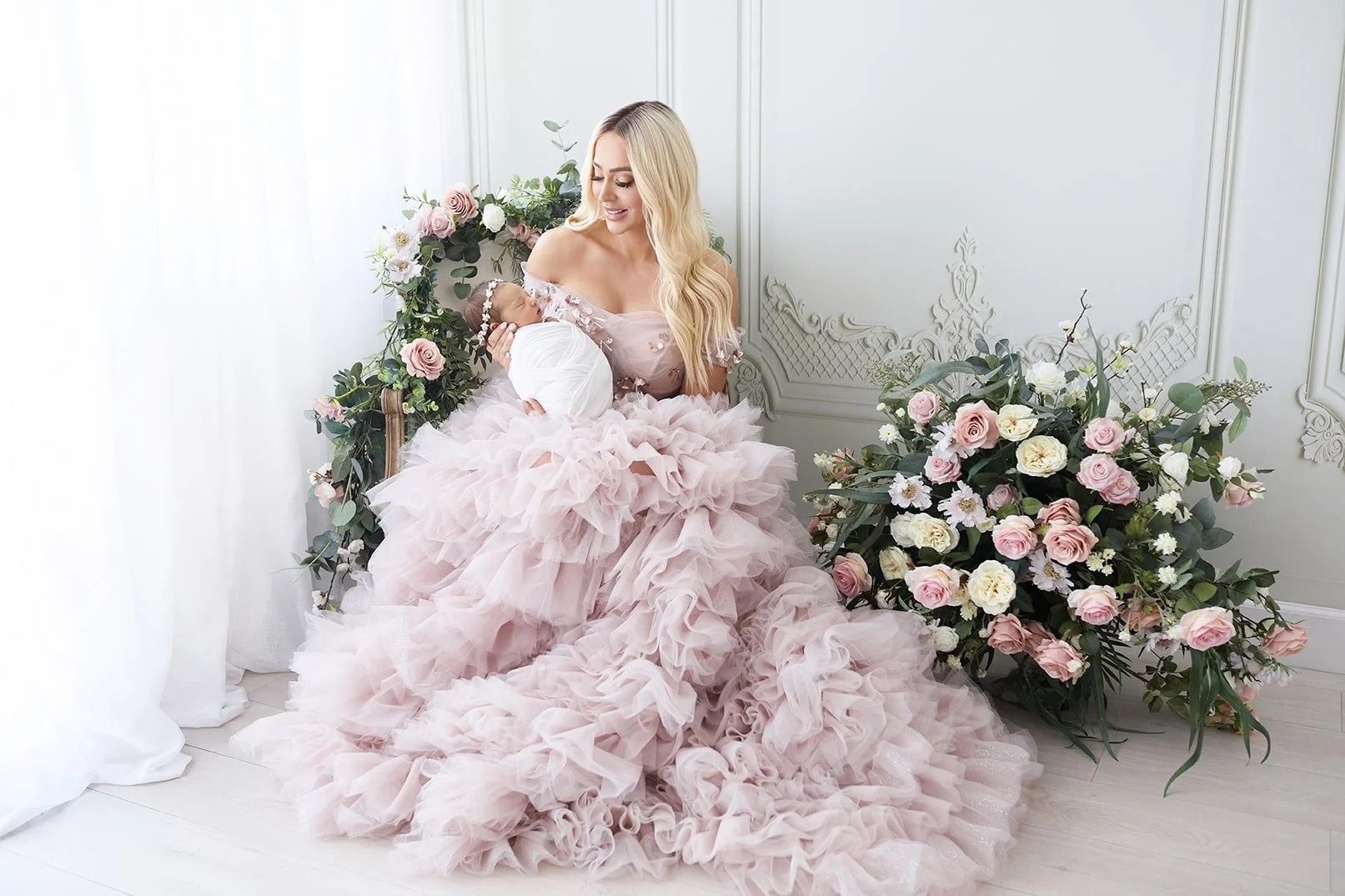
White Noise, Gentle Movements, And Safety Awareness
The whoosh is familiar to a newborn, masking small sounds that might jolt an infant from sleep. A continuous, moderate sound, from a machine or a simple phone app placed several feet away, keeps the sensory world consistent. Gentle movements do the rest. A calm hand on the torso, a gradual rock, and a still pause before lifting communicates safety far better than words ever could.
Newborn safety always leads the way. Airway remains unobstructed, chin never dips too deep into the chest, and every pose is supported. If baby signals discomfort, arched back, splayed fingers, a grimace, the pose shifts or stops. A professional newborn photographer reads those cues like a language and parents can learn them too.
If the idea of creating this environment at home feels intimidating, the DIY Newborn Photoshoot Course offers simple, natural light setups, practical tools worth investing in. Also see my Newborn Wraps Course to learn the exact wrapping techniques that keep a sleeping baby comfortable and secure while you capture your baby’s sweetest details.
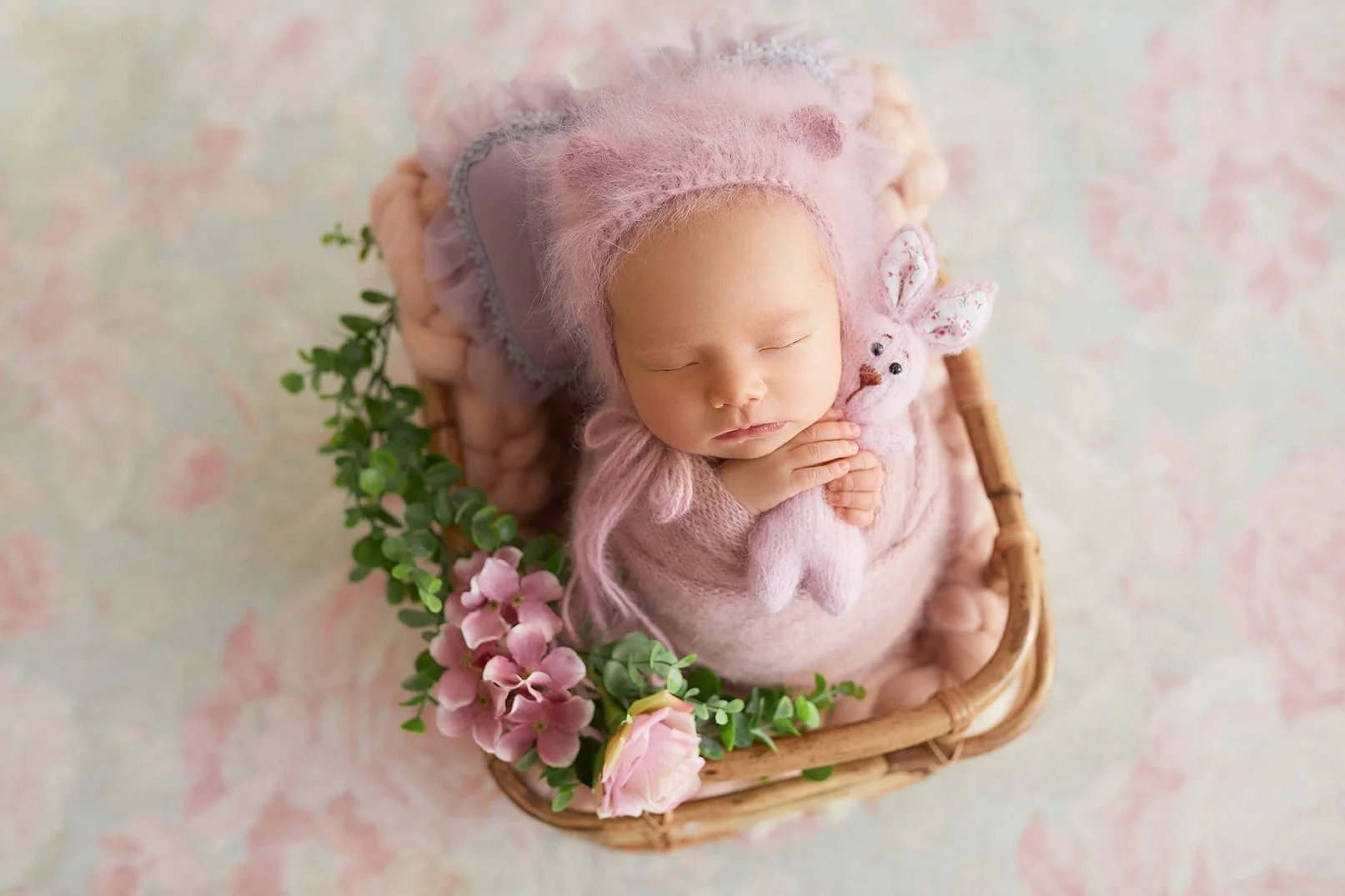
3. Feed Baby Right Before The Photo Shoot
Nothing soothes like a full feed taken slowly. Milk turns on the body’s “rest” systems, and a deeply satisfied newborn drifts into that pliable, sleepy state that makes a newborn photography session smooth. A full feed in the studio or right before leaving home prevents arriving to start-and-stop fussing. Burp breaks are also part of the process because a tiny bubble trapped high in the chest can become a big protest later in the pose, so a gentle pat with a steady rhythm after each side (or every ounce or two for bottle-fed babies) helps avoid mid-session tummy discomfort.
4. Keep Baby Comfortable With Proper Swaddling
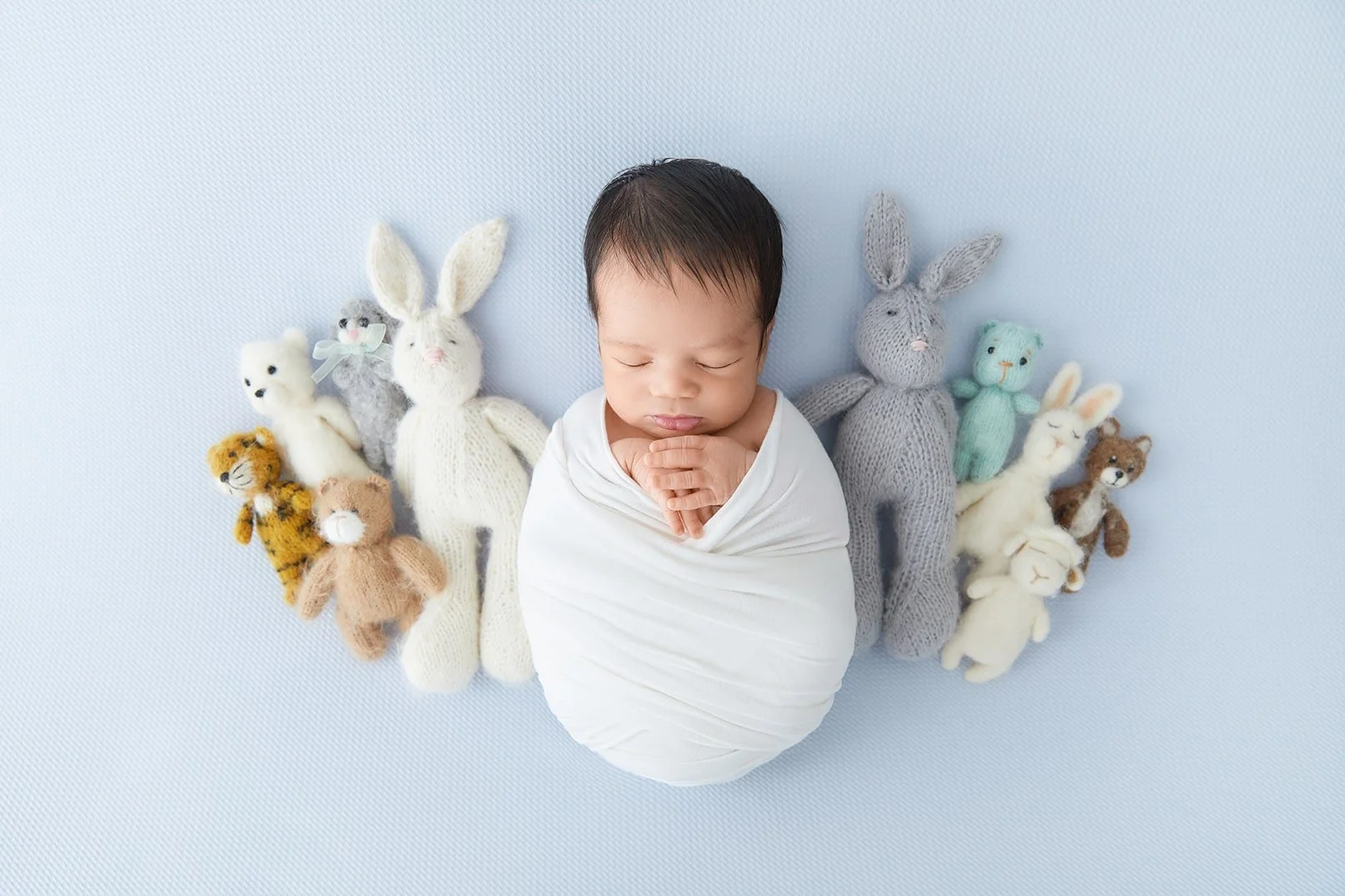
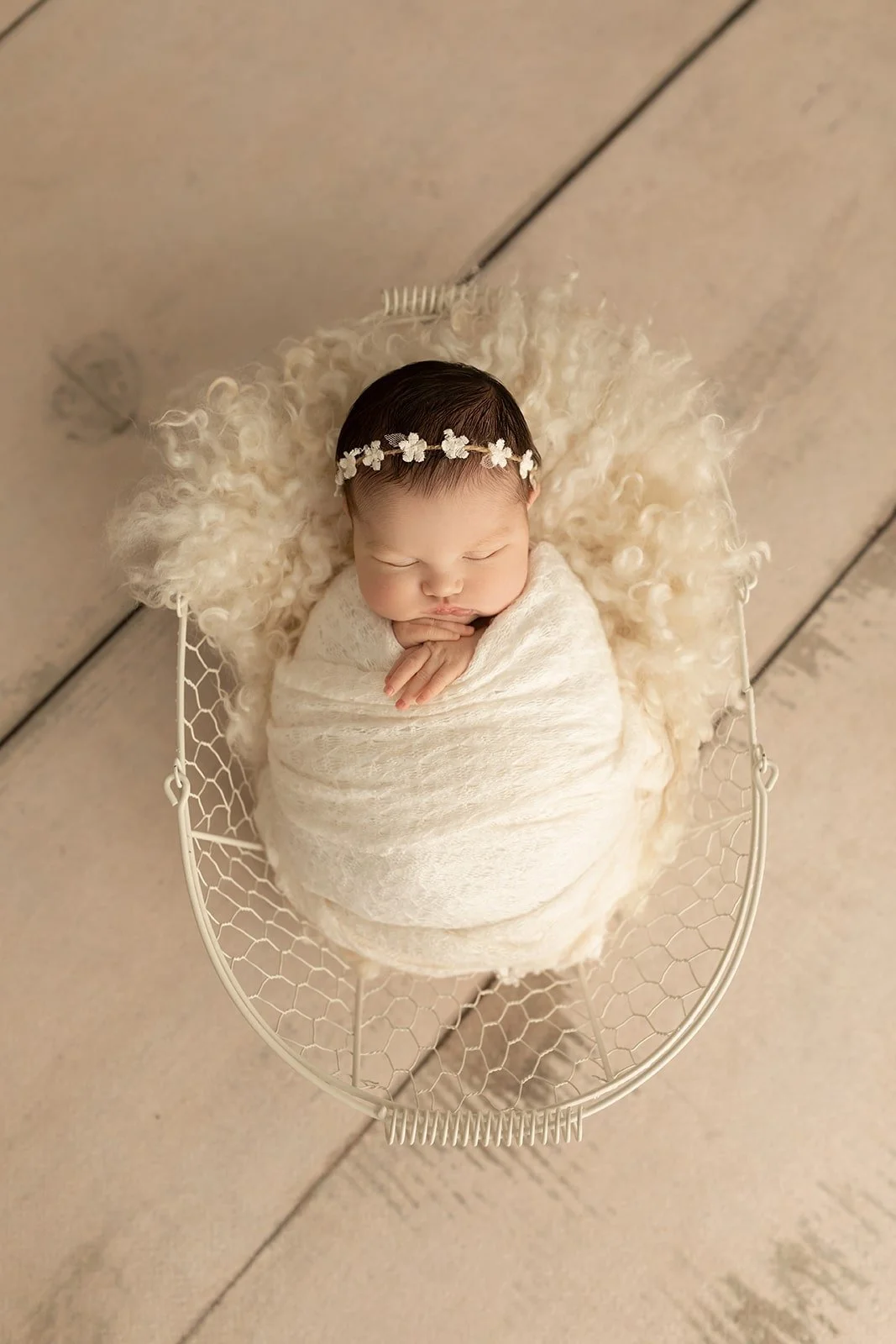
Swaddling is more than a pretty wrap. It’s a conversation with the startle reflex. A secure-but-gentle swaddle contains surprise flails that would otherwise wake a sleeping baby and reduces the sensation of emptiness that can startle newborns when their arms reach the air. In professional newborn photography, swaddling also creates clean lines that draw the viewer to the baby’s face and lips. The key is pressure distribution, snug across the shoulders and torso, relaxed across the hips, with hips and knees free to bend naturally. Toes can peek or be tucked depending on the shot, either way, the wrap supports, never squeezes.
Swaddle Styles That Influence The Final Image
Different wrap styles tell different stories. An egg wrap creates a smooth, rounded silhouette that feels cozy and womb-like. A layered wrap uses a base for security with a softer outer layer for texture, knits, gauze, or a light wool blend, so the newborn photo feels tactile without distracting from the baby’s face. For awake babies, a hands-to-heart wrap gives the fingers a calm place to rest near the chin, producing that endearing hello, world look. Color is a storytelling tool too. Soft neutrals keep the mood timeless, creams, oat, warm gray, and dusty rose flatter every skin tone and help the baby’s features glow.
For parents who want a hands-on lesson, my Newborn Wraps Course demonstrates five signature wrap styles step-by-step, balancing safety and comfort for beautiful newborn photos, every time.
5. Use Natural Light To Create Soft, Dreamy Baby Photos
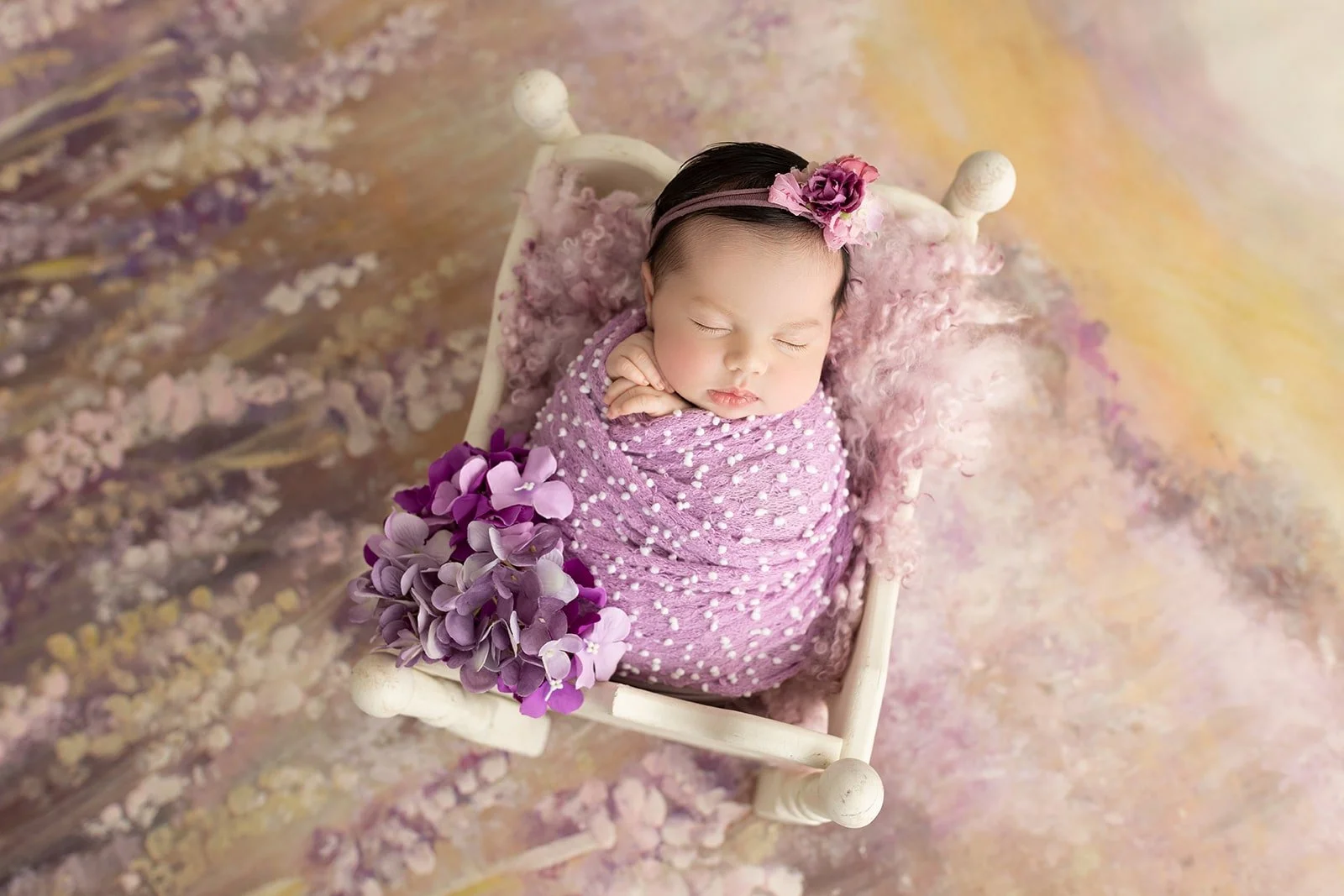
Natural light is kinder than any filter. It wraps, it flatters, and it forgives. The most flattering newborn photoshoots use a window as a giant softbox. Position the baby so light skims across the face from the side or slightly from the top of the head toward the chin. This angle shapes the cheeks, lights the eyelashes, and gives the lips a gentle highlight.
When light comes from the feet upward, shadows can fall oddly under the nose, rotating the baby or the posing surface just a few inches restores balance. If the sun is direct, a sheer curtain turns harsh rays into a velvety glow. If it’s gloomy outside, embrace it, moody light against a soft blanket can be perfect for capturing beautiful details like hair swirls and tiny eyelashes.
Avoiding Harsh Light And Distracting Shadows
Hard light can be too dramatic for newborn babies. Avoid placing the baby where sunshine cuts across the face, dividing features. A simple sheer drape or stepping back a few feet usually solves it. Reflectors, anything from a white foam board to a light bed sheet, bounce light back to the shadow side of the face, erasing heavy shadows without flattening the baby’s features.
This is how a professional photographer makes even a small space feel like a bright studio. Parents often say, there isn’t enough light at home, and then watch the room transform when a chair is pulled closer to a window and curtains are softened.
For those wanting more in-depth natural light setups specifically designed for newborn photography tips, the DIY Newborn Photoshoot Course inside ROXAMINA Photography Academy breaks down four simple layouts that work beautifully in small spaces.
6. Choose Soft, Neutral Colors And Minimal Props
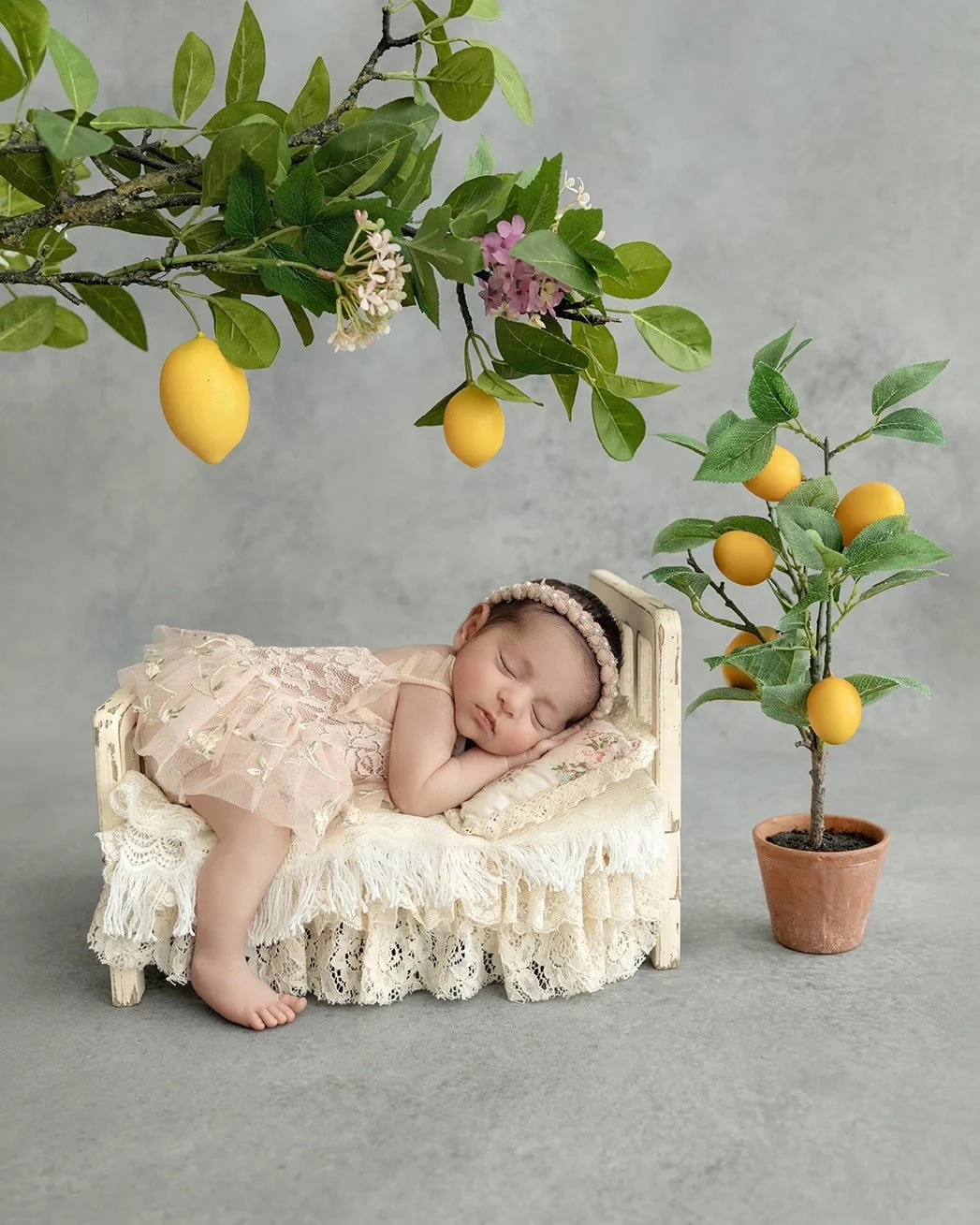
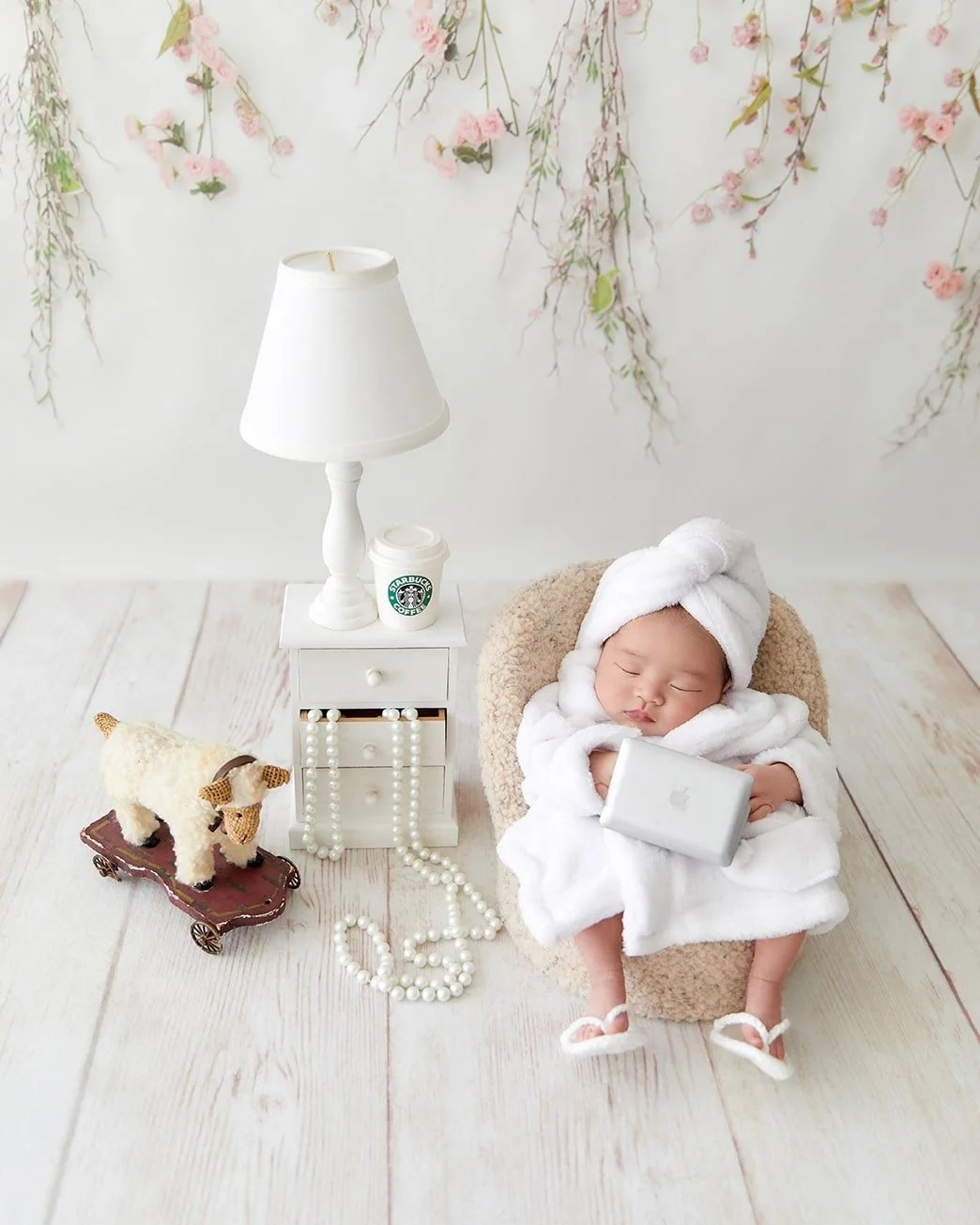
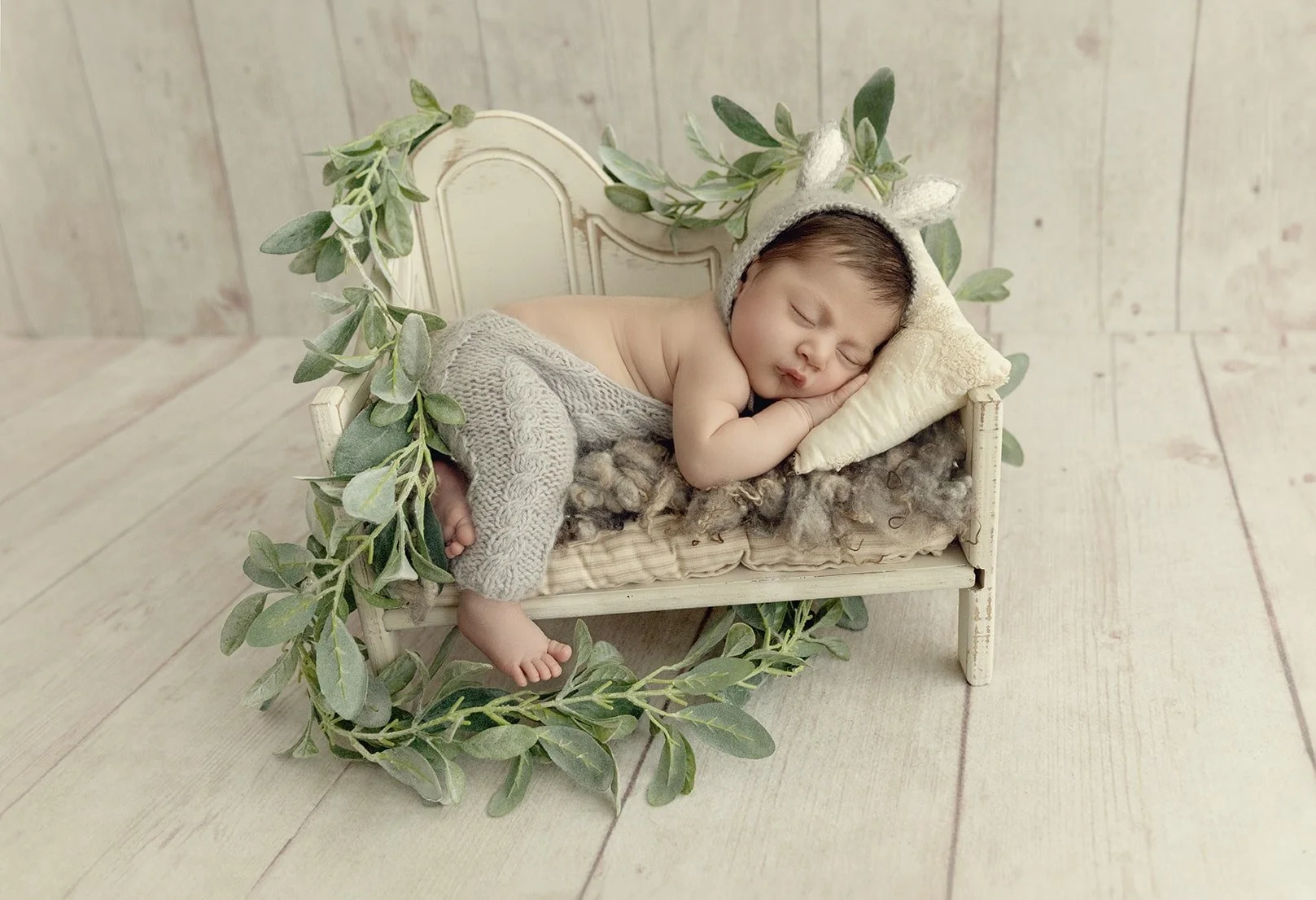
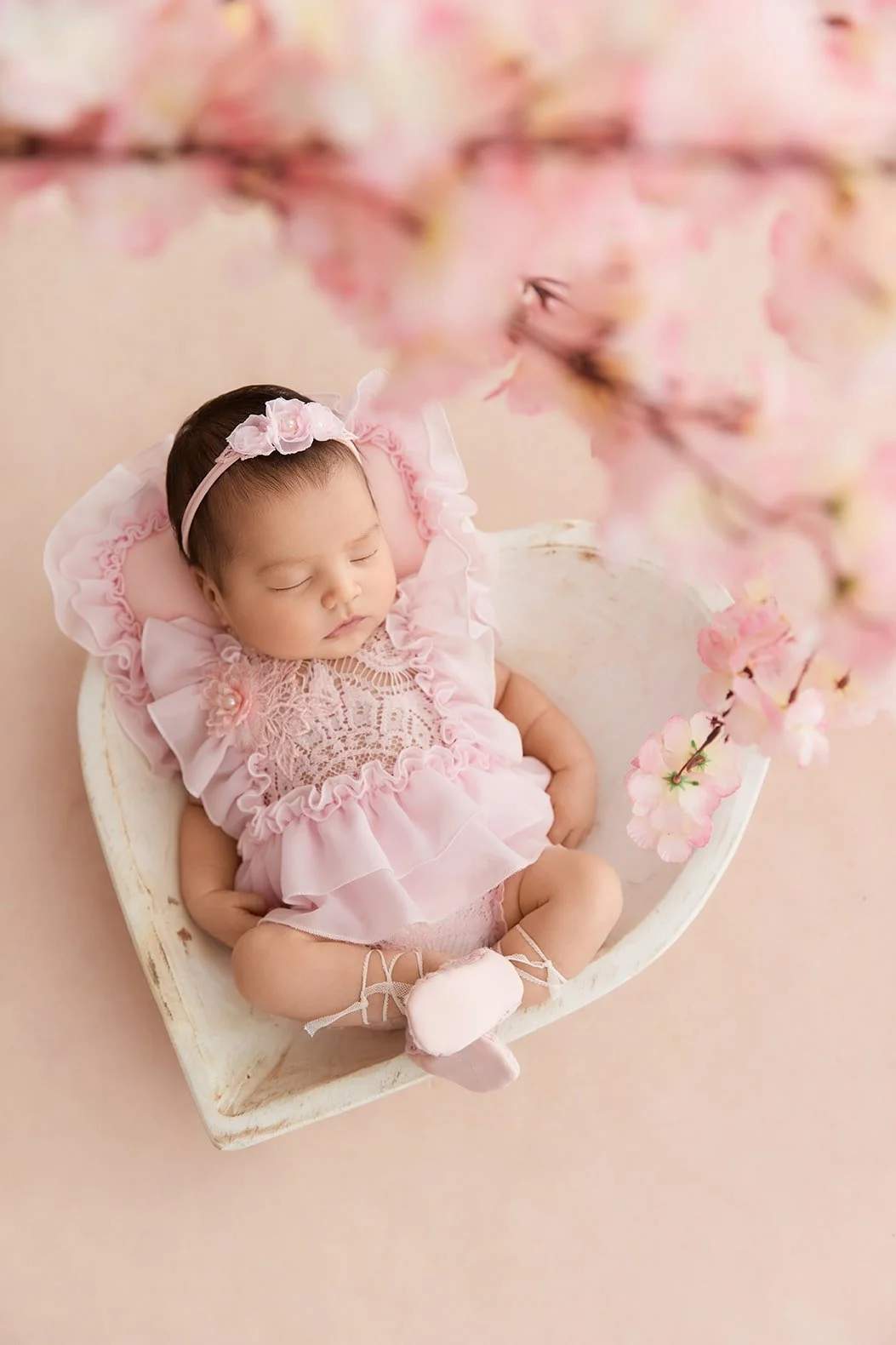
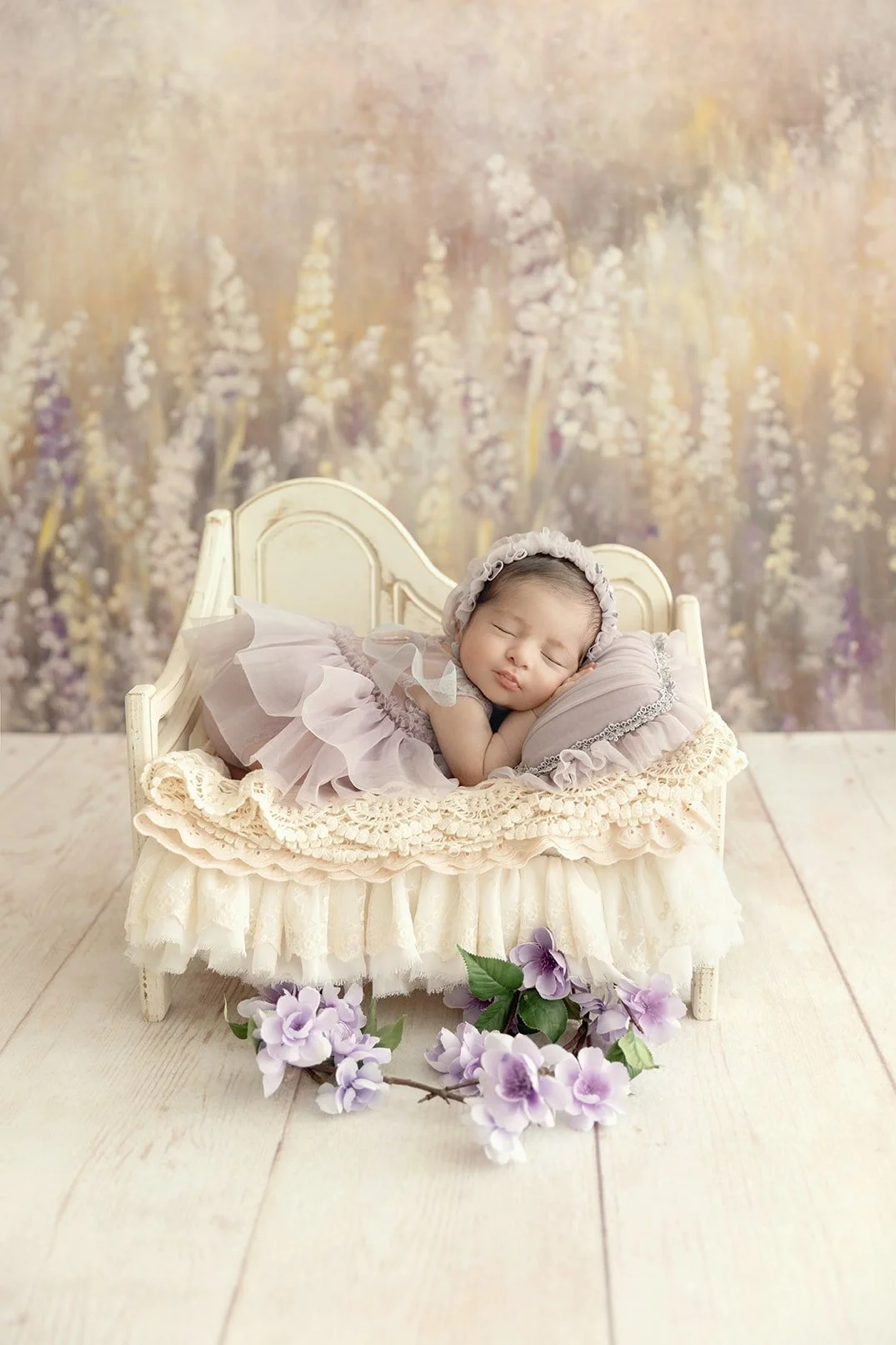
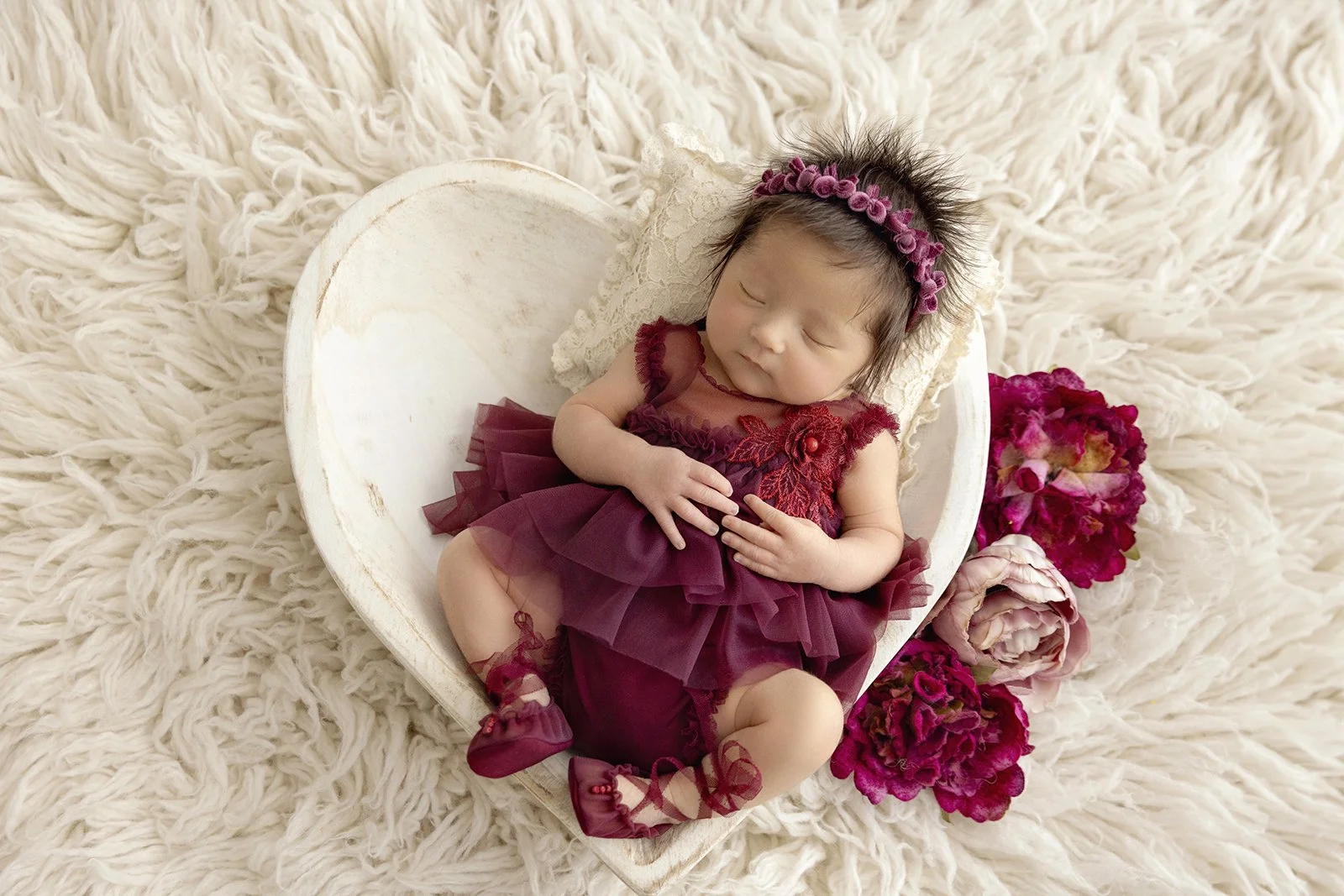
Props are like seasoning, not the meal. A beautiful newborn photoshoot begins with a clear focal point, the baby’s face. Soft, neutral tones won’t compete with delicate skin, and minimal props ensure nothing pulls the eye away from the story. The tiniest newborn needs scale to look tiny, a small knitted pillow, a gentle bonnet, or a single stem of dried florals can provide context without crowding the frame. Palettes built from cream, warm gray, honey, and pale blush feel like a lullaby. They also age gracefully, which matters when these newborn portraits become heirlooms on a living room wall.
Texture And Material Selection In Professional Newborn Photography
Texture adds depth without noise. Flokati rugs, brushed cotton blankets, ribbed knits, and handwoven wraps create layers of softness that photograph like clouds. Wood props, simple bowls, shallow beds, or platforms, bring warmth and a sense of origin. The guiding rule is comfort first. Every surface is lined, every edge is padded, and every layer breathes.
7. Learn How To Pose A Newborn Safely
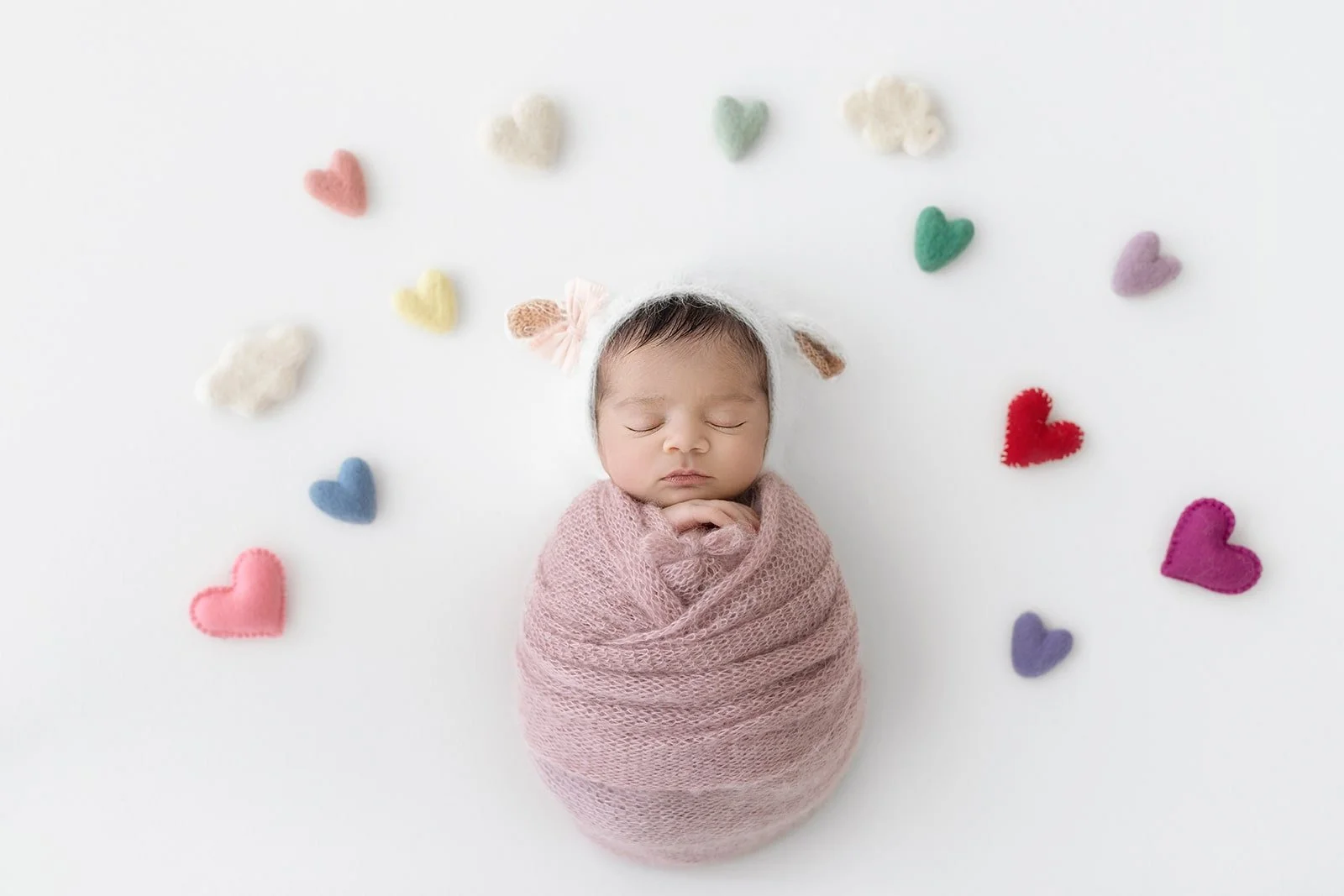
The safest and most comfortable positions follow the baby’s natural curl, keep the airway neutral, and distribute weight evenly. The side-lying curl, the back-lying tucked pose with hands near the cheek, and the semi-upright swaddled pose in a shallow basket are staples because they respect physiology. A folded receiving blanket tucked discreetly under the shoulders lifts the chin just enough to keep breathing easy. Fingers are guided softly, not placed rigidly. If a baby tightens, opens the mouth wide, or pushes away, try a different approach.
Poses To Avoid And Why Safety Must Always Come First
Any pose that requires unsupported balancing or strains the joints is a no. Newborn safety means avoiding extremes, no extreme neck flexion, no pressure on wrists or ankles, no forcing of hands flat under the jaw. Composite images sometimes seen online are created by professionals with a spotter and multiple frames combined afterward, they’re never done unsupported in real time.
Parents planning to take newborn photos at home should keep to the simplest positions and use swaddling as a helper. If a baby is more alert, the safest and most photogenic option is often the most natural, swaddled on the back with hands peeking, or side-lying in a shallow, padded basket with the head gently elevated.
For a deep dive into adapting poses in real life, my Newborn 18 Days Old Course will teach you everything you need to know.
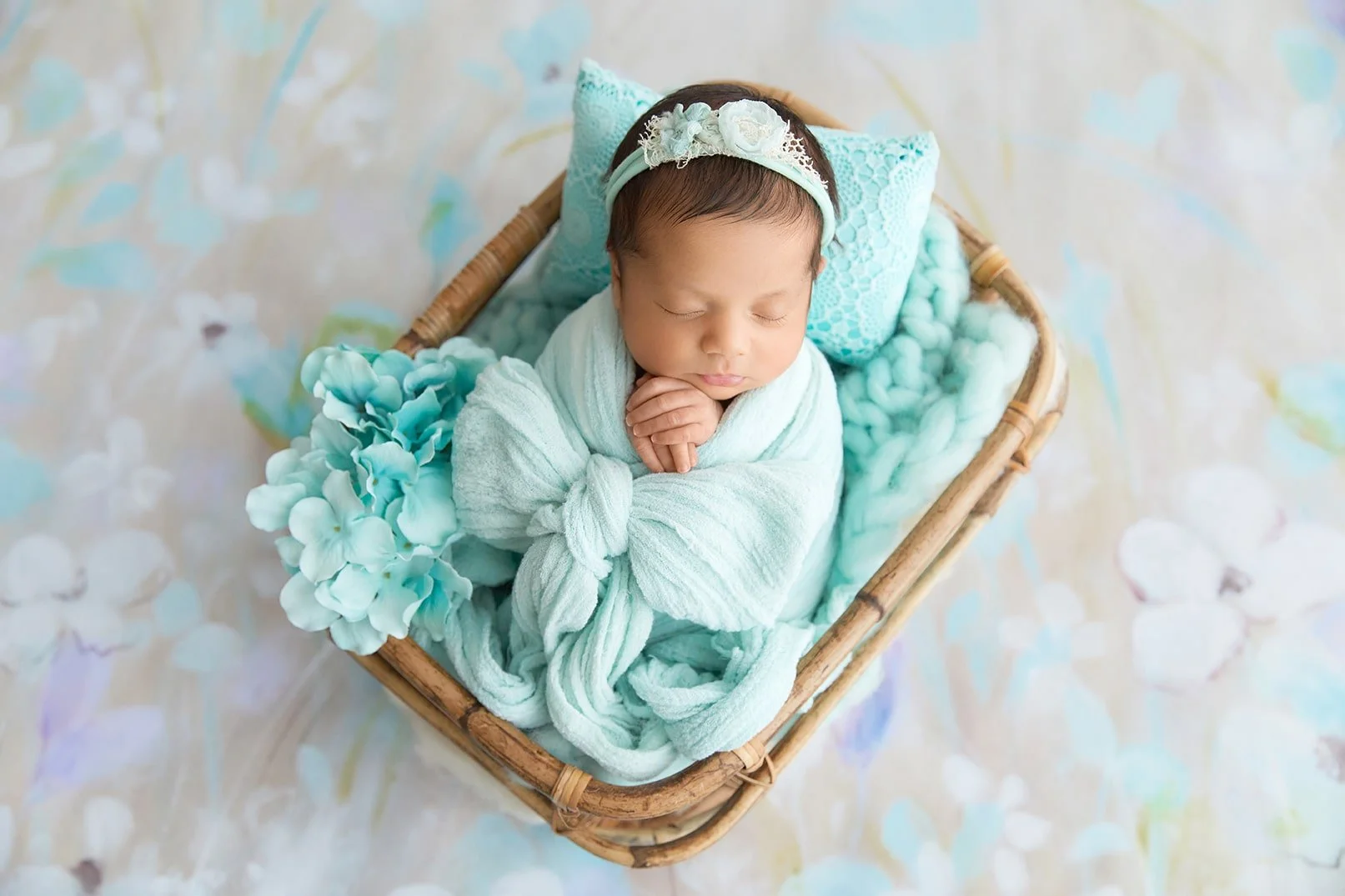
8. Photograph Baby From Above
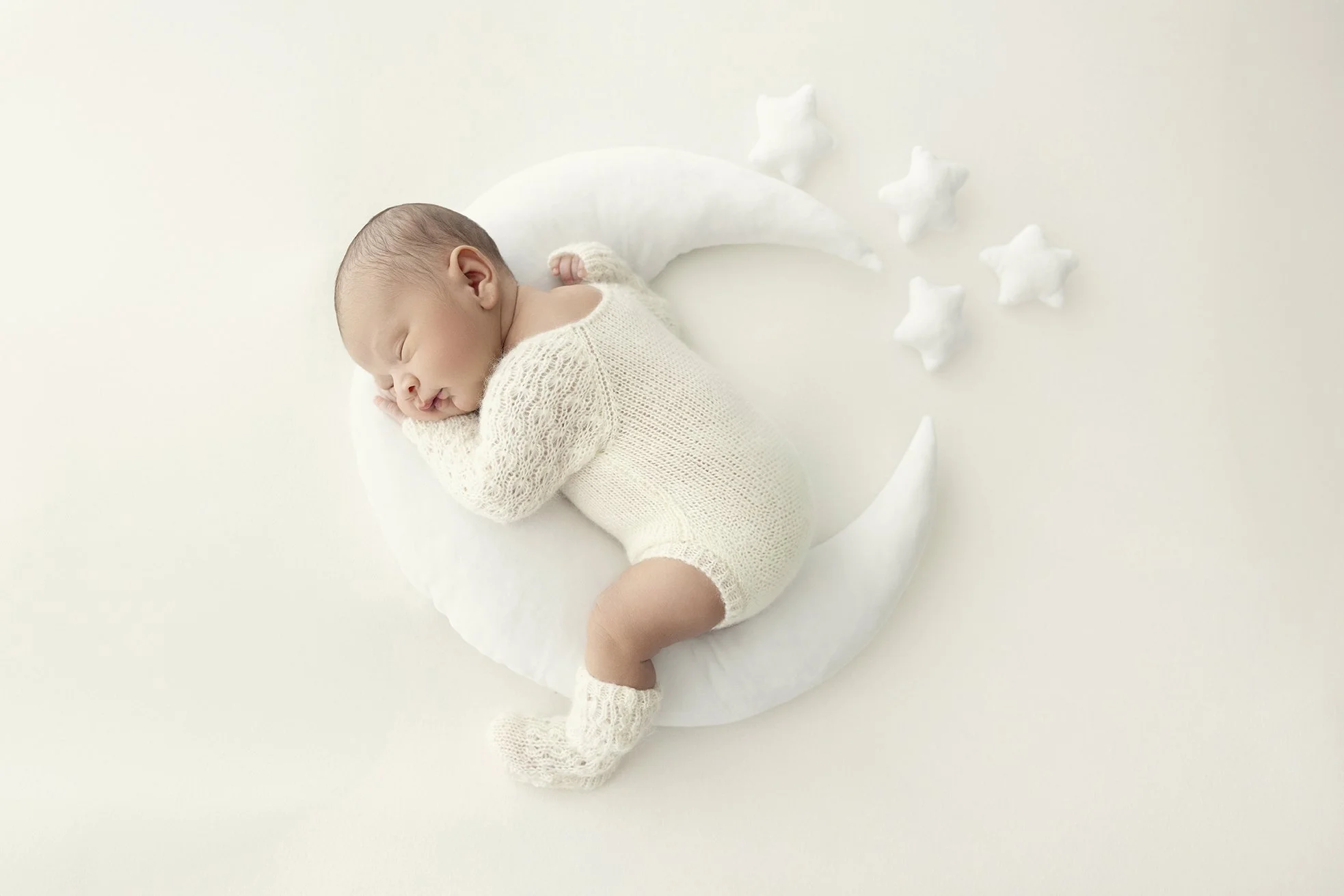
The overhead angle is a newborn photographer’s secret handshake with simplicity. From above, the proportions look true, the eyelashes catch the light, and the baby’s face becomes the poem. This angle avoids the foreshortening that can happen when shooting from the feet, and it minimizes background distractions. A subtle turn of the baby’s head toward the window lifts the catchlight in the eyes if baby is awake, a gentle tilt away from the light softens shadow if the goal is a dreamy, sleepy look. Cropping tighter on the face and hands turns a simple photo into a portrait that feels intimate and timeless.
When photographing from above, plant both feet, lock the elbows softly, and lean from the hips to stay balanced. Keep the strap around your wrist or neck, and if using a phone, grip it with two hands. If a step stool is ever used, another adult stands within arm’s reach. In a studio, a wide, stable posing surface removes risk and allows tiny adjustments without shifting the baby’s center of gravity.
Parents often ask how to keep hands steady for crisp baby photos. The answer is breathing. Exhale slowly while pressing the shutter, even if you're shooting on an iPhone.
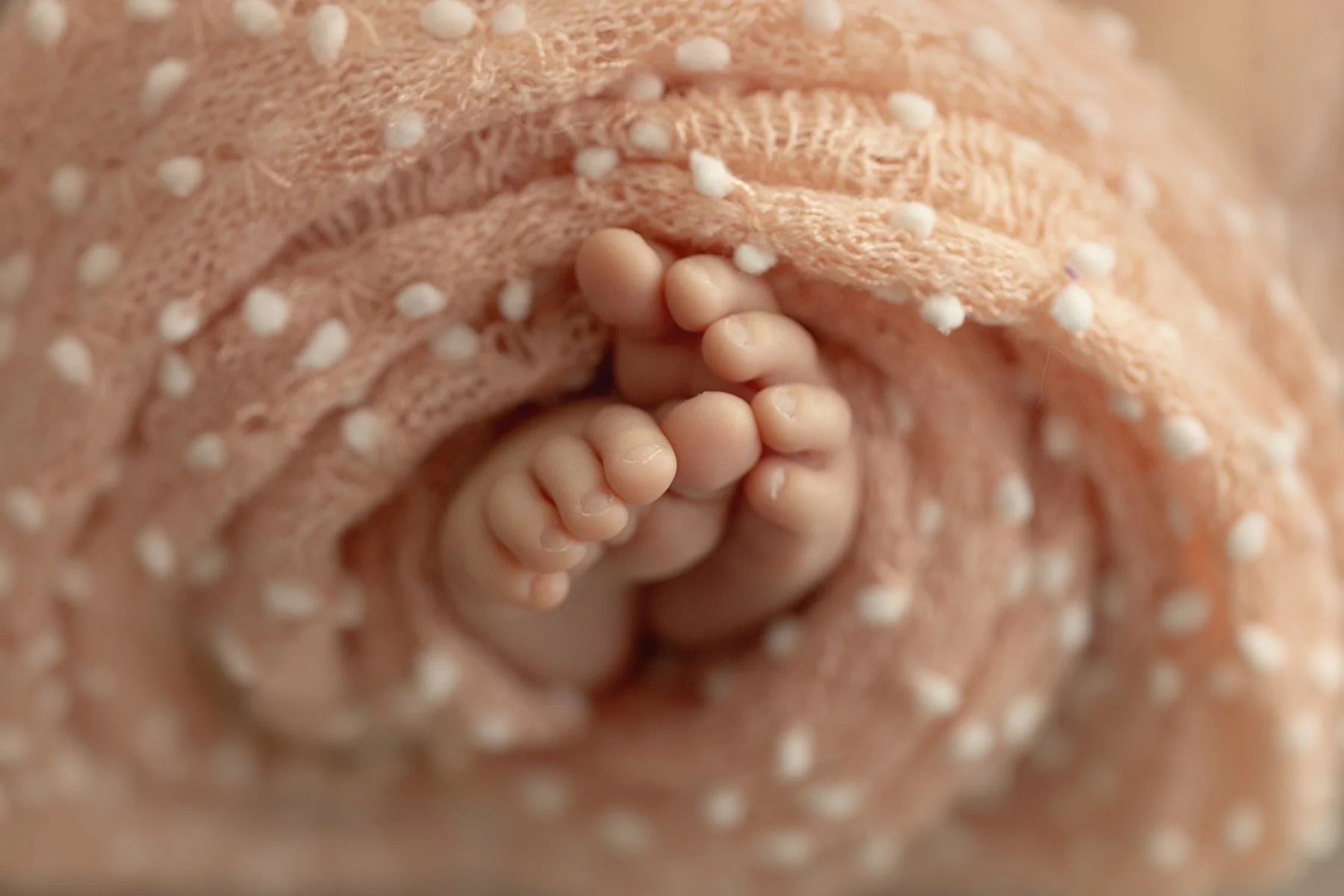
9. Capture The Tiny Details That Change So Fast
Newborn pictures that move people years later usually include more than one angle of the same setup. A full portrait anchors the memory, the detail shots make the memory three-dimensional. Fingertips resting against the swaddle tell you how tiny they were. A hair swirl by the crown becomes a signature. The faintest smile during sleep, caused by a dreamy cycle, can be the image that makes a parent’s heart flip every time they see it.
In the studio, these details are photographed intentionally, hands relaxed rather than clenched, toes peeking through a knit at just the right place, lashes catching a whisper of light. Parents who try diy newborn photos at home can mimic this by shooting a small series for each setup, one wider frame, one mid, and at least two close-ups, always returning to the baby’s face as the anchor.
Macro-Style Close-Ups Using Any Camera
True macro lenses are wonderful, but not required to photograph newborns beautifully. On a phone, using the native camera and gently moving closer until focus locks preserves clarity better than tapping into digital zoom. The secret is light. Turn the baby a touch toward the window, find the direction that makes the highlight sit softly on the lip line, and tap to focus on the lashes or the edge of the mouth. Breathe out, click, and repeat.
In the studio, a reflector brings light back into shadows under a chin or hand. At home, a white pillowcase does the same job. The goal is consistency across the gallery so the detail shots feel like they belong with the portraits, a single story told in many close, quiet chapters.
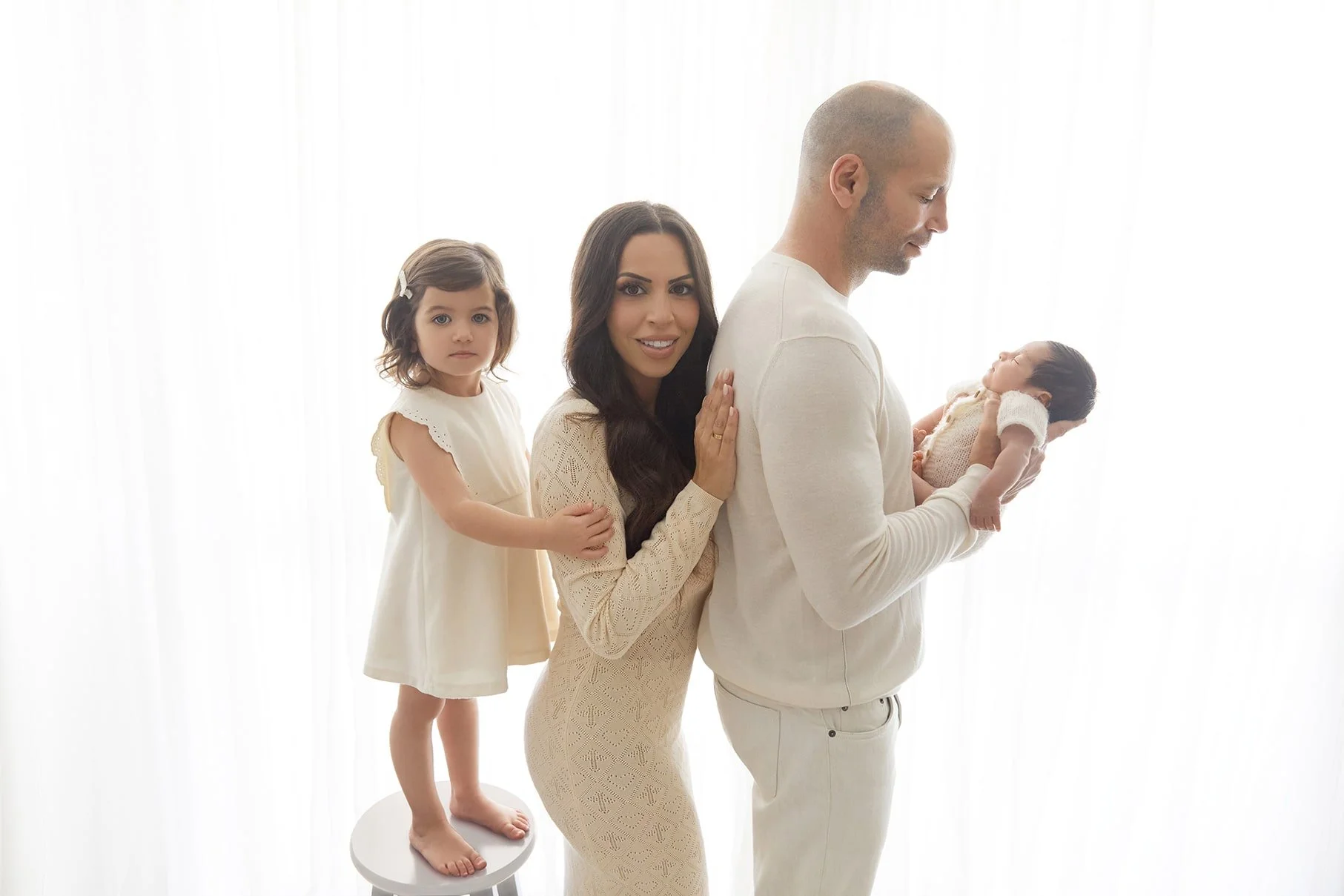
10. Include Parents For Beautiful Newborn Portraits
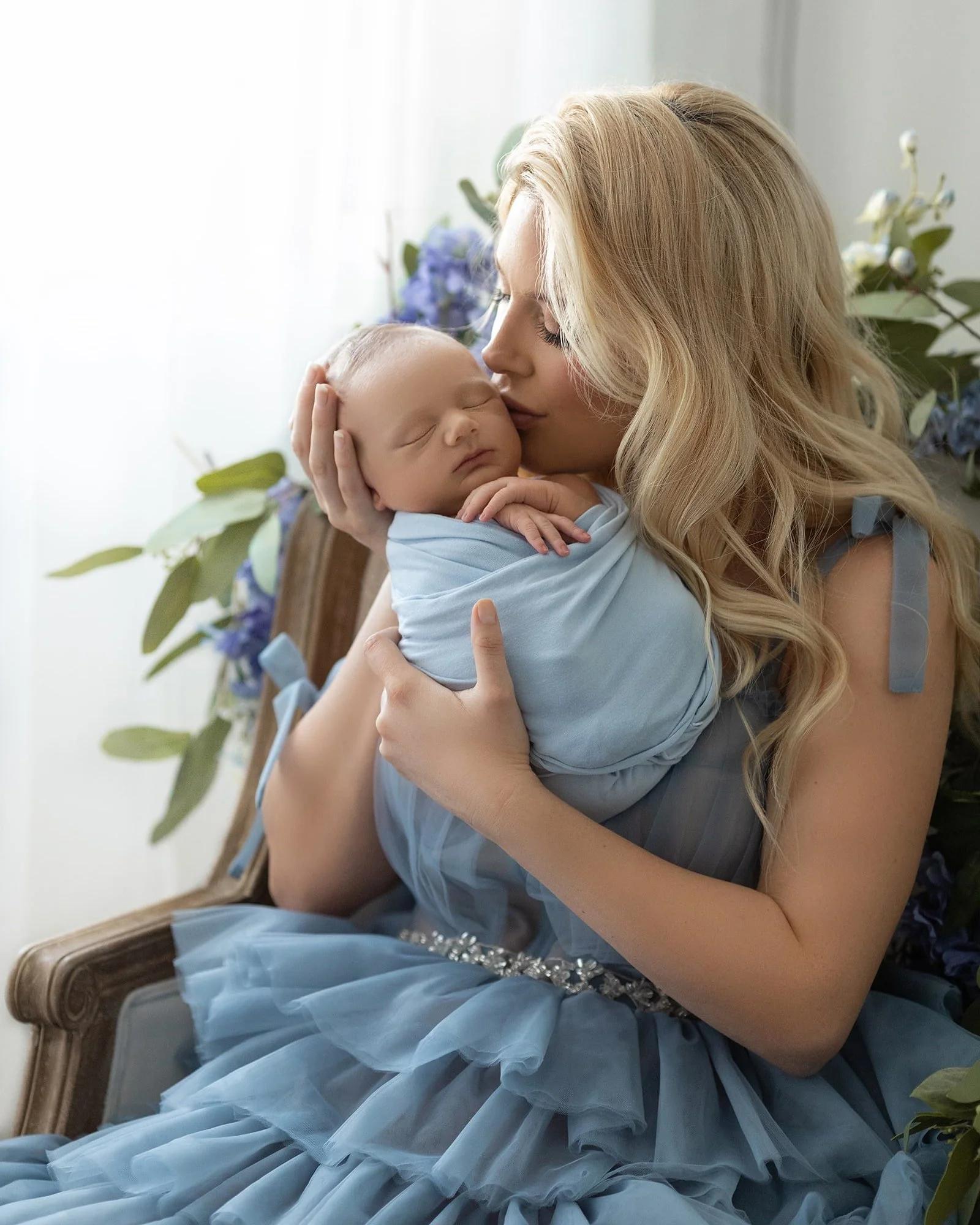
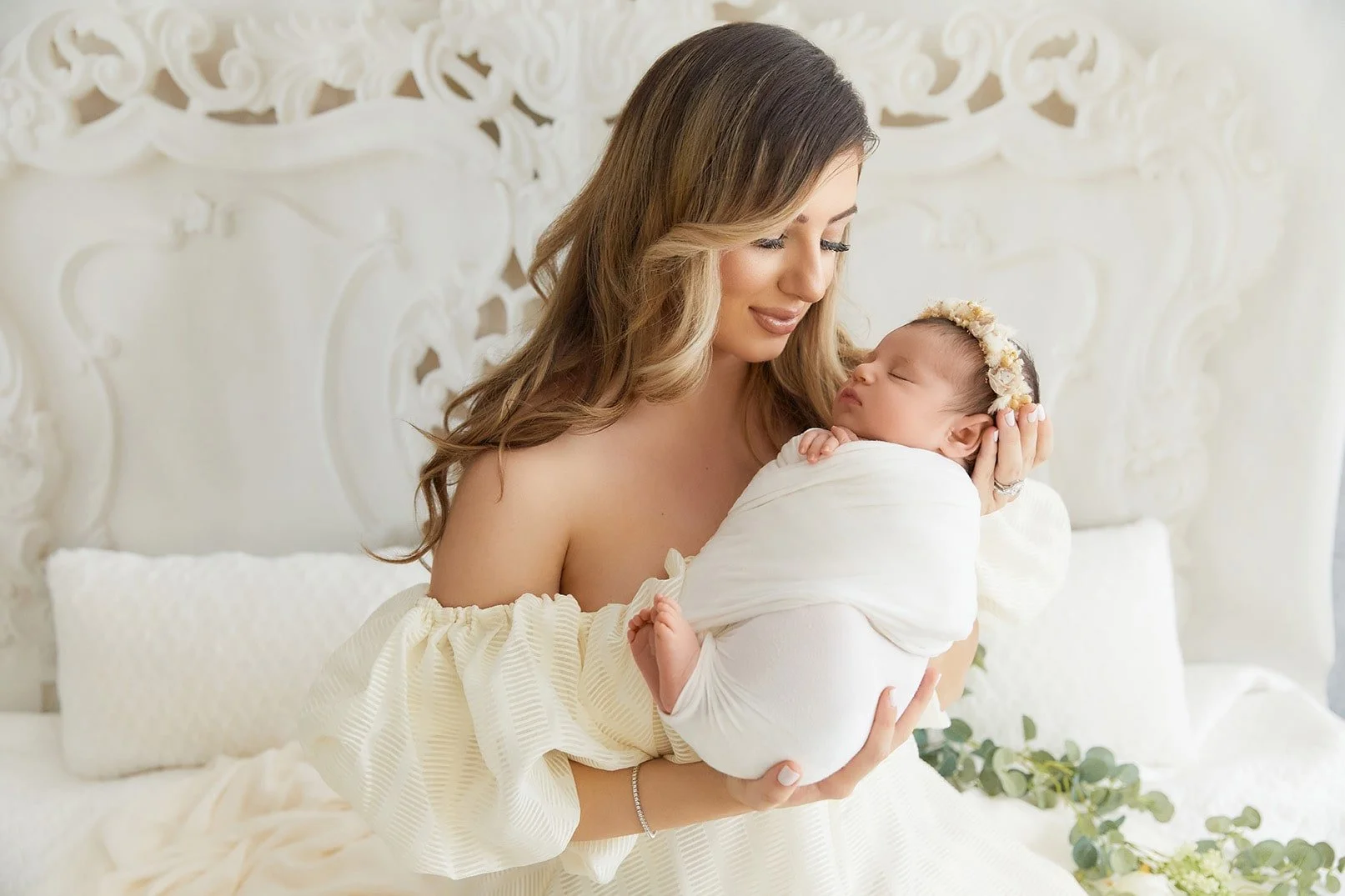
A newborn and family portrait is the feeling of a new baby settled into a familiar heartbeat. Poses that keep parents touching the baby, cheek-to-forehead, hand at the crown, baby lying across forearms with a soft swaddle, photograph as love rather than composition. Wardrobe stays simple. Soft neutrals for everyone let skin tones glow and help the little one remain the visual center. When a parent worries about not looking camera-ready, remember, the baby is the star and gentle connection is all that reads.
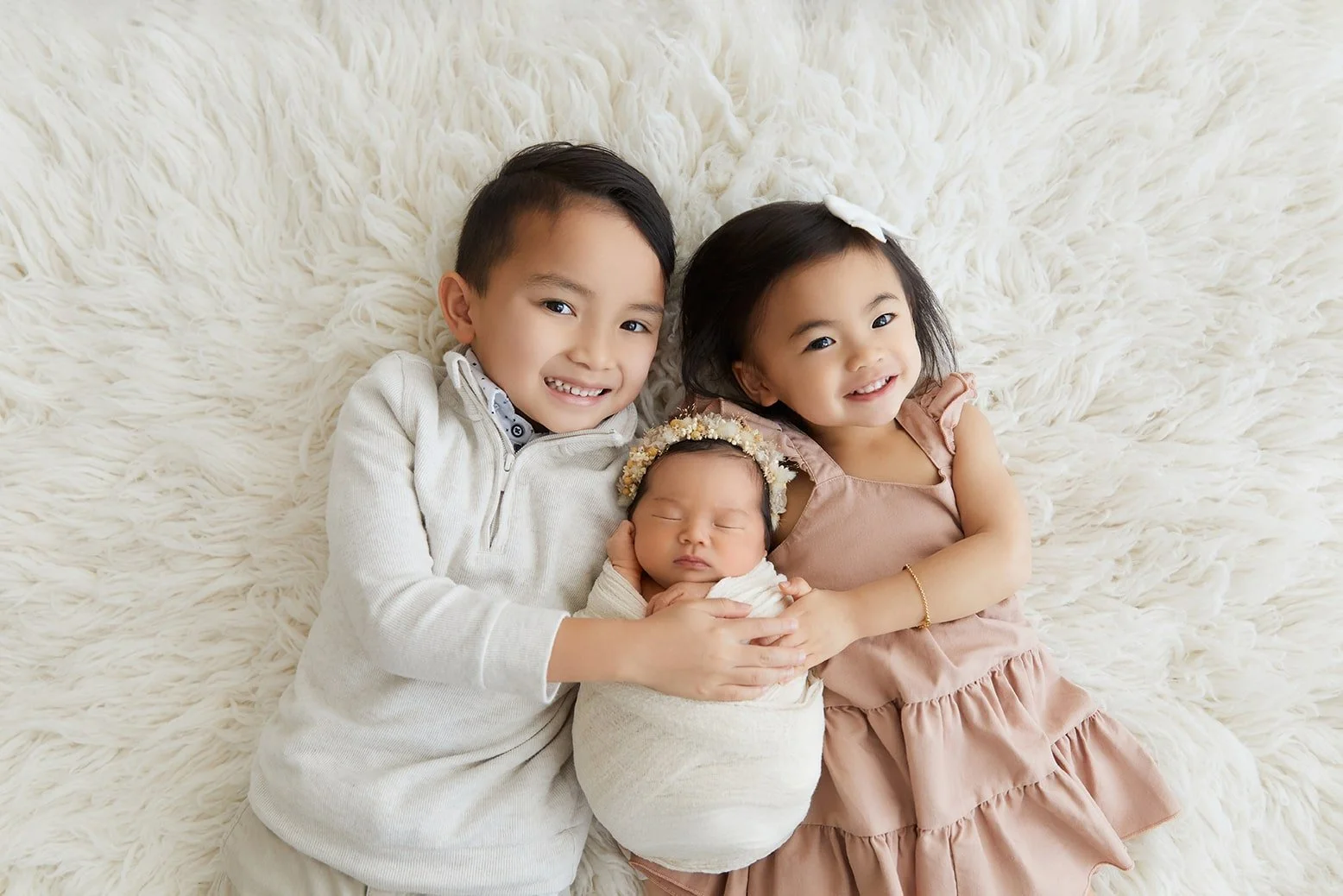
11. If Including Siblings, Keep It Simple And Playful
The most successful newborn and family sessions with siblings keep expectations playful. A toddler is not a prop, they’re a person with their own timeline. Sessions should plan the sibling portion first while attention is fresh, and then pivot if curiosity goes elsewhere. A soft rug on the floor, a simple pillow, and a wrapped baby create a safe setup where the older child can lay their cheek near the baby’s head, count tiny toes, or help by holding a hand. If the toddler decides today is not a day for snuggles, a parent’s lap can become the set, baby swaddled, sibling perched on the knee, everyone in a loose cuddle. The moments in between, quick kisses, half-laughs, proud looks, are the ones that translate into unforgettable baby photos.
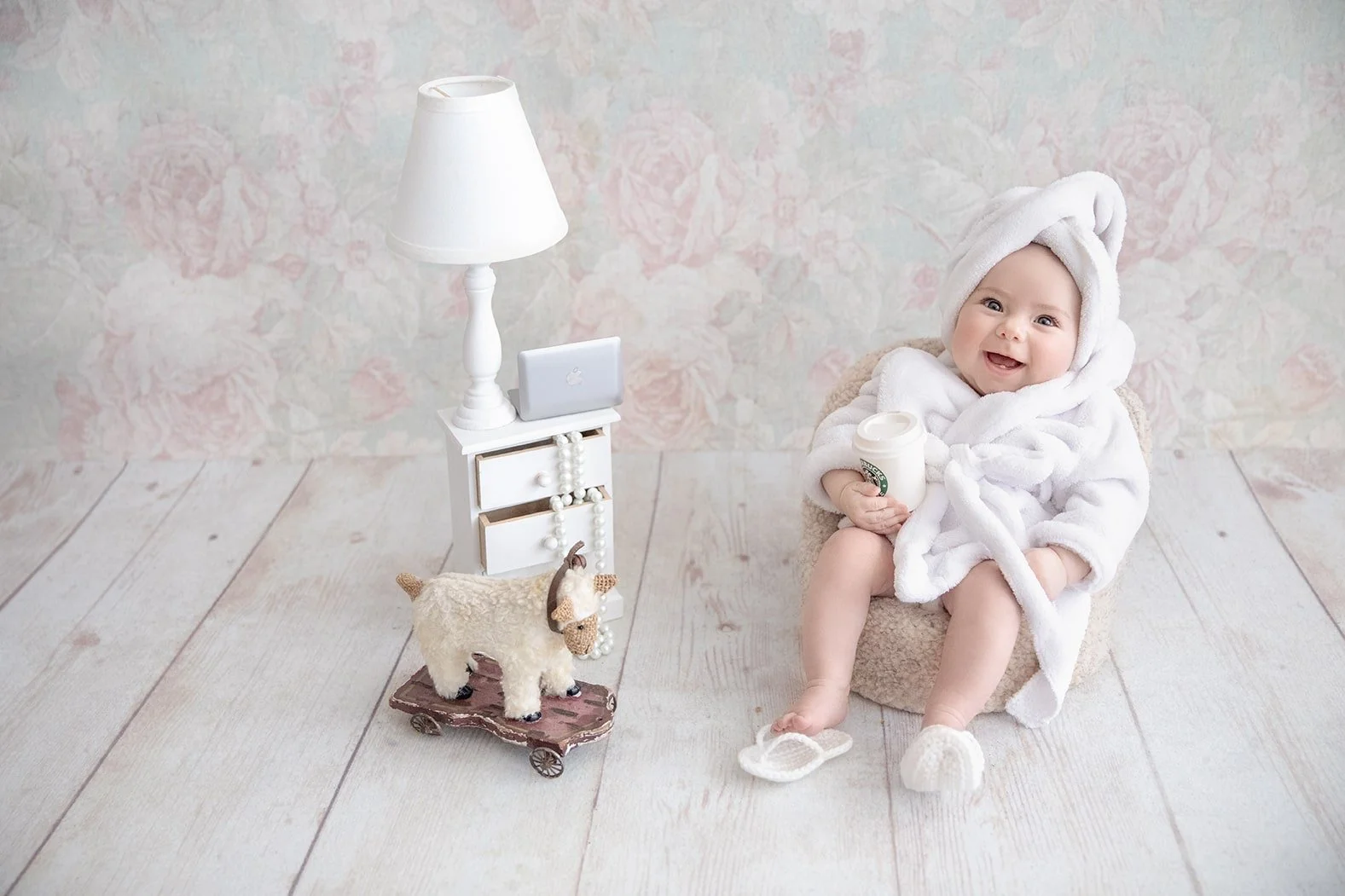
12. The Best Moments Happen When You Slow Down
A newborn session is less a race and more a tide. There are moments of calm, small swells of fussiness, then another long exhale into sleep. Embracing that rhythm is the difference between stressful and magical. Breaks are built in. If baby wakes hungry again, that’s part of the plan. If a diaper change becomes a reset, the next setup is adjusted to meet the mood. This patience is why newborn photography looks effortless when done well. The calm energy in the room becomes the calm energy in the pictures. Parents breathe, the baby senses it, and the camera sees the exhale.
The best galleries are earned by listening. If a baby settles beautifully on the side, that becomes a theme across two or three setups. If the sleeping baby stirs every time hands are tucked under the cheek, the hands are left over the chest instead and the wrap becomes the star. Letting the baby lead doesn’t mean giving up on variety, it means making small, intelligent changes, altering the angle, swapping a texture, moving closer for details, that keep the session flowing without jolting the baby from comfort to protest.
My Newborn Photography Course Bundle goes deep on flow, pacing, and adapting, so every setup feels like it belongs to your baby’s unique story.
Conclusion
The best newborn photos are built on small, loving decisions. Choosing a soft palette that frames the baby’s face rather than competes with it. Keeping the set minimal so every curve and dimple reads clearly. Preparing for the session the way one prepares a nursery corner, cozy, clean, calm. Scheduling your newborn photography early so there’s no rush or worry. Trusting that if a plan needs to pivot, the result can be even more beautiful than imagined.
A professional newborn photographer makes those pivots second nature, but parents can borrow the same instincts at home, keep the baby comfortable, follow the cues, let natural light do the heavy lifting, and slow down. Always slow down.
The little one will never be this small again and with thoughtful preparation and a gentle approach, a newborn photography session becomes a quiet celebration. It preserves the first chapter with all its softness and wonder, sleepy breaths, curled fingers. Years from now, when those baby pictures are pulled from an album or glow on a wall at the end of a hallway, the images will still carry the sound of that tiny heartbeat. They will still feel like the day everything changed and a family became larger by one perfect, beautiful newborn.
And that, more than anything, is why these twelve simple newborn photography tips for parents matter. They aren’t just practical tips. They are the scaffolding for a memory you can hold, the way to capture your baby’s first days with tenderness and skill, and the promise that the small details, the ones that pass the fastest, will be yours forever.
About Ramina Magid
Ramina Magid is an award-winning newborn photographer, celebrated for her organic, timeless approach to capturing life’s earliest moments. Originally from Baku, Azerbaijan, Ramina built her dream newborn photography studio in Beverly Hills, where she has photographed more than 800 newborns and families over the past eight years.
Her gentle, safety-focused style and natural light aesthetic have made her one of the most sought-after newborn photographers in California. In 2024, her work was recognized with awards for Best Newborn Photographer in both Beverly Hills and Los Angeles. Ramina’s portraits have reached millions worldwide through social media, admired for their warmth, simplicity, and emotional honesty. See her courses here.
Source: Ramina Magid