
Choosing the right maternity photographer to capture your motherhood journey? Find tips for your maternity photography session & portraits.
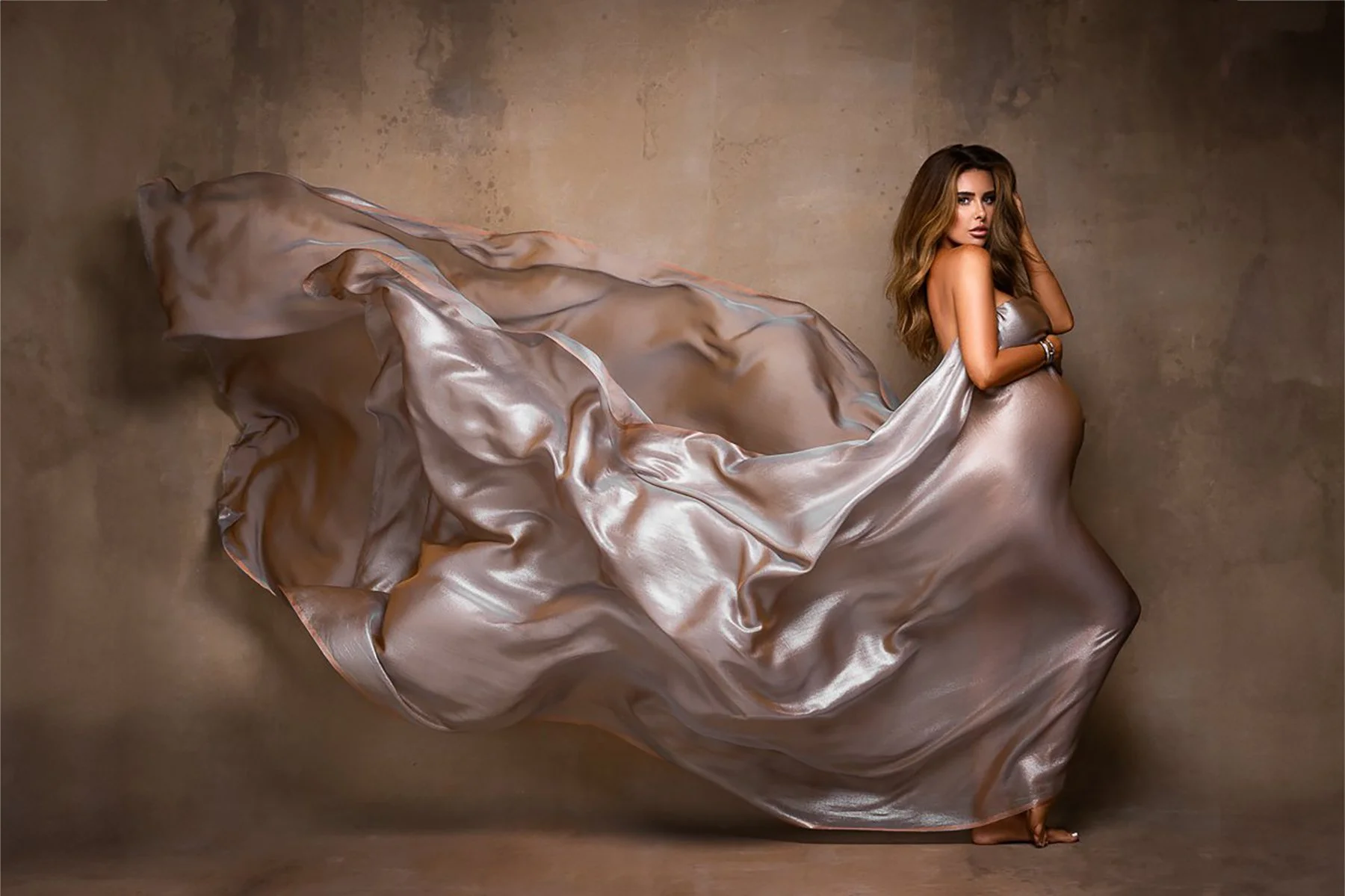
Choosing a maternity photographer is not about picking a pretty backdrop or a dress you saw online. You’re choosing someone to help you remember a version of yourself that exists for only a brief moment. Pregnancy changes how you move, how you stand, and how you feel when you look in the mirror. The person behind the camera needs to understand all of that and then shape light, pose, outfit, and space so the photographs feel like a true reflection, not a performance.
A maternity session begins with feeling and ends with images. If the photographer doesn’t understand how to read the quiet cues, a shoulder that softens when you feel safe, the way your hand naturally supports the bump, the small release in your face when you stop trying, the images can look polished but still feel distant.
When someone enters my Beverly Hills studio, I meet a mother at a specific point in her story. Sometimes it is a first pregnancy that still feels like a wonder. Sometimes it’s a next chapter in an already lively home. Sometimes the road to this day was winding and hard. A maternity session honors all of that. It is not a stage for posing on demand, it is a space where you are invited to be seen. If you feel pressured to deliver a certain kind of expression or to turn it on, tension sneaks into every frame. When you feel welcomed, guided, and unhurried, your presence deepens and the camera records what is real. That difference is everything.
Maternity Photography Styles
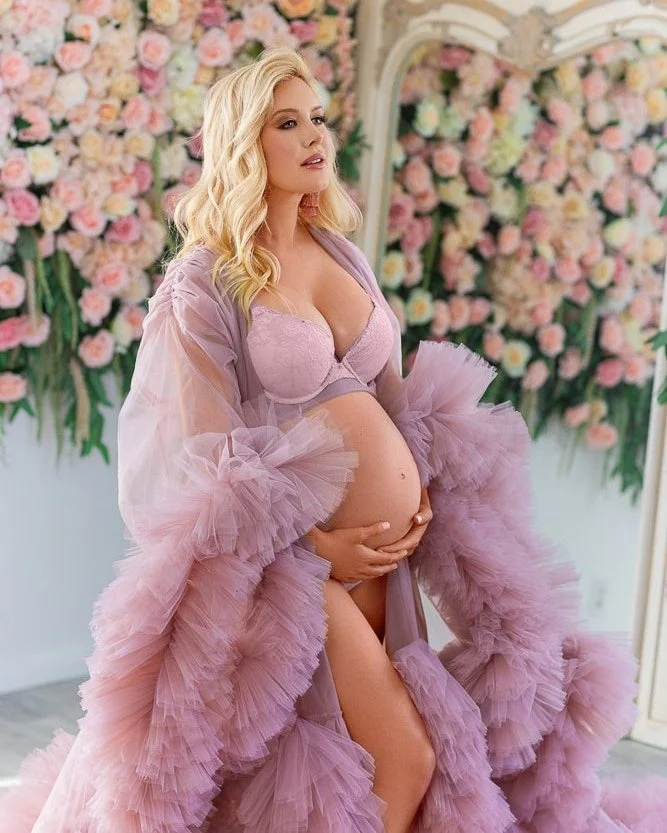
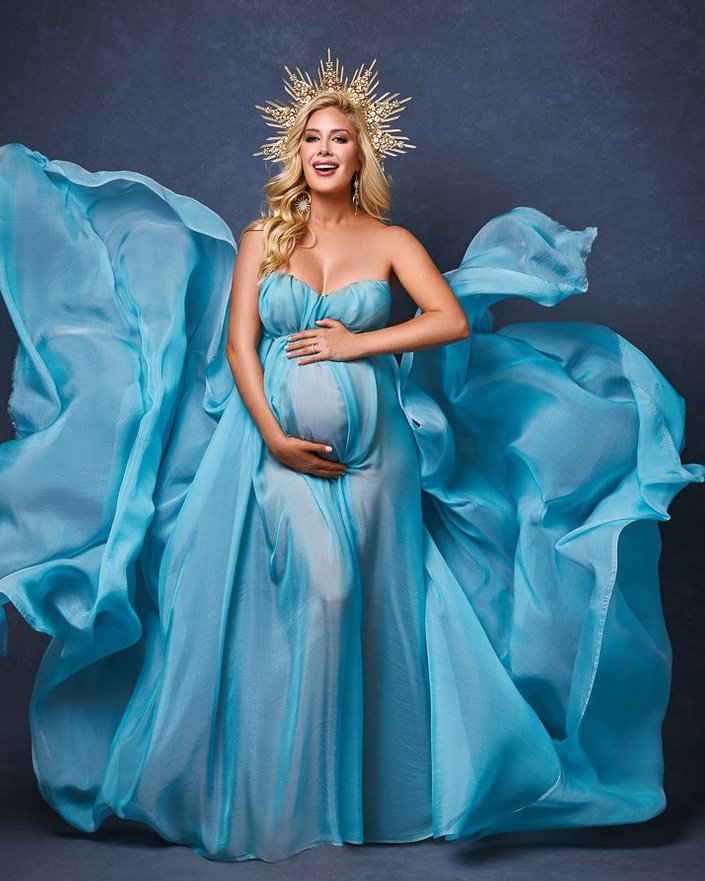
Style is the way lighting, pose, outfit, backdrop, and edit work together to express one clear feeling. In maternity photography, you will see a few dominant directions, each with its own mood, and the right one is the one that matches who you are and how you want to remember this chapter.
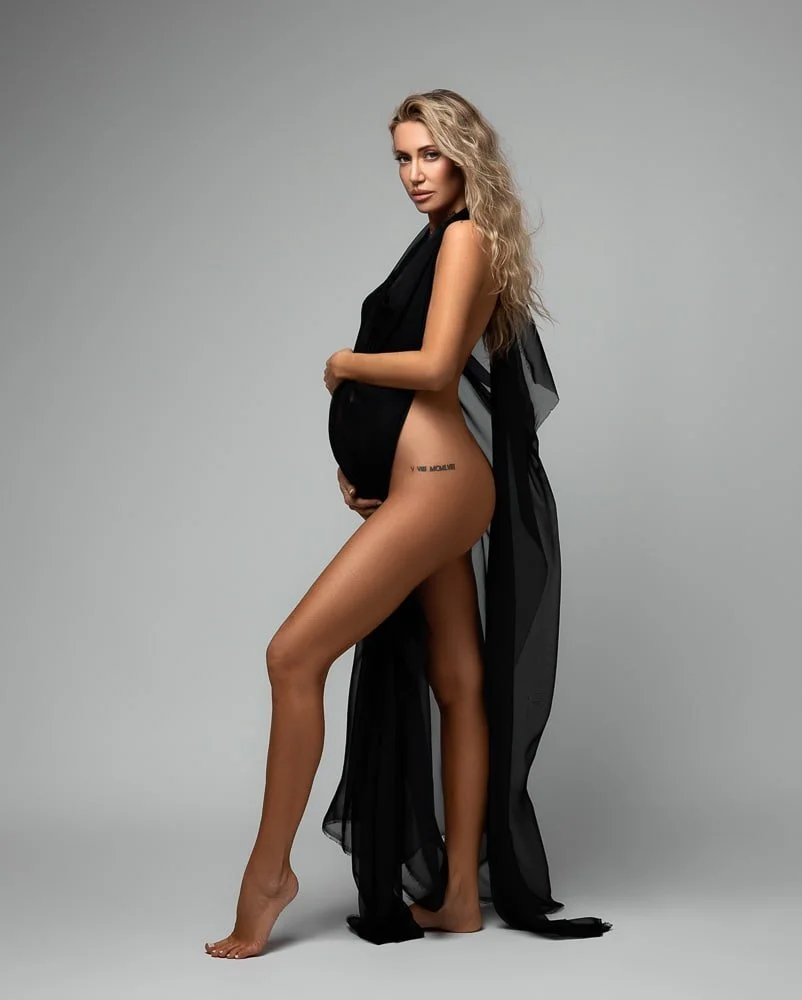
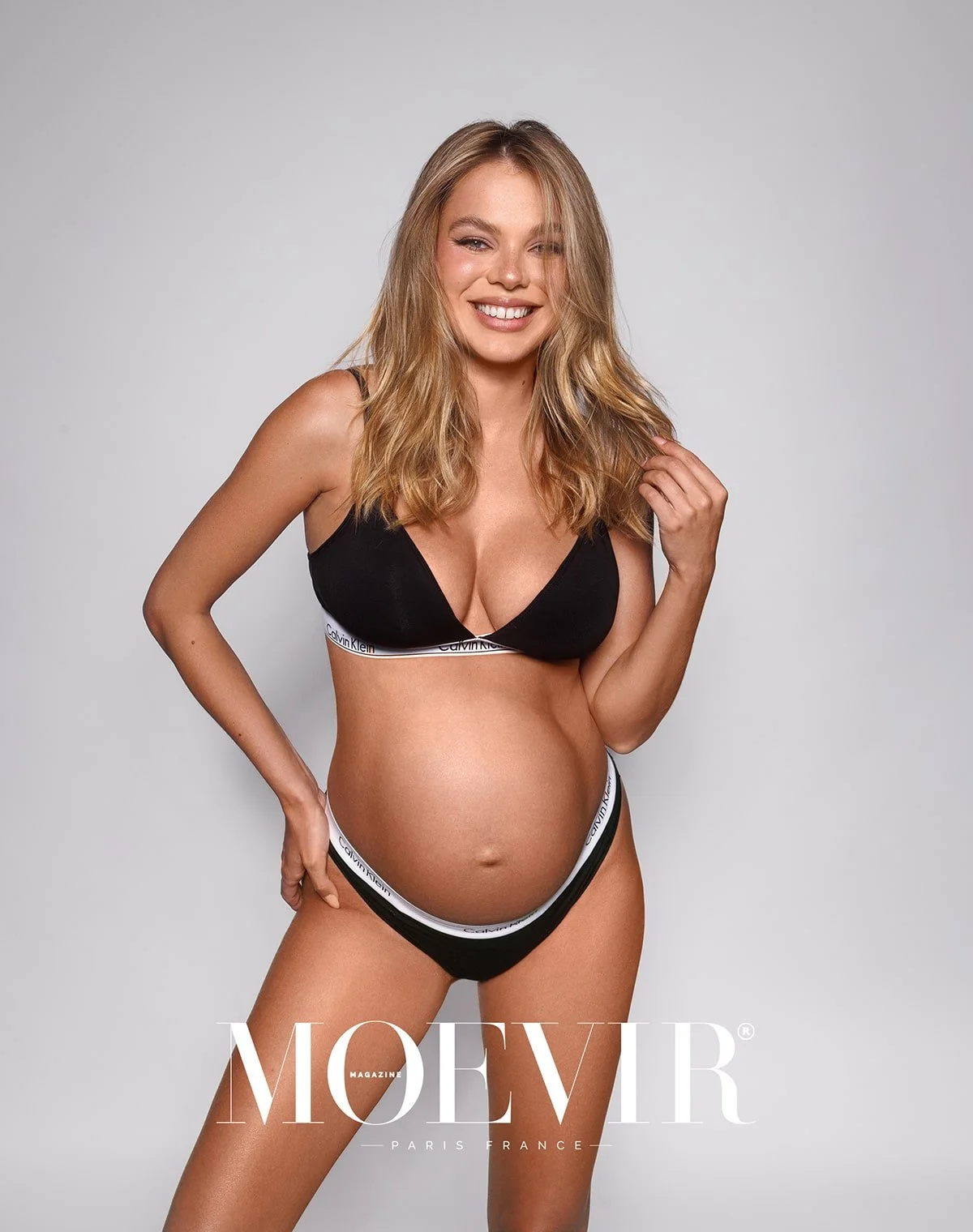
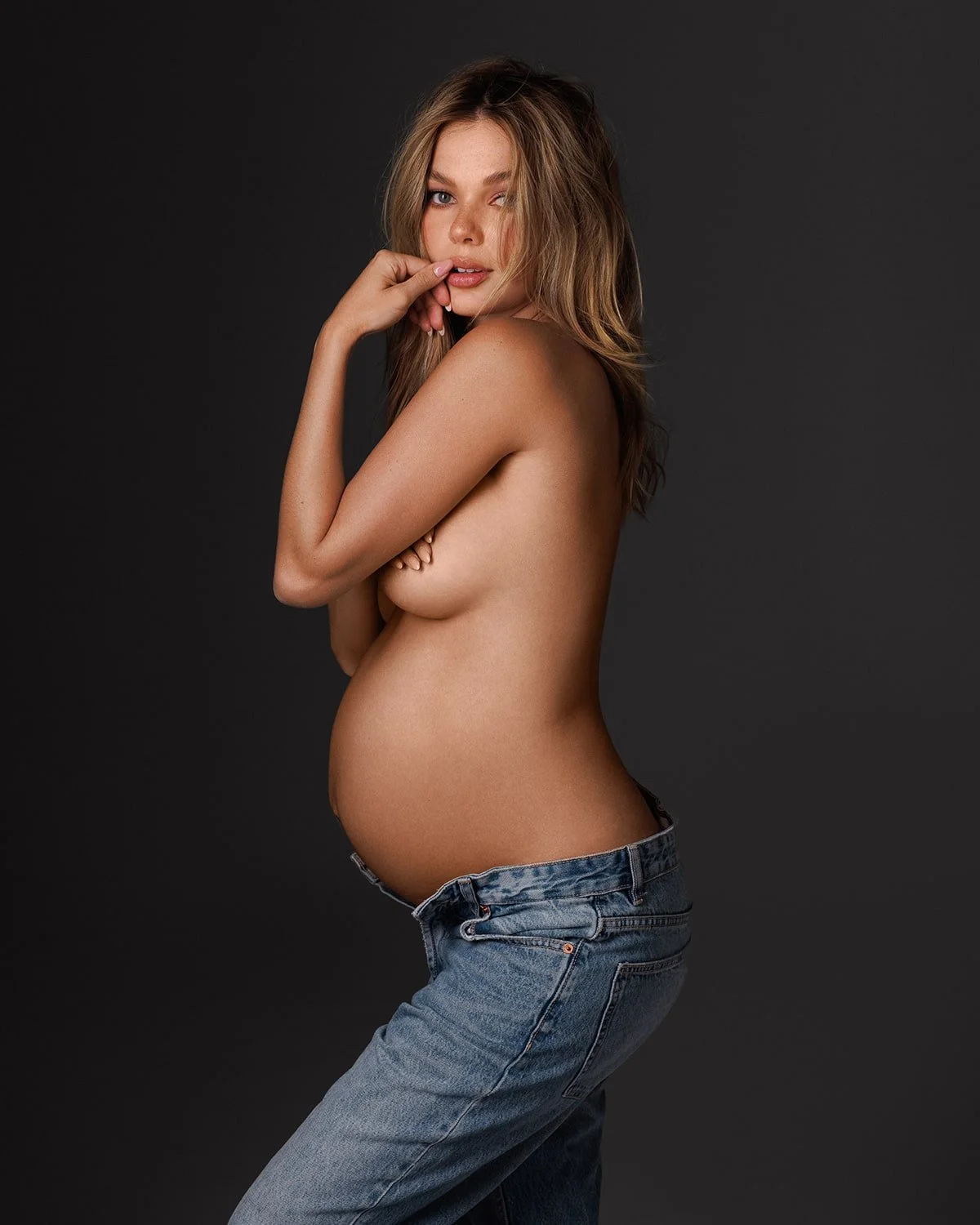
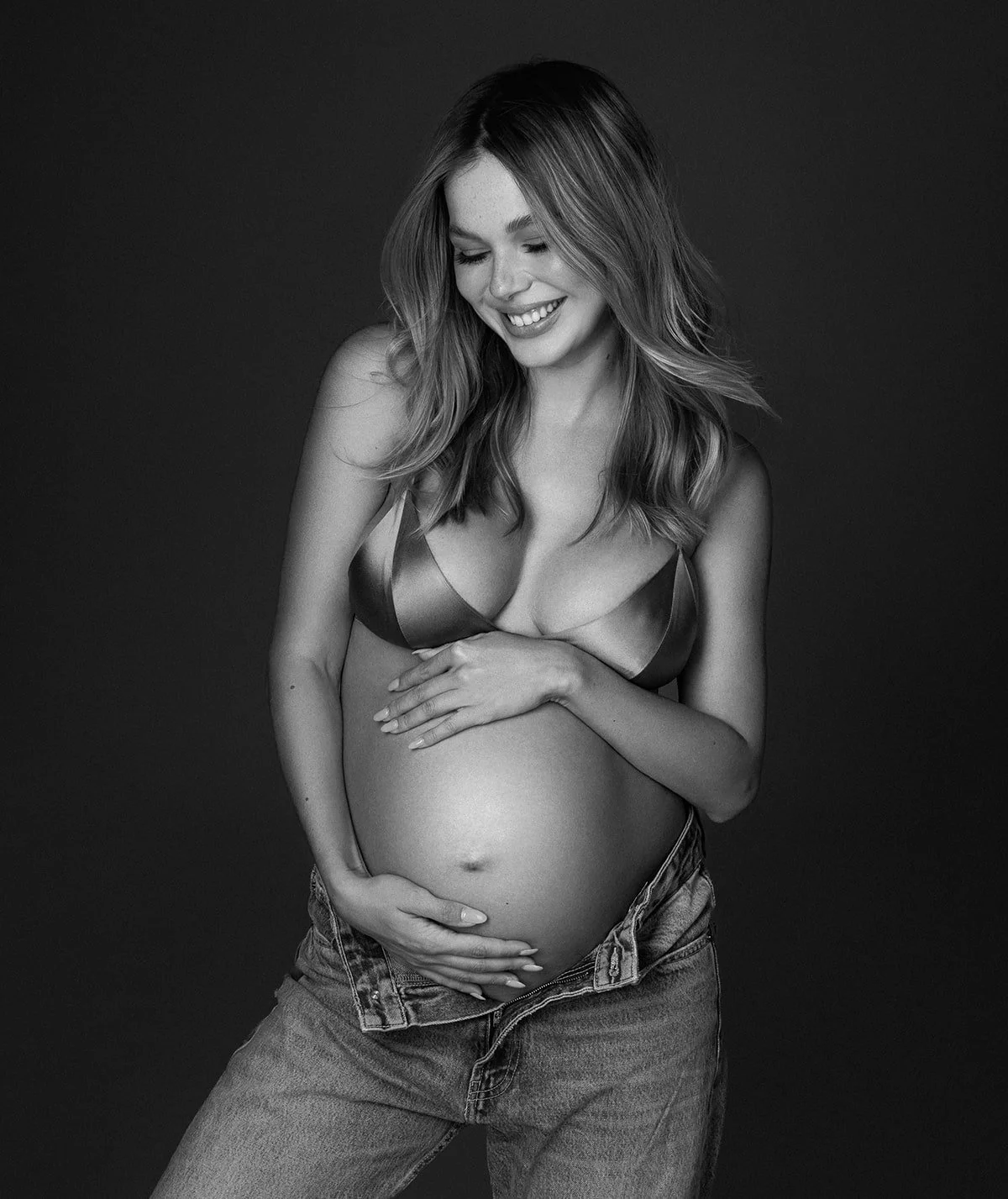
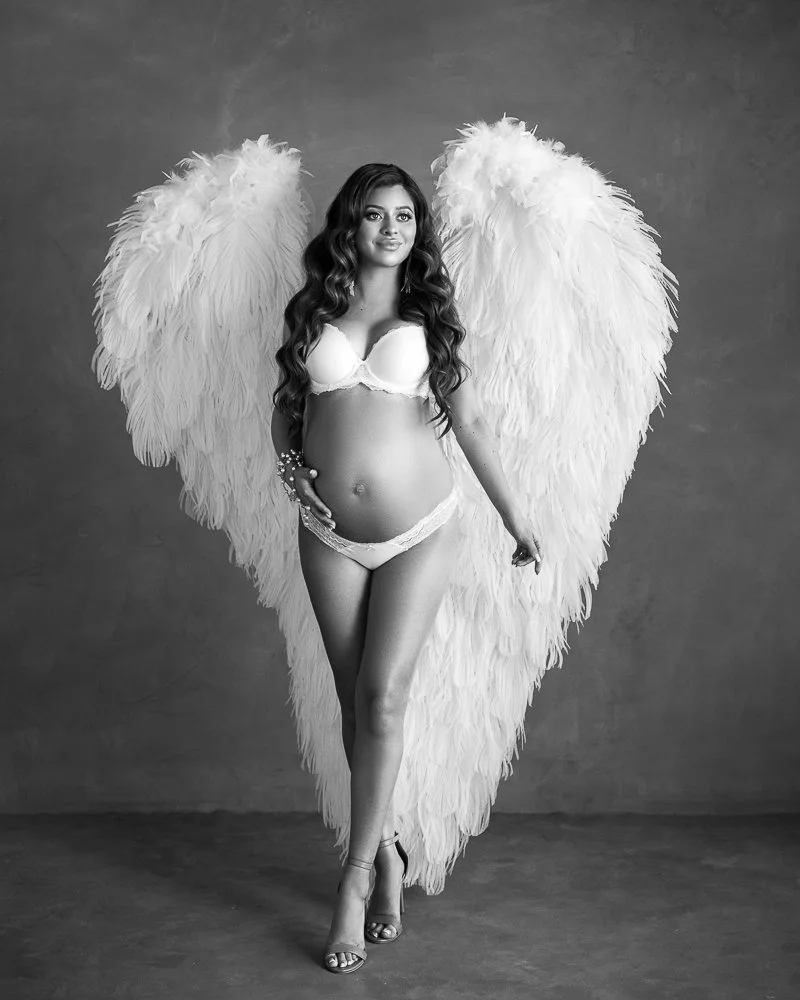
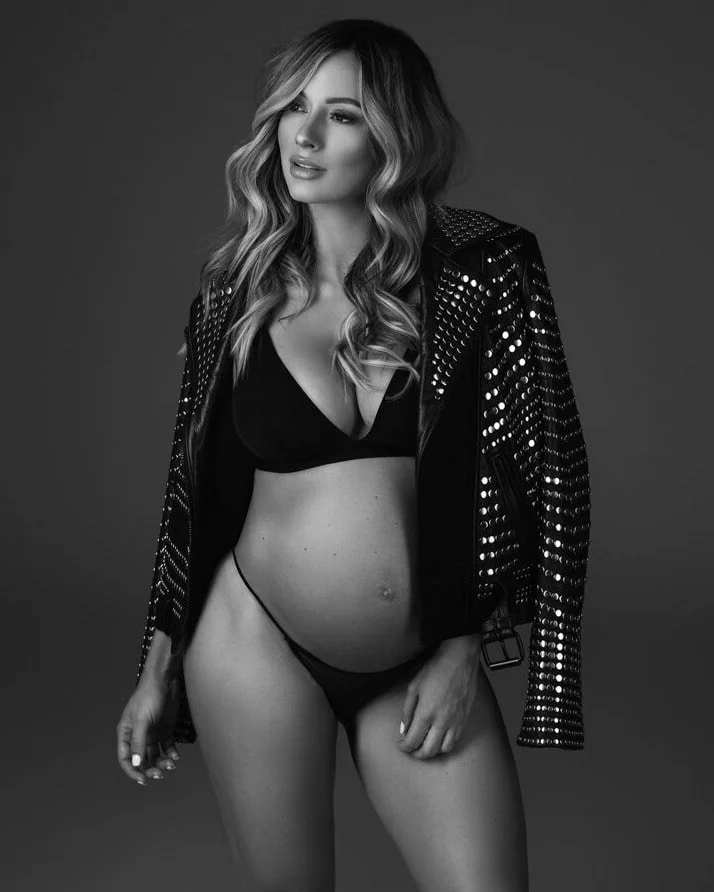
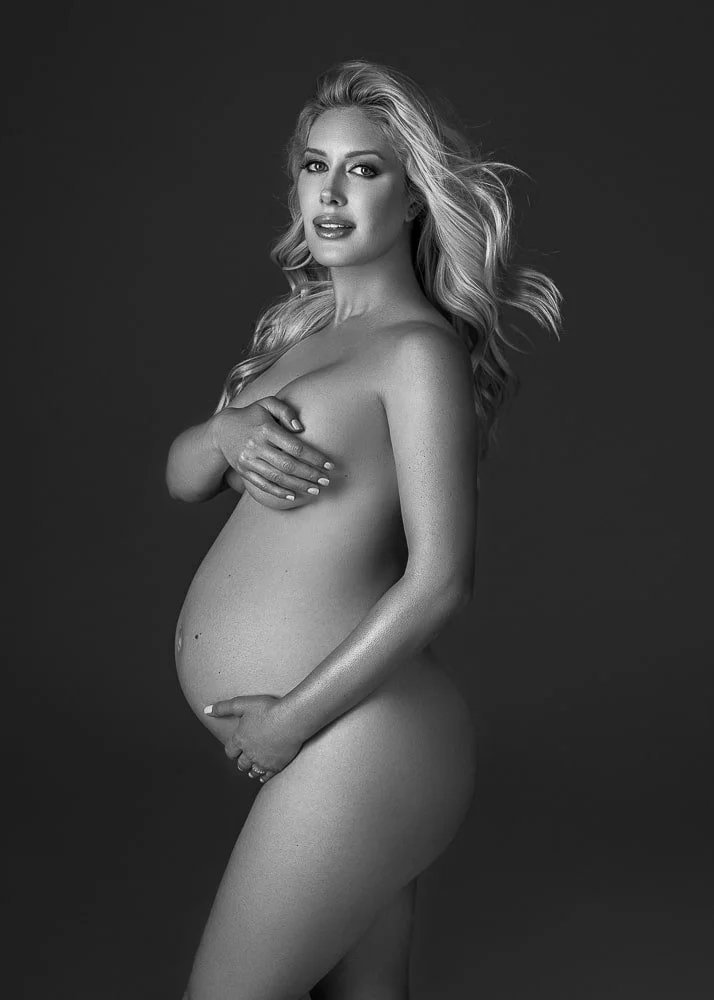
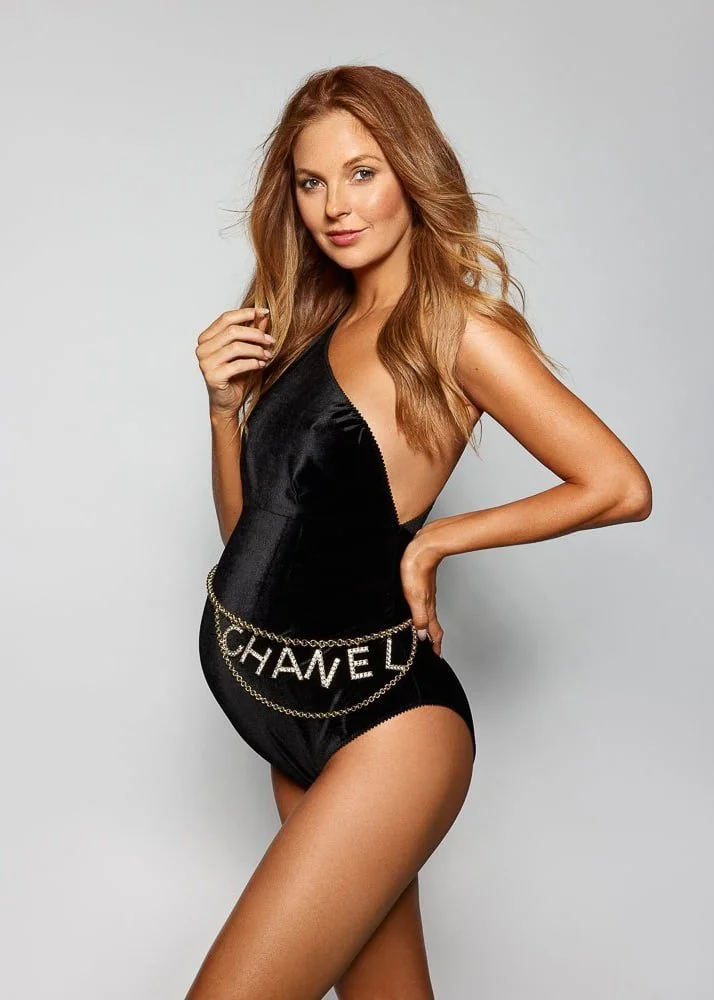
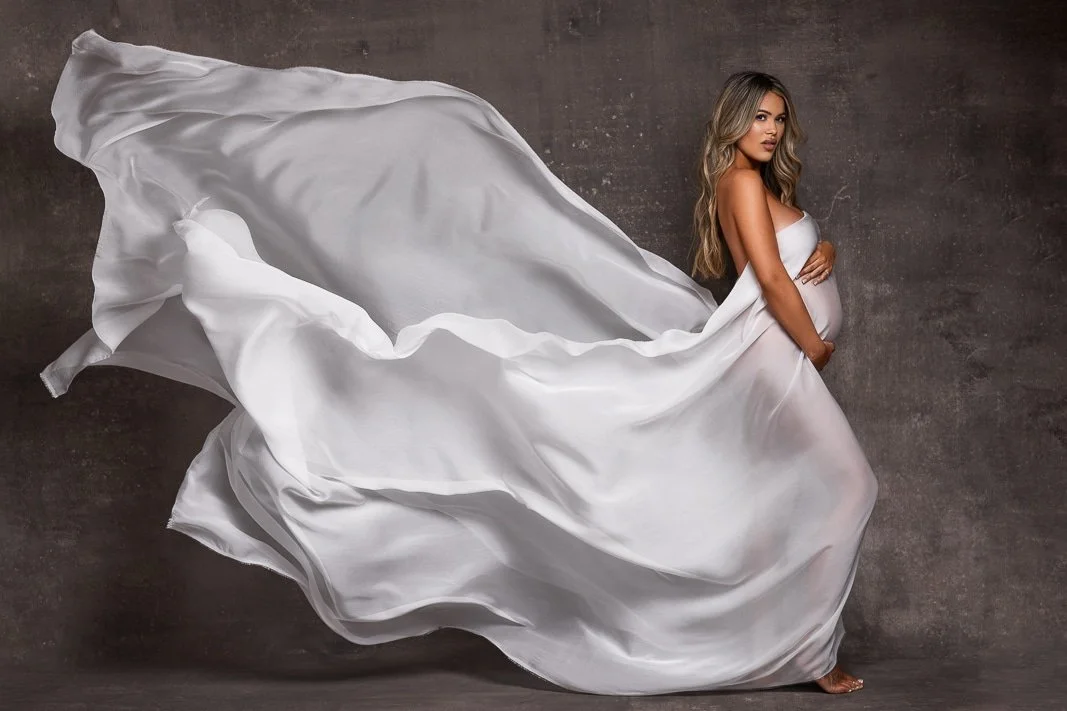
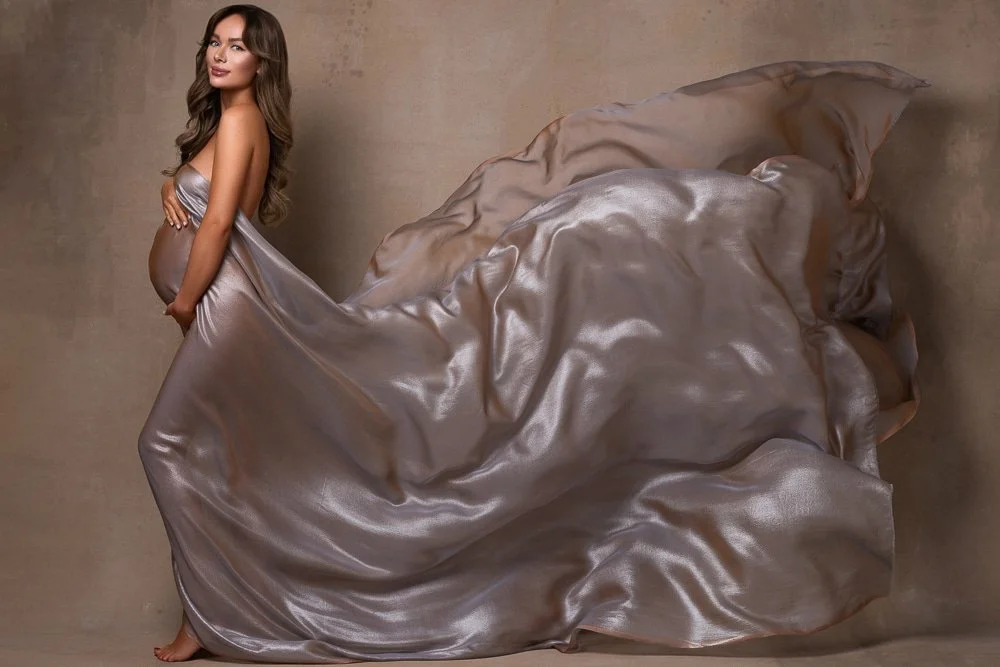
Fine art studio work is intentional and polished, often built on seamless paper or textured canvas with elegant gowns, clean composition, and lighting that sculpts the portrait. Editorial minimalism removes distraction and leans into simplicity, negative space, and quiet confidence; bare belly portraits often live here because the focus sits on line and form. A fashion-forward approach invites boldness with structured gowns, flowing silk, strong silhouettes, and movement that feels expressive rather than showy. A lifestyle motherhood blend invites warmth and intimacy, letting connection, gentle touch, and relaxed direction carry the frame.
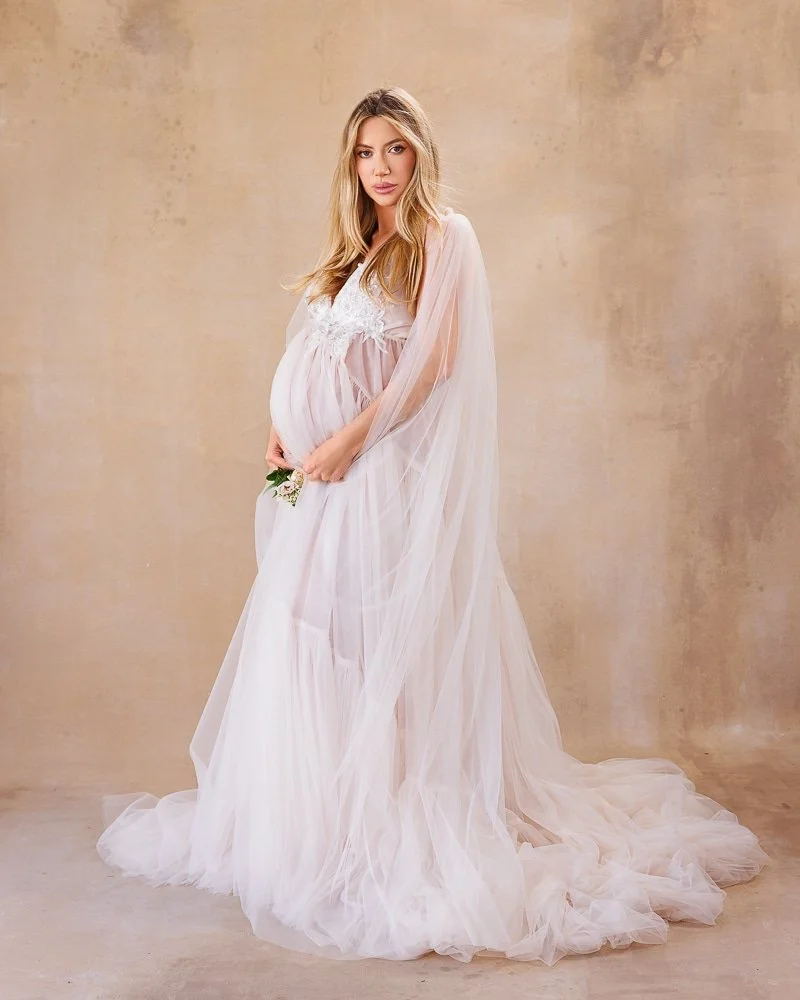
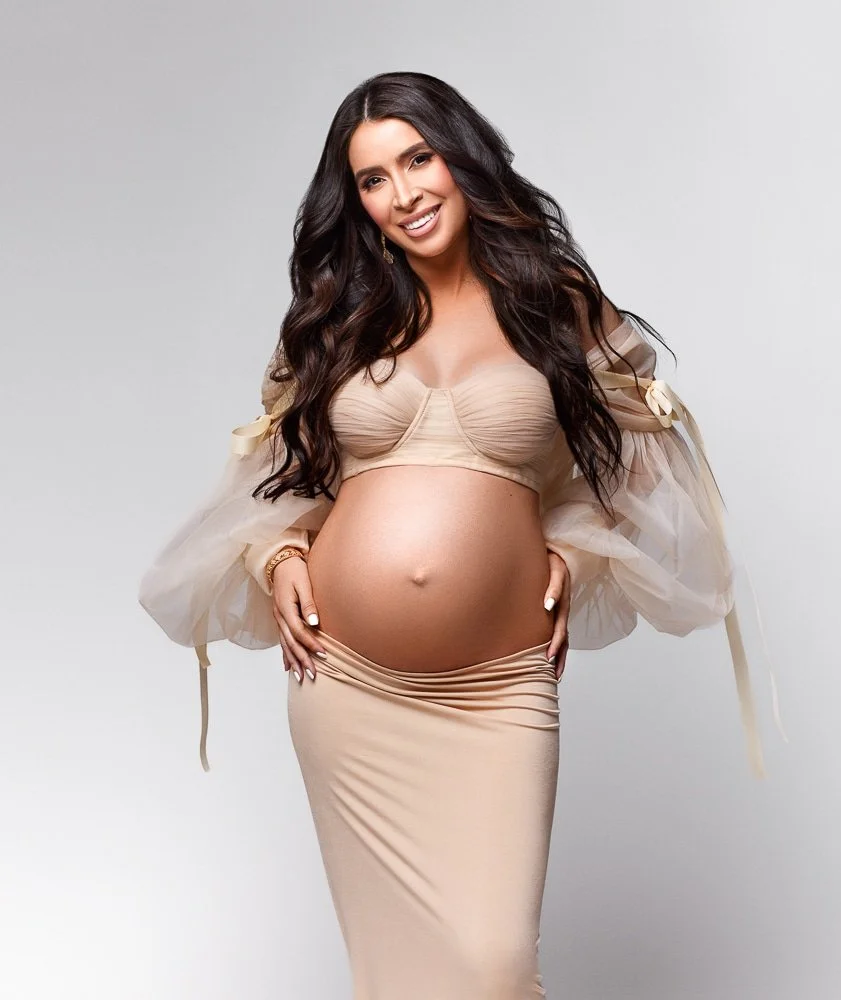
You don’t need specialized vocabulary to choose. Look at a portfolio and pay attention to your reaction. If neutral, timeless tones make your body relax, note it. If a strong rim of light outlining the bump gives you a pleasant thrill, note that too. If you feel most yourself in a crisp white shirt with a ribbed set underneath and a calm backdrop, there’s your answer.
A professional maternity photographer will translate that feeling into decisions like which backdrop will support the mood, which gown or outfit belongs in the story, where the key light should sit, whether negative fill will help define the ribcage, and how much motion the fabric should hold. If they insist on their vision or style instead of what feels right for you, skip.
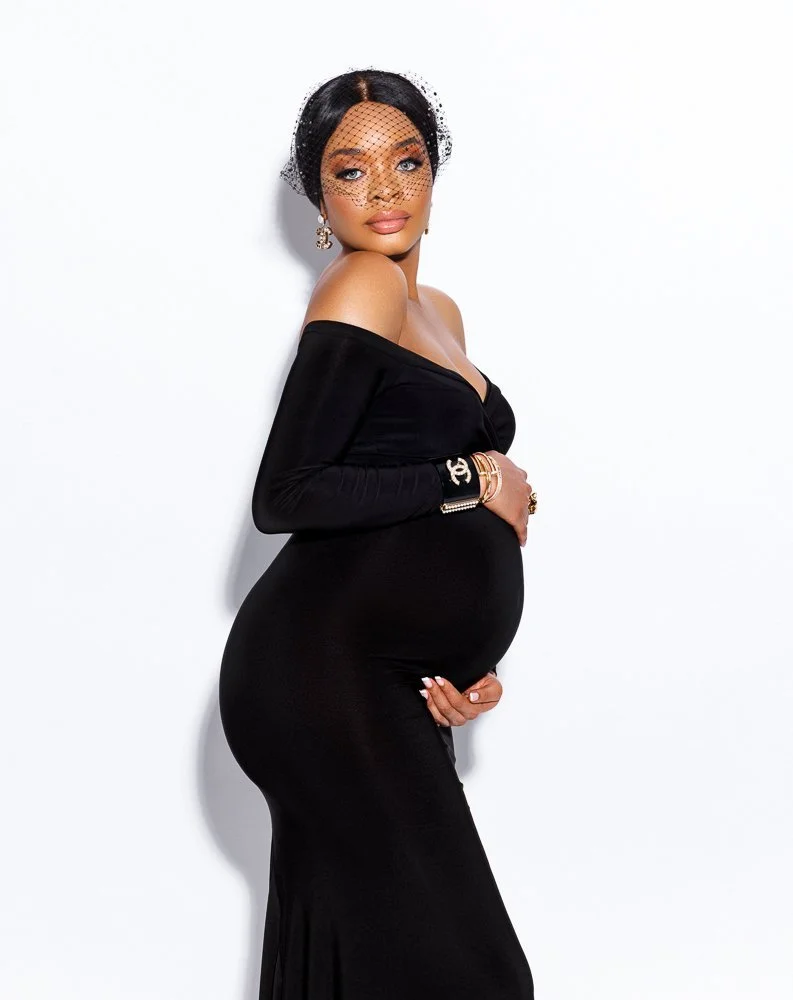
Reading A Maternity Session Client Portfolio
A portfolio is a promise. You are looking for repeatable craft and emotional truth. Start by scanning for consistency. If one gallery is warm and natural and the next looks cold or overly gray, the editing hand may be uncertain. Skin should look like skin across different subjects and sessions. The belly should have shape and dimension rather than glare or muddiness.
If the highlight on the bump blows out in one set and the next set sinks into shadow, lighting control may be shaky. Strong work shows quiet confidence, silk draped across the ribcage with detail preserved, a silhouette that celebrates the graphic line of the pregnancy portrait, and close images where eyes feel clear and alive and the skin remains believable after the edit.
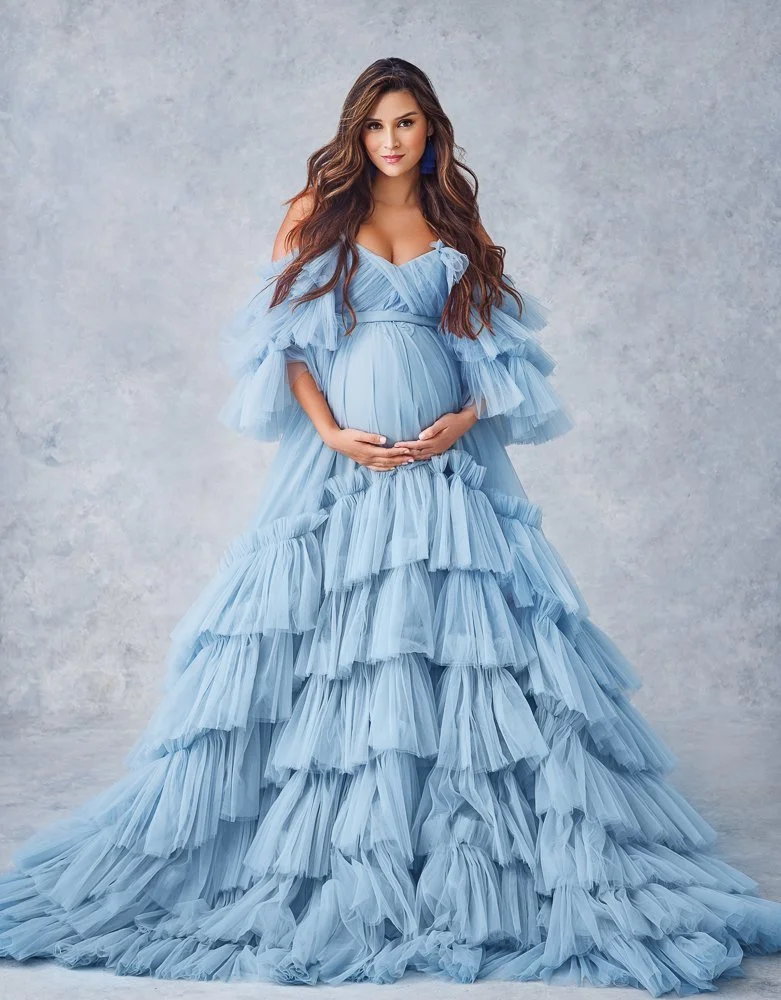
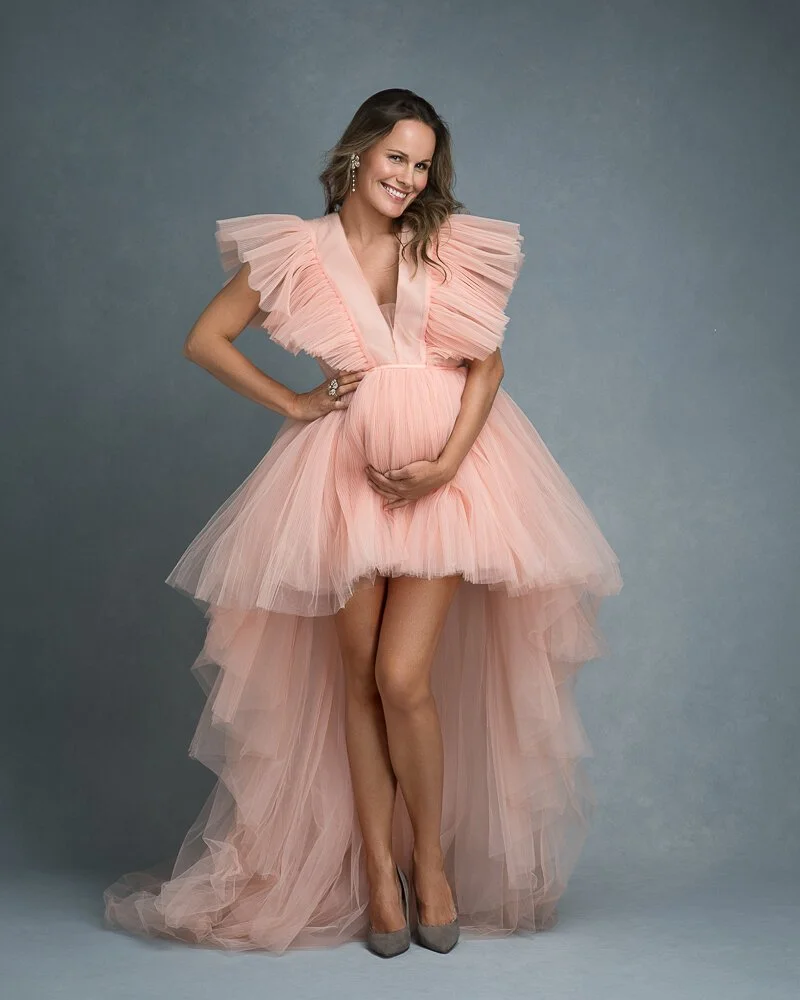
Look at hands. If fingers are splayed or pressing deeply into the belly, the subject was likely unsure. If fingertips rest softly and wrists look at ease, guidance was present and the pace was calm. Study backgrounds and sets. A seamless paper that lies smooth and unwrinkled signals a considerate setup. Canvas that reads evenly from corner to corner tells you the light is placed with intention. Props should be purposeful and few. If a prop competes with the face, it is a distraction.
Also note that while consistency is great, a portfolio where every mother stands in the exact same pose in the exact same dress may indicate a routine rather than attention to the person in front of the camera.
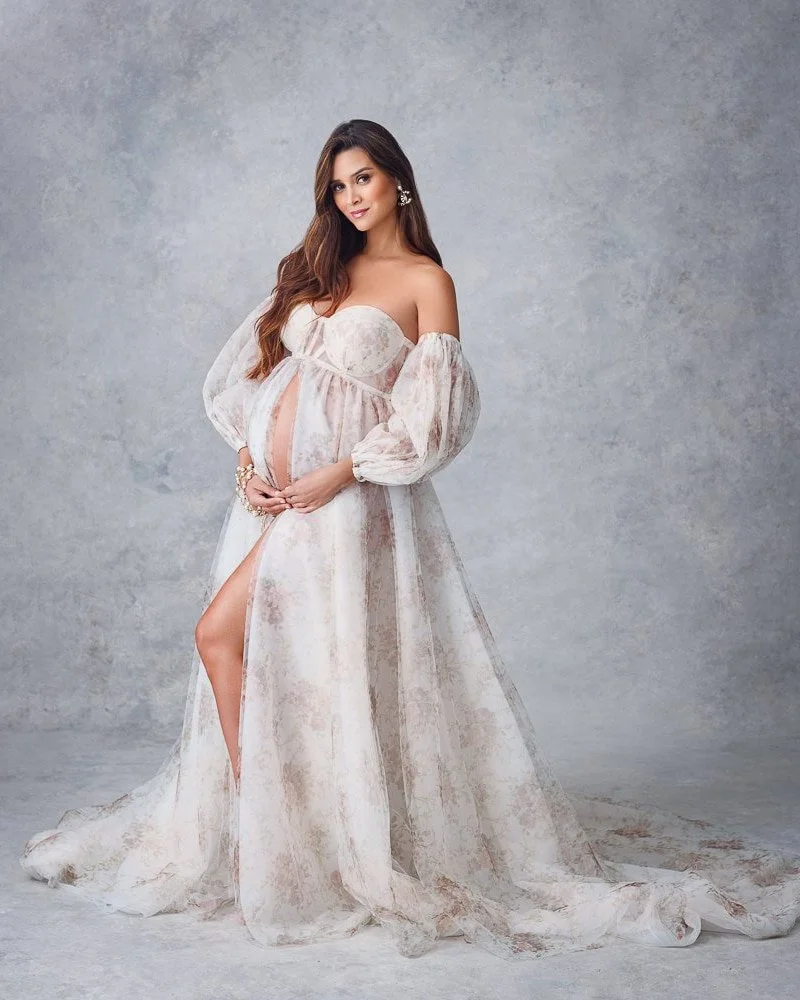
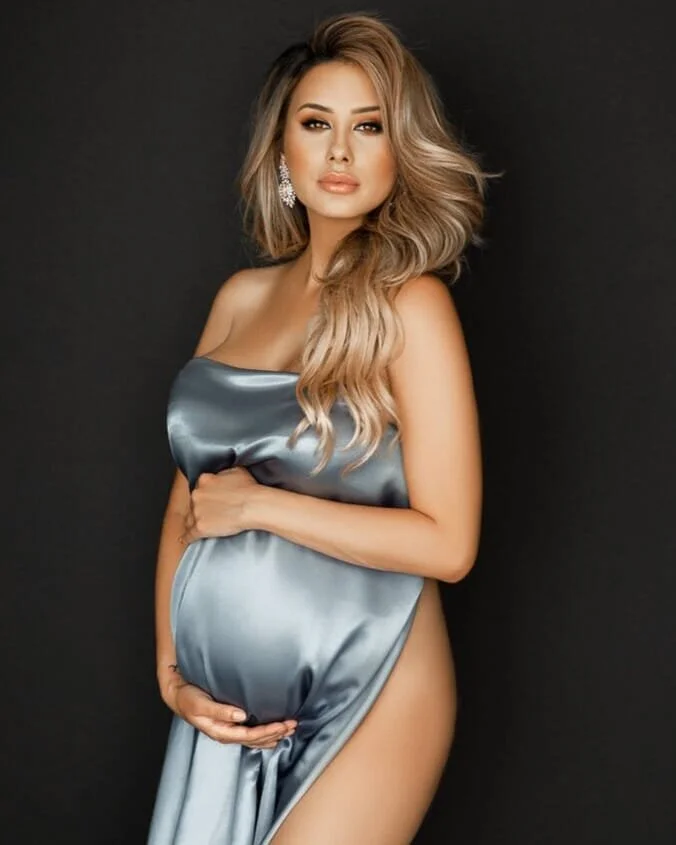
The Studio Session Environment Changes Everything
From the moment you step into the studio, your body reads the space. The temperature should feel comfortable, the air should be calm, and the layout should make sense. Music can set a steady rhythm without overwhelming. There should be privacy for changing, a mirror that lets you see a gown from every angle, and seating that supports a pregnant body getting up and down without strain. Floors must be clean for barefoot sets, and stools should be steady for half-seated poses. Seamless rolls should be stored correctly so paper falls smooth and unruffled. V-flats should be in excellent condition to do their job, bounce if you need glow, subtract if you need shape.
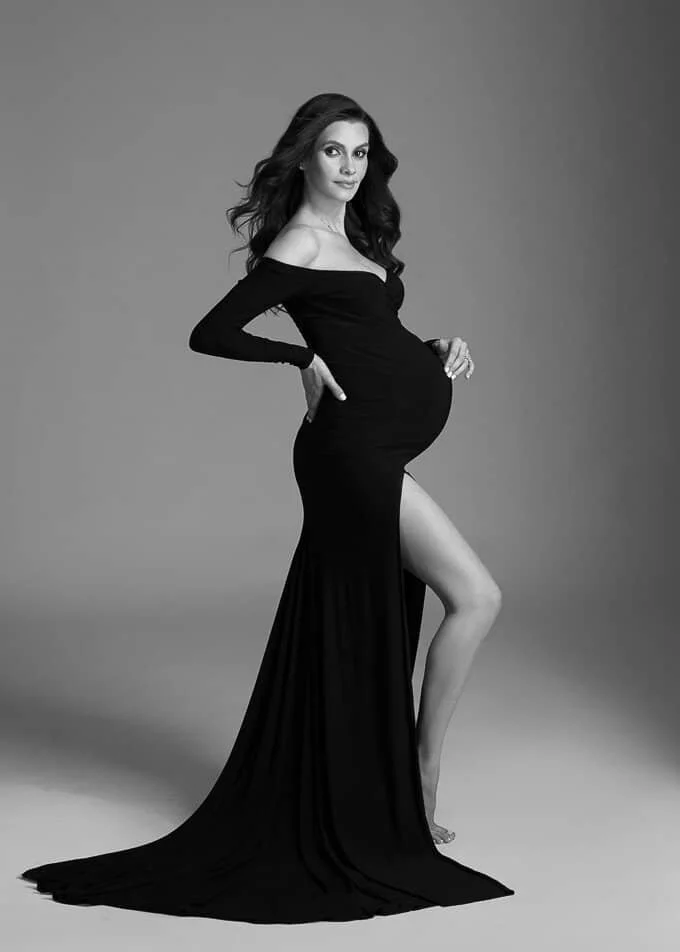
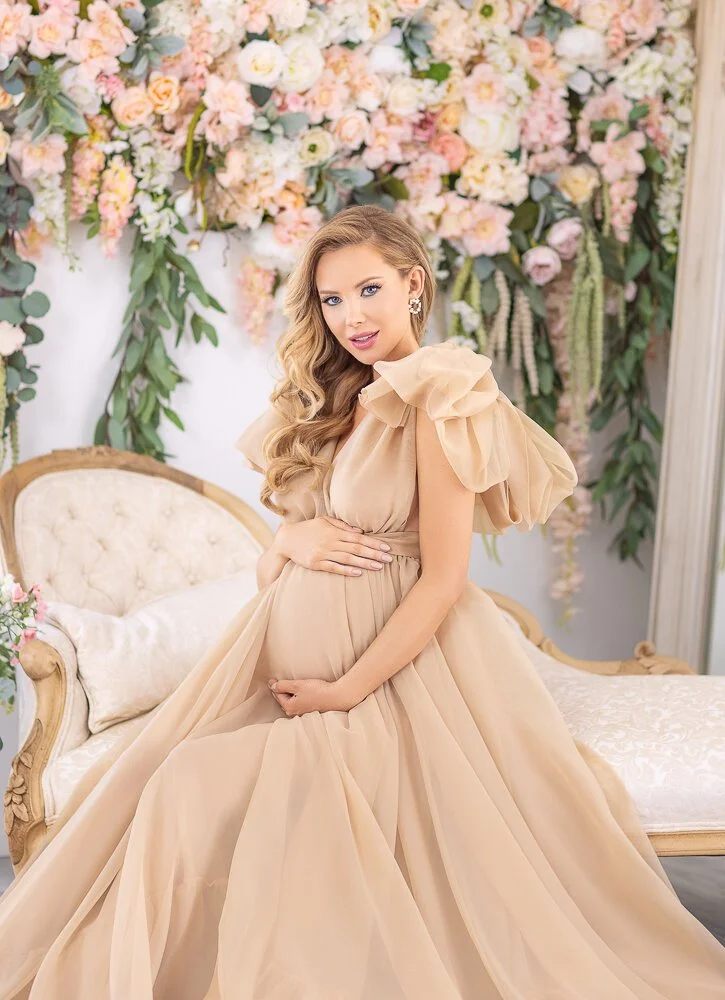
A client closet should feel like a thoughtfully curated boutique, not a costume rack. Fabrics are the heart of that curation. Silk moves softly and photographs like water. Stretch jersey hugs kindly and shapes the body. Sheer mesh offers a refined hint of skin when layered over a neutral, especially beige, and reads both elegant and modern. Chiffon catches air beautifully when a partner tosses a length of fabric to frame the belly. Quality reveals itself instantly under studio lighting.
A scratchy dress that looks fine in a mirror will fight the camera. Cohesion matters more than volume. You don’t need a hundred gowns, you need the right ones and a photographer who knows which look belongs with which lighting and backdrop.
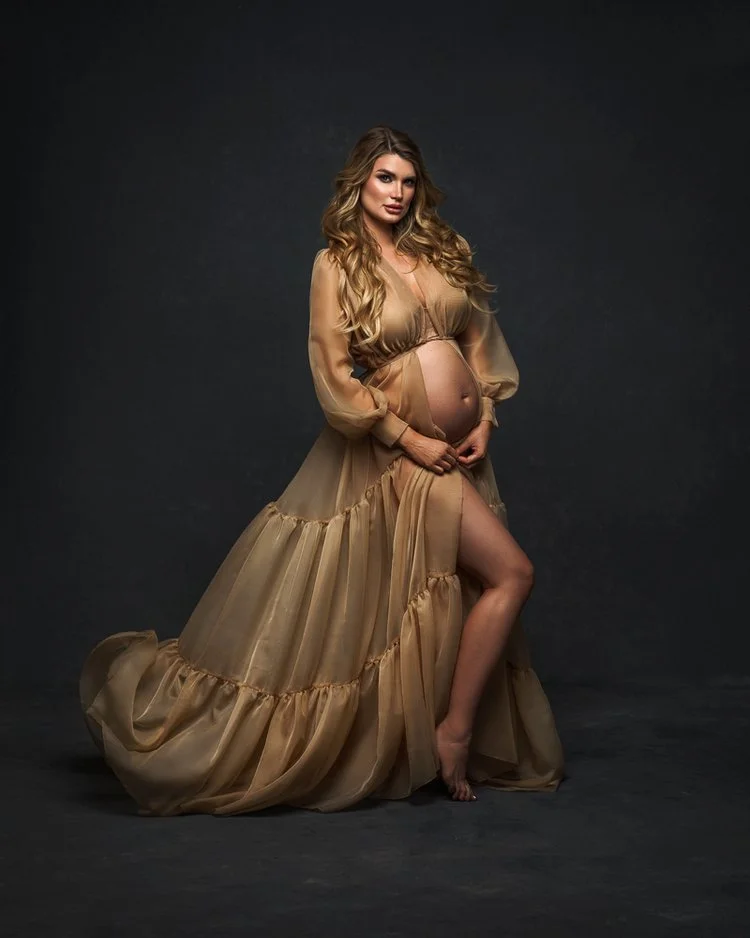
Wardrobe And Styling That Photograph Beautifully
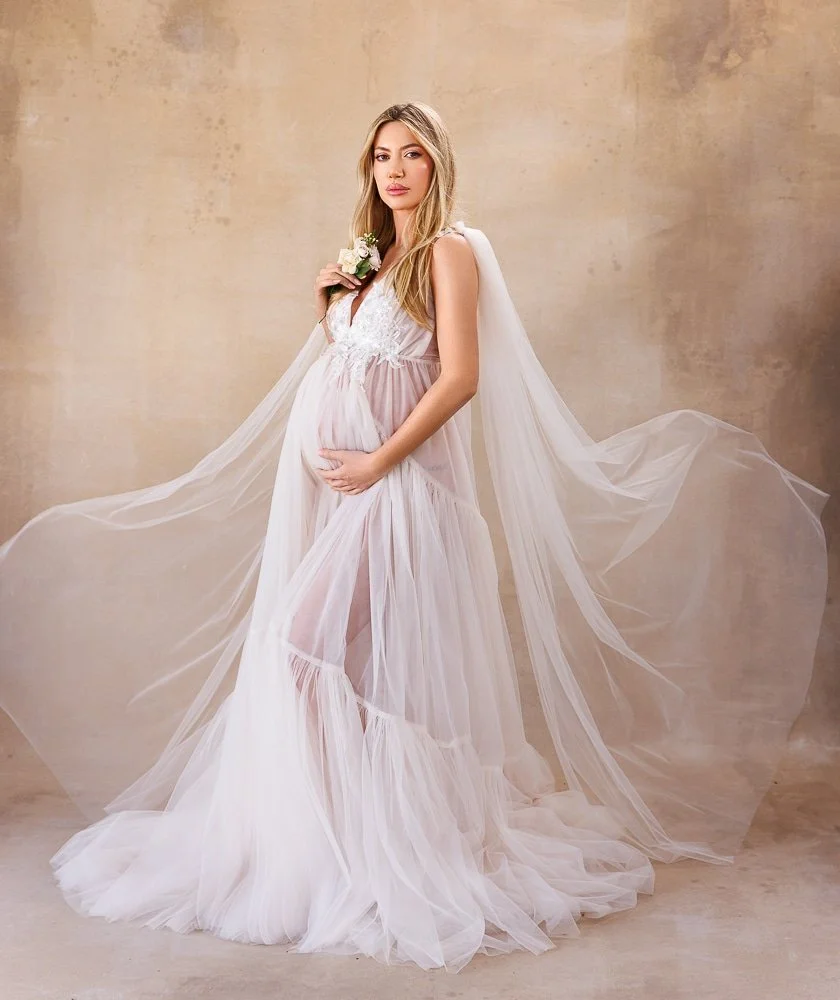
Clothing for a maternity session should behave well in light and movement. A gown made for a dinner date will not necessarily perform on set. Seams need to align with movement instead of resisting it. Slits should lengthen the leg without making you feel exposed. Sleeve length can shape the arm beautifully when it ends at the right point.
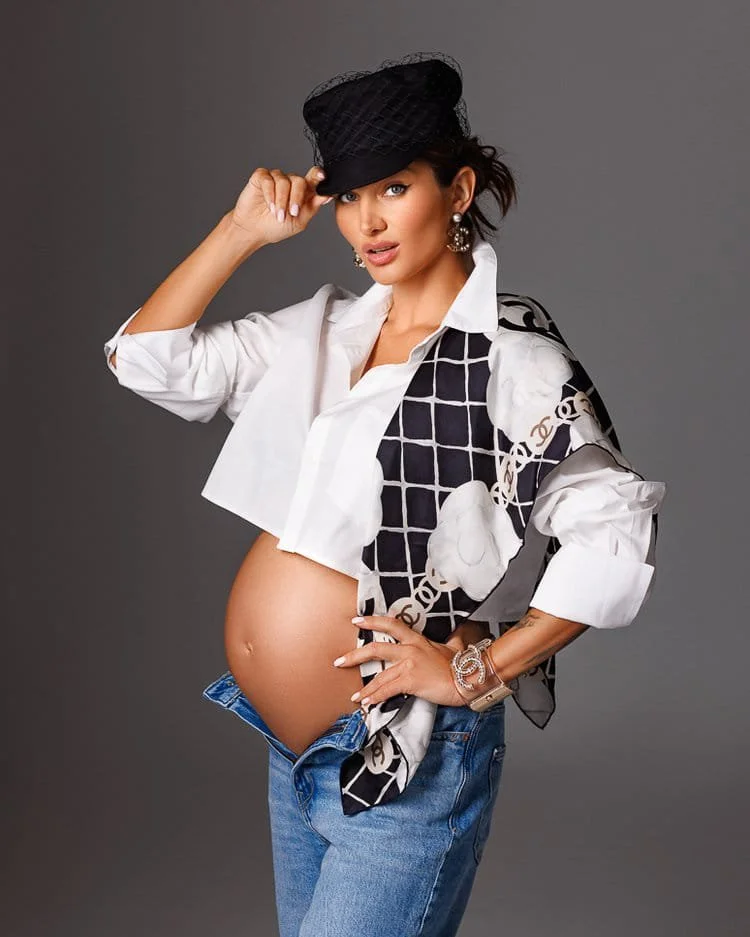
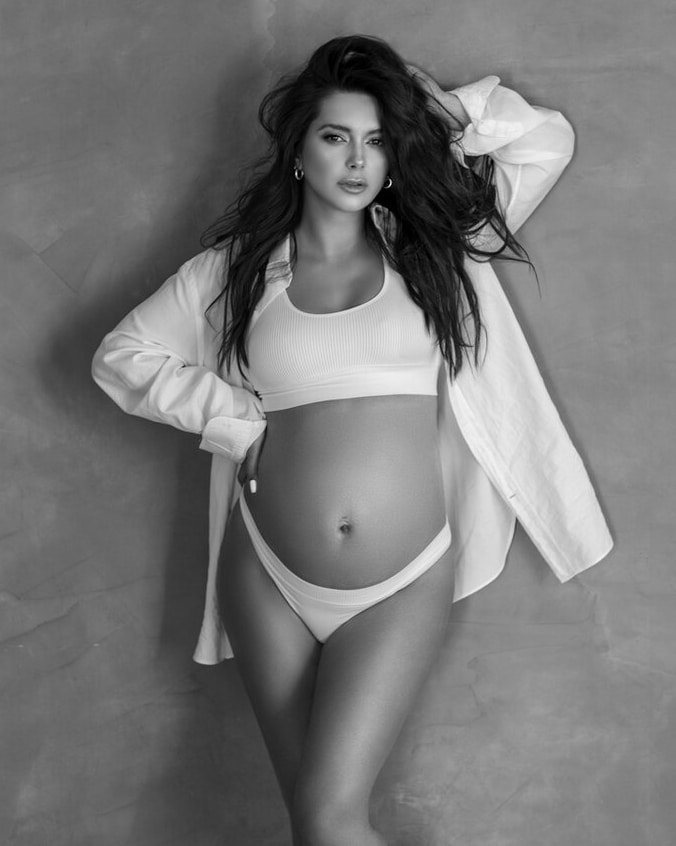
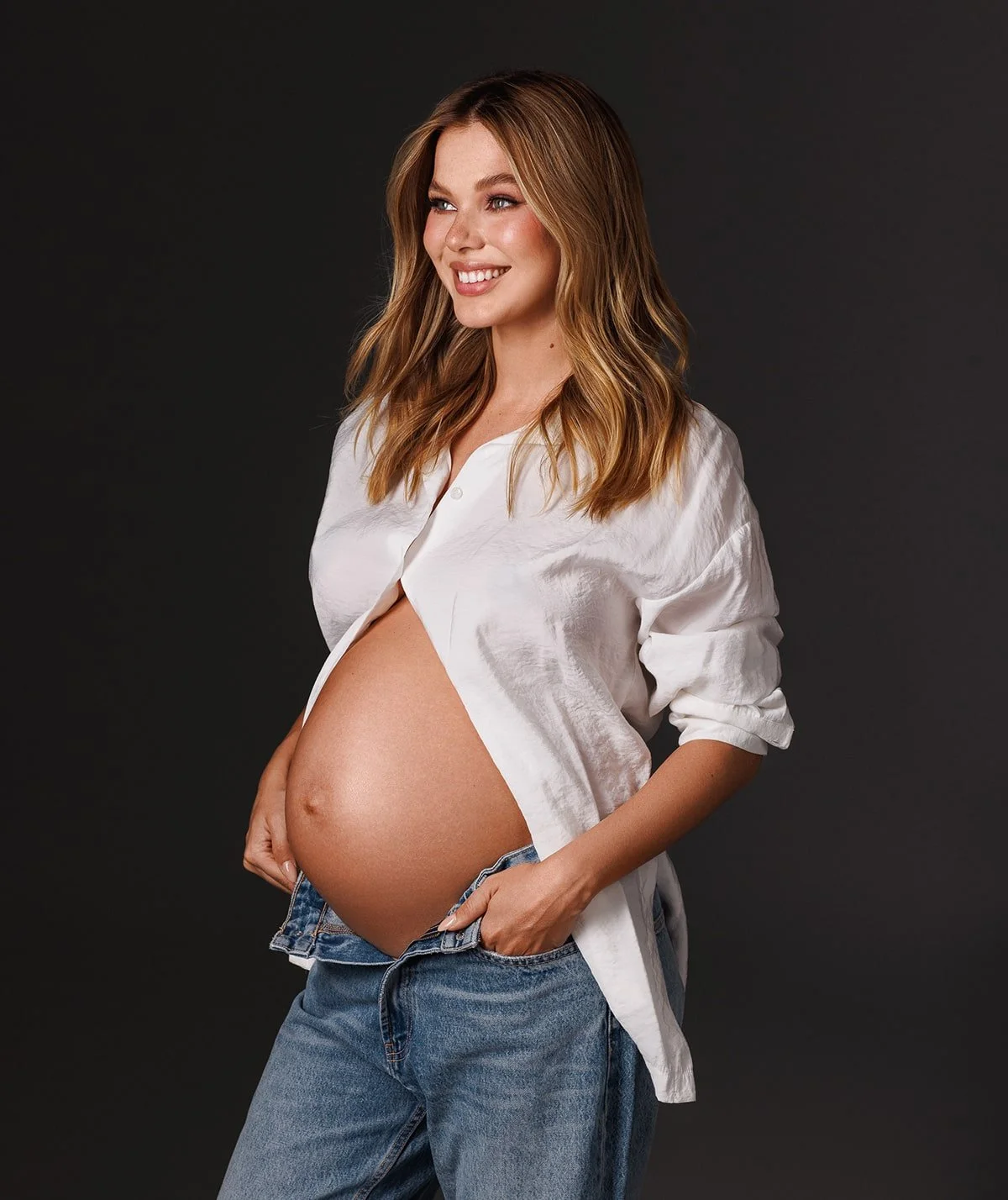
Necklines should draw attention upward without competing with your expression. The most elegant image is often the simplest... a fitted bodysuit with a silk wrap, a crisp shirt worn open over a ribbed set, a tailored blazer over a bare belly for strength, or a minimal gown that reads modern and timeless at once. Good styling provides options so you can choose throughout the session as your comfort and energy evolve.
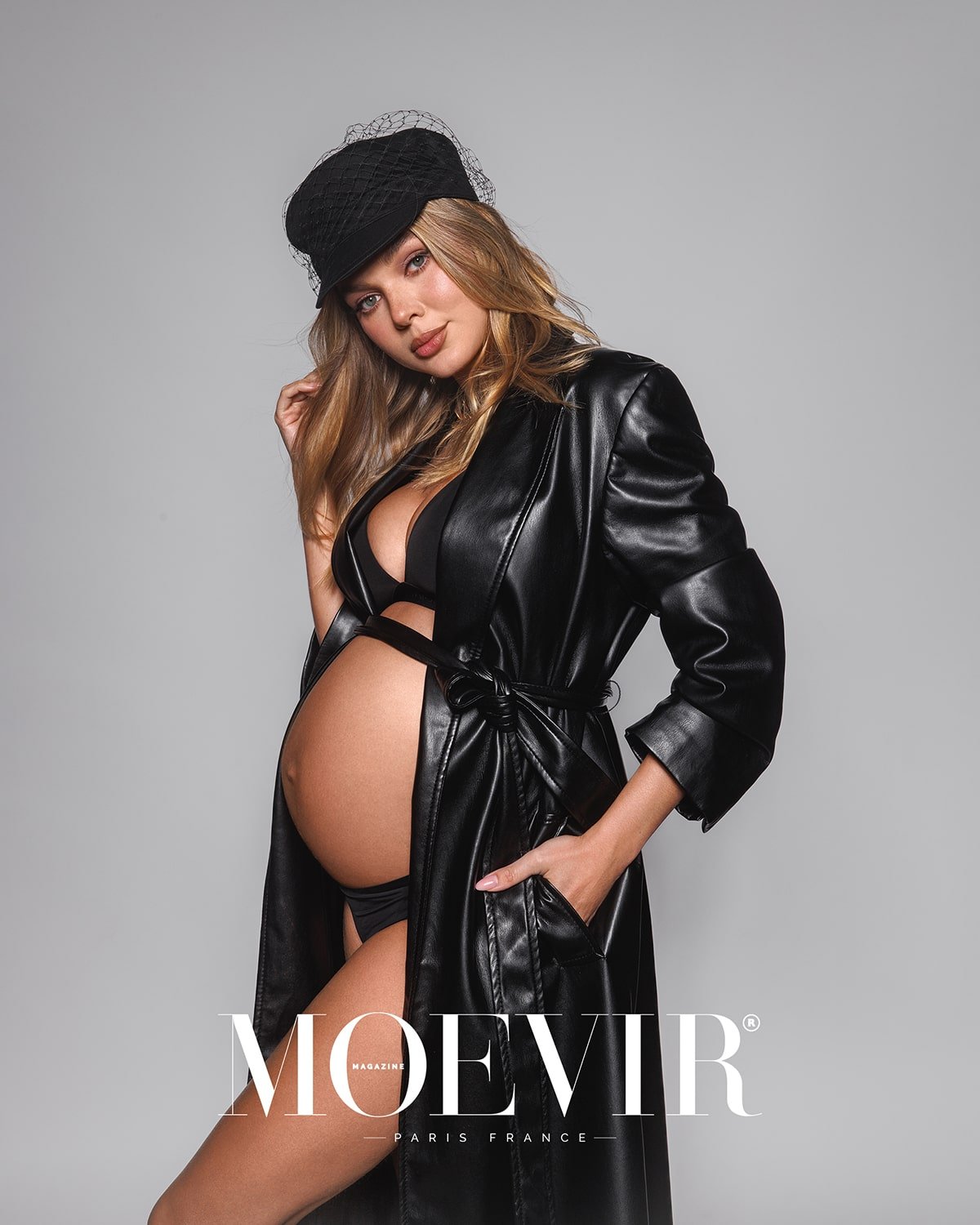
Accessories deserve the same restraint. Jewelry that spins or glares interrupts focus. Rings, earrings, and delicate pieces are wonderful when they support the portrait rather than claiming attention. A prop should be intentional and minimal. A single stem or a simple stool gives your hands purpose without stealing the frame. Backdrops are part of styling. Beige canvas reads warm and sculpted. Black seamless invites drama and a more assertive pose. Pale gray feels quiet and calm, especially when paired with natural or mixed light.
See my Natural & Mixed Light Course here that covers window light shaped with bounce and subtle flash.
Lighting Is The Quiet Superpower You Should Absolutely Judge
You do not need to know the names of modifiers to judge lighting. You only need to ask whether the light feels gentle, dimensional, and clear. Soft done well is sculpted without harsh edges. Dramatic done well is confident and intentional, not heavy. In a controlled studio session, the best lighting looks effortless because it was built carefully.
In my studio, most looks come from a combination of soft key light, stripboxes that add graceful edge, V-flats used as a bounce-box or as negative fill to refine shape, and careful attention to how the light wraps the face, chest, and belly. When I blend window light with subtle flash fill, the portrait keeps that dreamy quality people love while staying consistent across outfits and setups. The belly should hold detail and roundness. Eyes should carry a clean catchlight. Skin should look real and luminous.
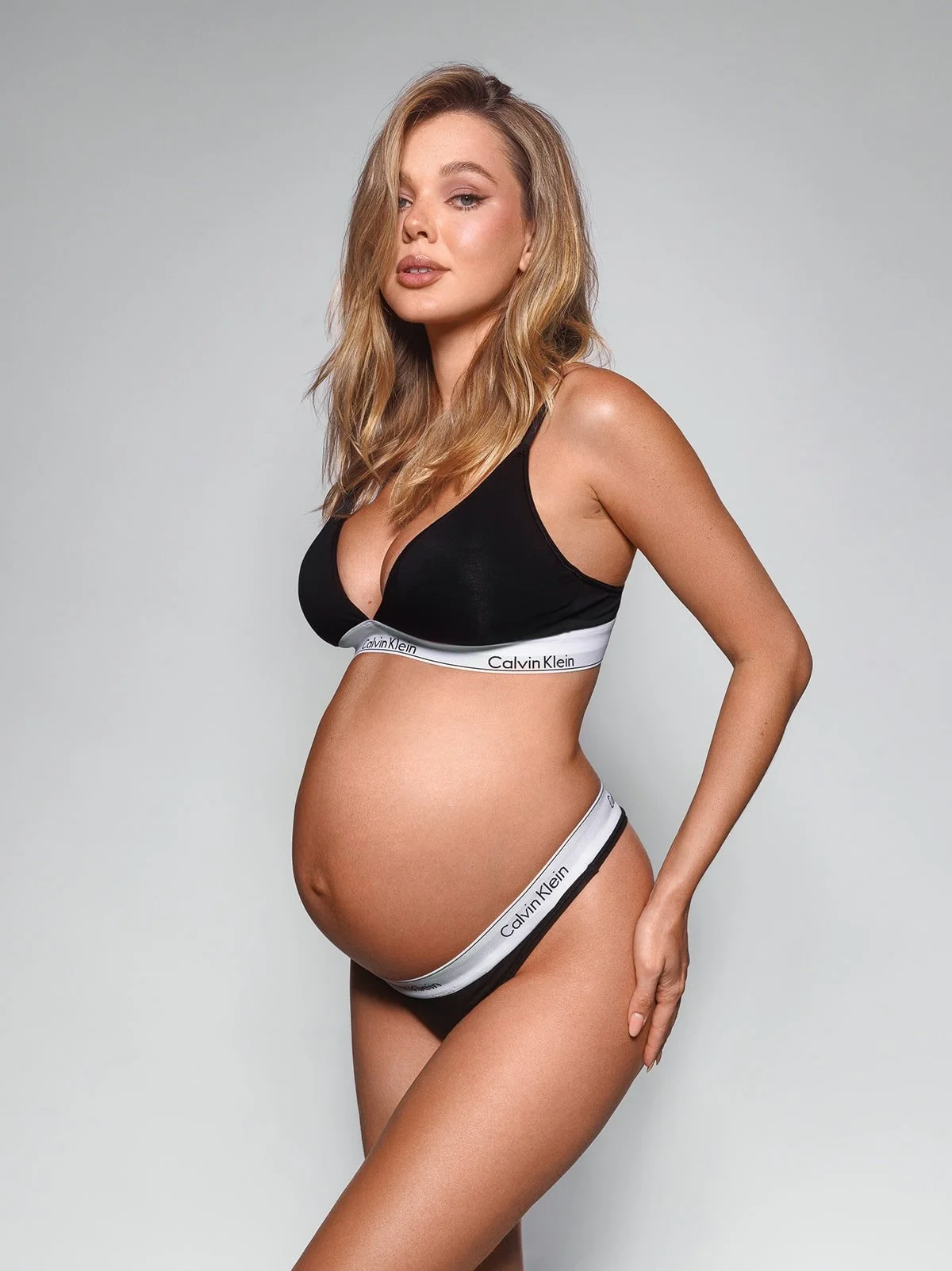
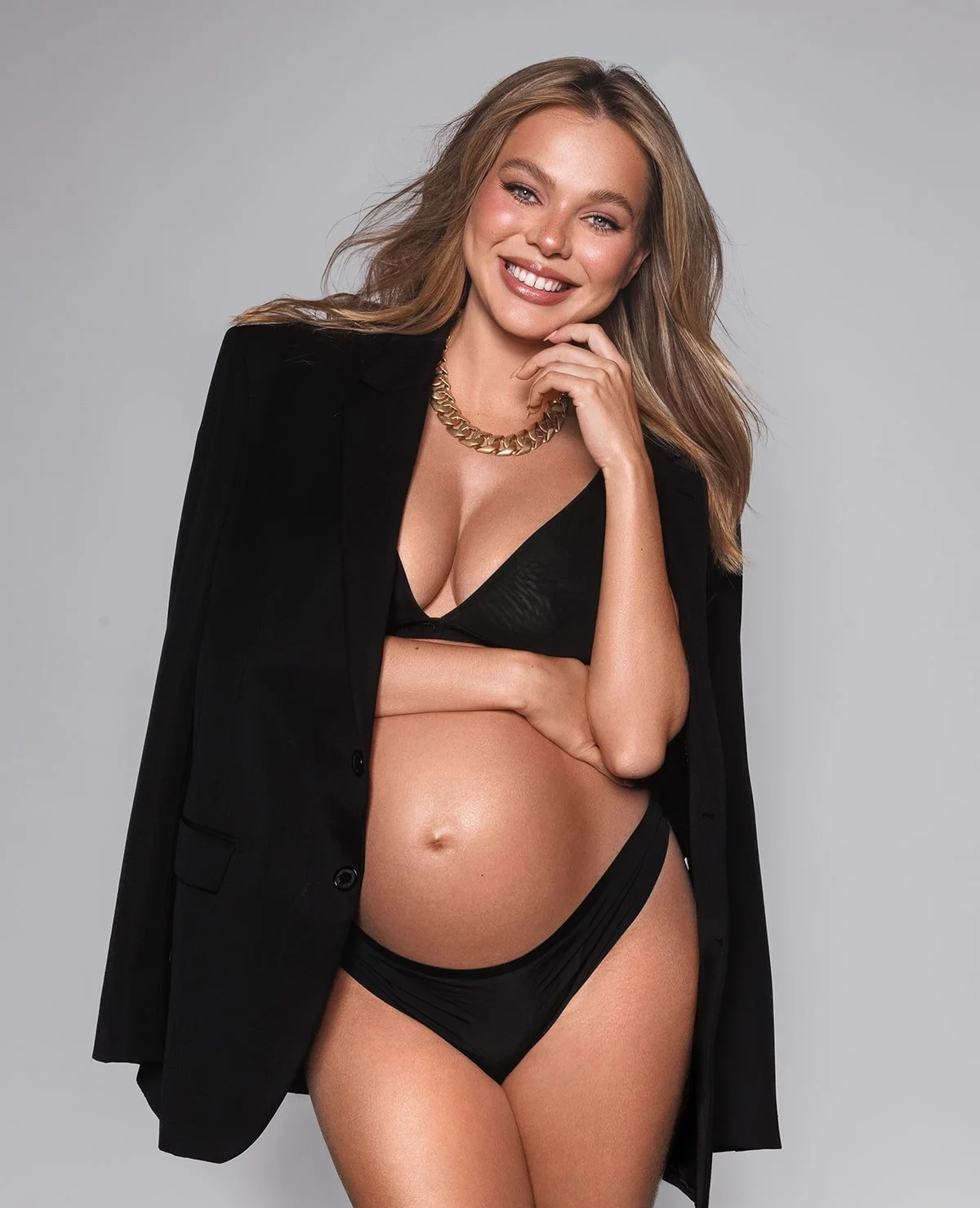
As you compare photographers, study the light on faces, not just the set. If under-eyes are unnaturally erased or the face looks plasticky, the edit is carrying the work that lighting should do. If you love an airy approach, ask how the photographer manages backlight so the skin doesn’t wash out and the belly retains definition. If you love sculptural images, ask how they keep edges smooth and flattering rather than sharp. A thoughtful answer indicates practiced craft.
If you are a photographer developing these skills, my Maternity Photography Lighting Course Bundle breaks down how to build luminous results with repeatable setups and my Signature Maternity Style Lighting Course focuses on stripboxes, V-flats, spill control, and a hair light that adds polish without announcing itself.
Posing You Feel In Your Body, Not Poses You Perform
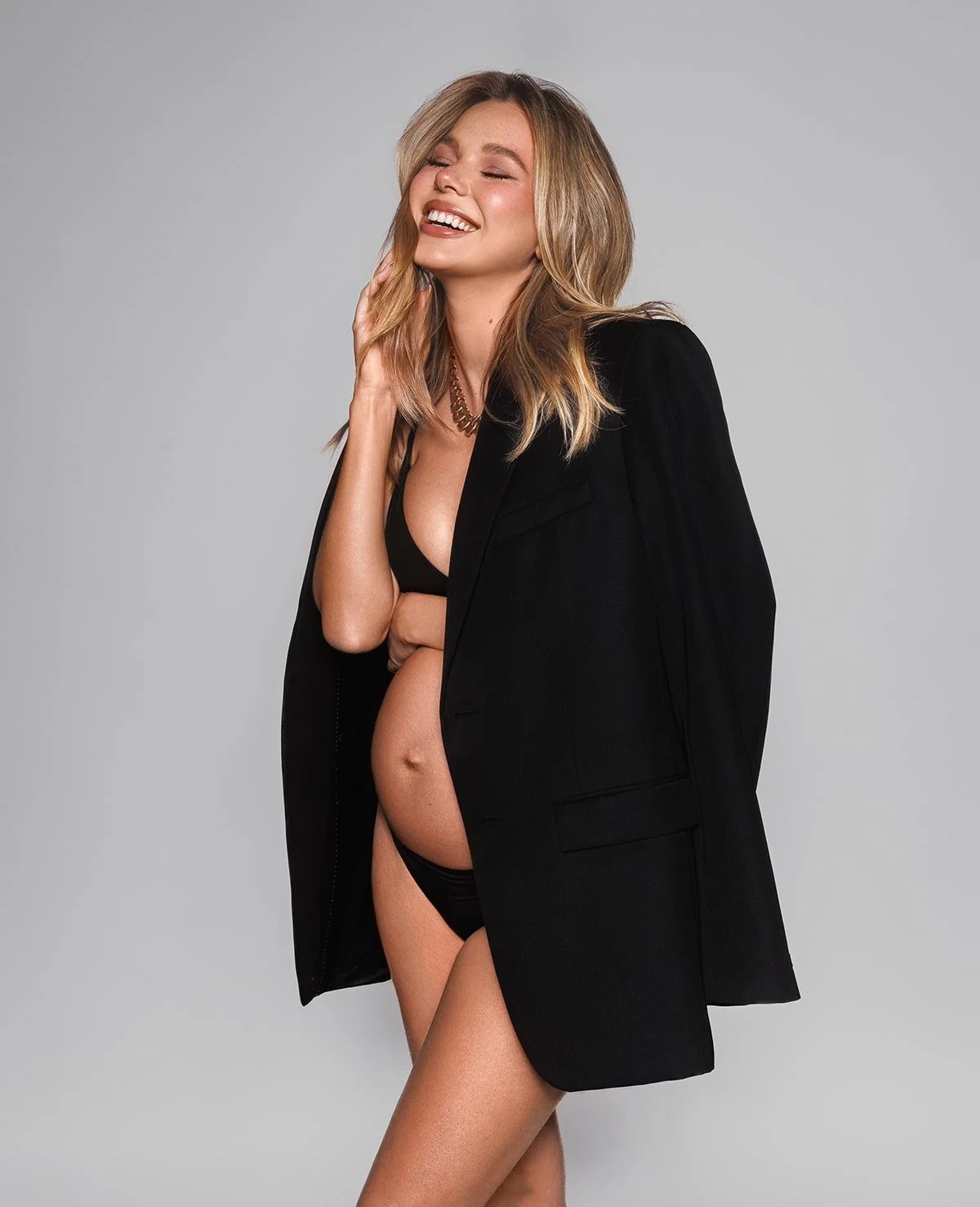
The right photographer guides micro-adjustments that you can feel and that the camera rewards. Shifting weight to the back foot lengthens the front line and protects balance. Turning ribs slightly toward the key light rounds the belly toward the lens with grace. Relaxing the hand so fingertips rest softly on the bump avoids tension. Aligning shoulders and tilting the chin with care opens the face and keeps the neck long. The difference between almost right and exactly right is often one breathless inch, and it comes from a calm pace and attentive direction.
If a partner joins, their presence should protect and support rather. I often guide partners to the side of the light falloff, positioning hands so they layer gently over yours without covering the belly. A soft temple-to-temple contact reads intimate but relaxed. Eyes can be closed for one frame and gently open for the next. This is connection, not choreography.
For photographers refining this language, the Posing Couples in Maternity Shoots Course shows how to guide real chemistry without stiffness and how to build sequences that feel natural and polished.
Communication That Reduces Stress
Clear communication makes the session feel easy. Before the session day, you should know how wardrobe will be handled, what kinds of looks are realistic, how the session flows, what to bring, and how any physical considerations will be respected.
A thoughtful photographer translates inspiration into a plan that fits your features and the studio. You should never wonder what happens when you arrive or in what order things will occur. If the photographer offers a client closet, you’ll know the sizes available and how selections are sanitized and steamed. If hair and makeup are part of the experience, timing should feel organized so you can settle in feeling like yourself.
Brand Voice And Whether It Matches Your Heart
A brand is the feeling of how you are treated when the camera is down. Read the photographer’s words. Do emails answer questions plainly, including pricing and what a photography session includes?
Do captions on Instagram feel like a conversation or a sales pitch? Does communication make your shoulders rise or fall? A retainer is normal for booking, but policies should be clear and fair. Flexibility matters because life is real. The way a photographer communicates before the session is the way they will direct you during it. You’re looking for a rhythm match.
Price, Value, And What You’re Actually Investing In
Price is a number, value is an experience. You are paying for expertise, studio resources, a curated client closet, thoughtful lighting design, posing guidance, and a careful edit that preserves authenticity. You are investing in how you will remember your pregnancy.
Transparent pricing should explain what is included without confusion. Some studios provide digital images with a print release, others offer collections that pair files with credit toward albums or framed prints. Ask what is realistic in terms of the number of looks and how much time you’ll spend on set without rushing. Ask what retouching includes and how small refinements are handled. Clarity now prevents surprises later, when you are already in love with your images.
Choose the photographer based on the feeling their portfolio gives you, the consistency of their craft, the way their studio is prepared, and the clarity of their communication.
Questions That Reveal Craft
A conversation is better than a checklist. Mention an image you love and listen to how the photographer describes creating something similar for you. If they can translate feeling into a clear plan, you’re hearing working knowledge. Ask how they create variety without chaos. A practiced hand will describe a flow that makes sense like we begin in a refined gown to establish posture and confidence, shift to fabric for movement, transition to a minimal outfit or bare belly for intimacy, and close with a relaxed portrait that feels like an exhale.
Ask how they maintain energy. A steady pace, water nearby, and sensitivity to cues like a back twinge or tired feet tell you your comfort will guide the day.
If this is a chapter that includes older children, ask how they are incorporated without losing the elegance of the portrait. A photographer who blends family energy with maternity posing understands prompts, small games, and direction that keep the frame polished while the moments feel real.
My Family Maternity Photography Course and my Mommy & Me Course show how to hold that balance so images feel connected, modern, and timeless all at once.
A Few True-To-Life Scenarios To Guide Your Intuition
Imagine walking into a studio where you are greeted quietly, offered water, and shown a rack with three looks already set aside based on your notes. The lighting is ready but adjustable. The photographer explains the plan in simple language and asks how you’re feeling. The first pose takes shape with a tiny adjustment to the ribs, a small shift in weight, a gentle hand on the belly. Throughout the session, you are given choices without pressure.
Now imagine a studio where the paper curls up from the floor and no one notices. The gowns look lovely on hangers but feel rough on skin. The lighting looks good from one angle and harsh from another. When you ask for a softer portrait, you’re told it will be fixed in the edit. You are asked to pop the hip, but no one checks your balance. Your smile works hard. You go home wondering whether you’re photogenic. You are. You just weren’t seen.
Choose the first studio every time. And if you are building your own studio, let that first experience be your blueprint.
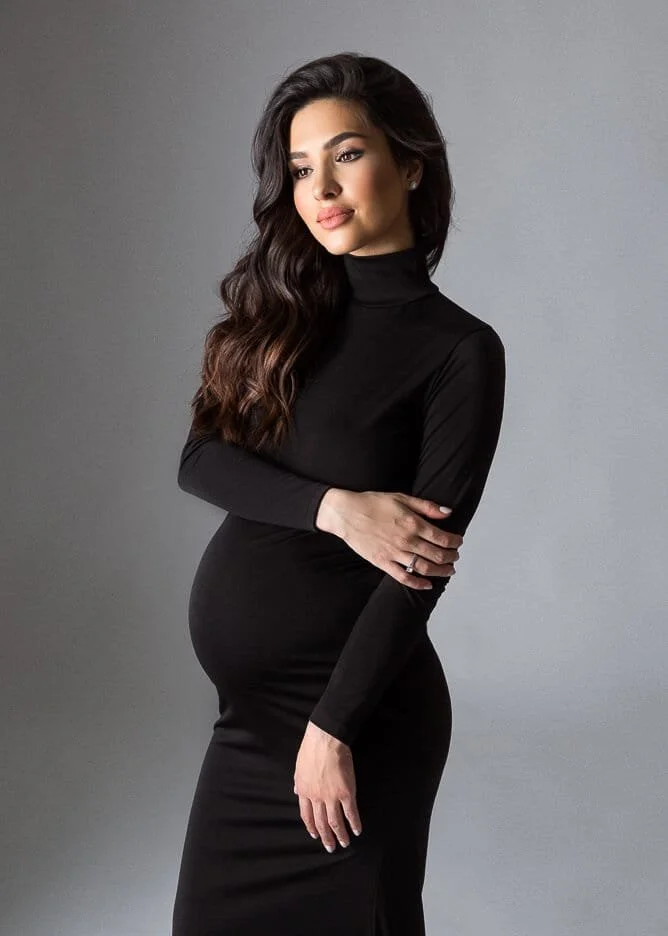
Know What to Expect
Eery experience is shaped around the woman in front of the camera, the flow is gentle, clear, and unhurried. Most mothers choose to schedule their maternity session between 28 and 34 weeks, when the belly has a graceful curve and the body is still comfortable moving and shifting. That timeframe is a guideline, not a rule. Some women feel ready earlier, and others feel most at ease closer to their due date. We plan for the moment when you feel most like the version of yourself you want to remember.
When you arrive, we begin quietly. We talk, settle into the space, and look through wardrobe together to choose the looks that feel right that day. The session typically unfolds through two to four different looks, depending on your comfort, energy, and the story you want to tell. Posing is guided through small, intuitive adjustments you can feel in your body, shifting weight to create balance, relaxing the hand to soften the gesture, allowing breath to shape the expression. The pace remains steady and respectful. Breaks are welcomed. If a partner or children are part of your story, their presence is woven in with intention so the images feel connected and natural rather than staged.
After the session, your images are carefully curated and individually refined. The edit is thoughtful and your expression stays true. The goal is to preserve what is beautiful about the moment rather than to polish it into something unfamiliar. Your final gallery is delivered within two to four weeks, depending on the season and the level of detail requested. You receive both high-resolution images and web-optimized versions for sharing.
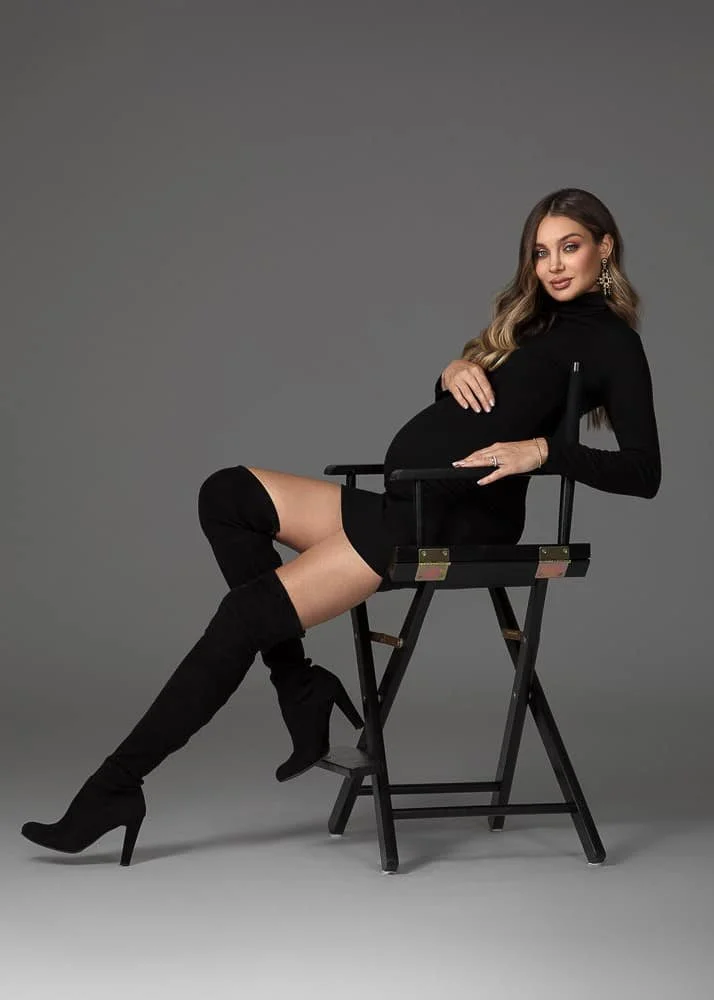
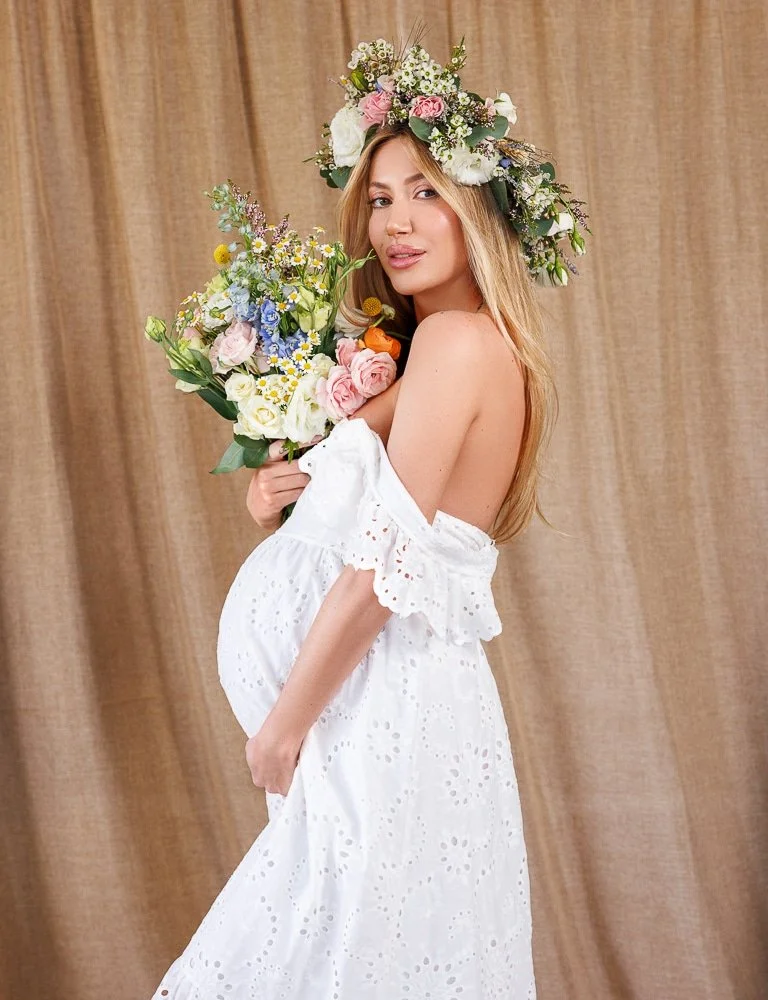
Conclusion
The right maternity photographer creates an experience where you don’t need to worry about what to do with your hands or how to stand. They help you pick and choose outfits that suit your mood and body. They watch how fabric moves and how light sculpts your belly. They guide you throughout the session so every decision feels easy. They deliver a gallery that reads like a love letter to this chapter, whether this is a first pregnancy or a new story added to a family you already adore.
Whether you are searching for the right person to photograph your own pregnancy or you are a photographer committed to creating this level of experience, remember that this choice is intimate. Notice how the work makes you feel, not only how it looks. Trust the quiet pull toward a portfolio that steadies you.
If you want help decoding the technical side so you can choose with more confidence, or create this experience for your clients, our maternity photography courses are designed to walk you through each piece. Lighting that flatters, posing that respects, styling that elevates, sequencing that tells a story, all of it is teachable, and all of it translates into portraits you will treasure.
A maternity photo shoot is like a small ceremony for the life you’re carrying and for the version of you that will never exist exactly this way again. The right photographer will shape light that feels like home on your face, guide you with steady kindness, dress you in fabric that moves like a memory, and deliver a gallery you will love looking back on for years. When you find that person, the decision feels simple. You step into the studio, slip into a gown or a favorite outfit, and realize you do not need to perform. You only need to be. The rest is craft, and that is their job.
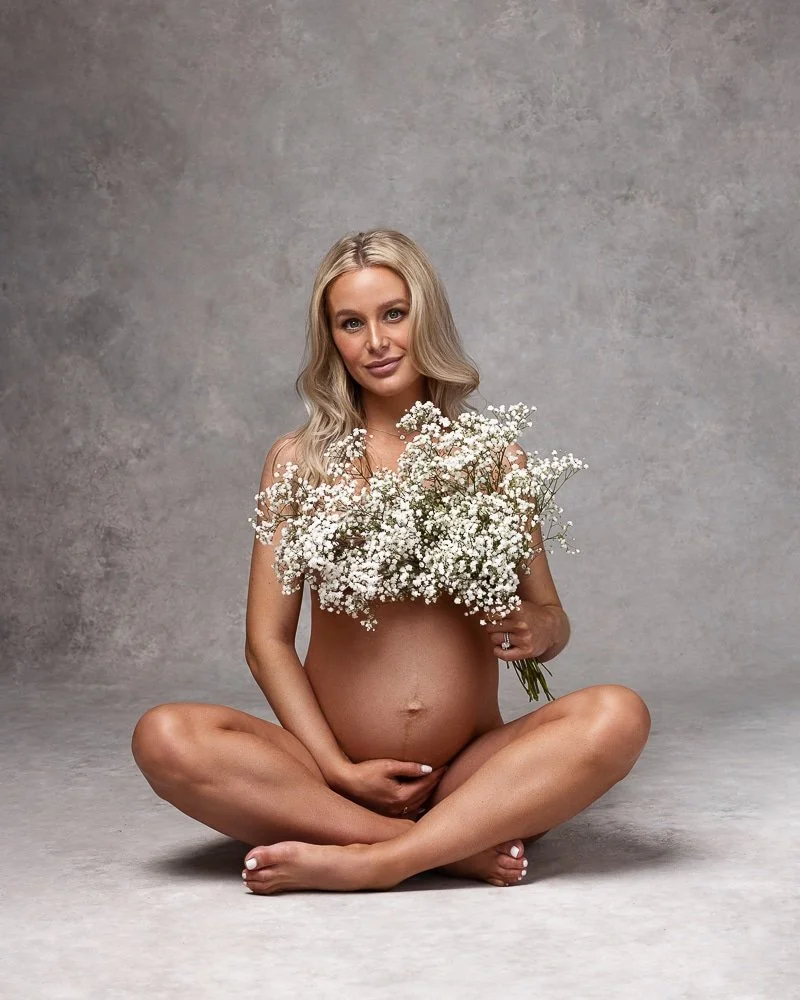
About Oxana Alex
Oxana Alex is a Los Angeles–based fine art and maternity photographer known for her signature couture studio style. Over the past decade, she has photographed more than 3,000 maternity sessions, creating timeless portraits that celebrate strength, beauty, and the magic of motherhood. Her work has been featured in Elle, Harper’s Bazaar, and L’Officiel.
Through Roxamina Photography Academy, Oxana teaches parents and photographers around the world how to master lighting, posing, and creative direction in maternity photography.
Source: Oxana Alex Photography